

Maddy summaryThis bill requires Minnesota's Commissioner of Transportation to apply for federal funding to develop two passenger rail corridors: one extending from St. Paul to Fargo, North Dakota, and another from St. Paul to Kansas City, Missouri (with stops in Northfield, Albert Lea, and Des Moines, Iowa). It appropriates $1 million for fiscal year 2026 to cover application costs, planning, environmental analysis, and matching federal grants for these routes. The funds are specifically for Phase I corridor planning under Minnesota's 2015 rail plan and must be used for state share of project costs. The bill directly affects Minnesota's transportation department and communities along the proposed rail routes.
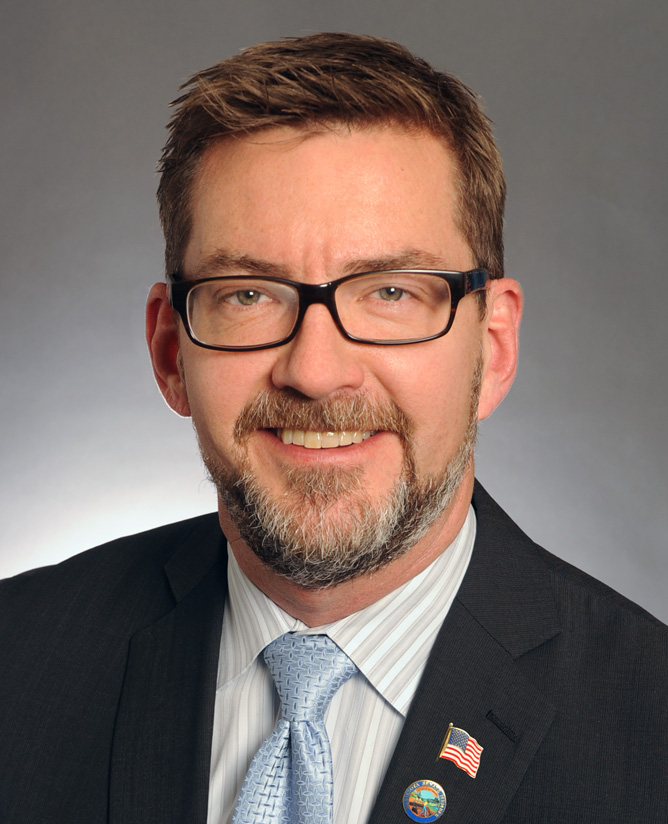
Sen. Scott Dibble
Sponsored bills
Maddy summaryThis bill proposes adding a constitutional amendment to guarantee equal rights under Minnesota law and prohibit discrimination. It would protect individuals from discrimination based on race, color, national origin, ancestry, disability, and sex - including pregnancy decisions, gender identity, and sexual orientation. If approved by voters in the 2026 general election, the amendment would take effect January 1, 2027, and apply to all state agencies and political subdivisions. The amendment is self-executing and does not override existing anti-discrimination protections.
Maddy summaryThis bill prohibits recreational camping area owners in Minnesota from charging campers fees beyond the base electricity cost they pay to their utility provider. Specifically, owners may only charge the "commodity rate" (the actual cost of electricity they pay) without adding administrative fees, capital costs, meter charges, demand fees, or taxes. The law directly affects camping area owners and their RV/camping guests by restricting how they can bill for electricity usage. It amends Minnesota Statutes to clarify that any violation is a legal offense under existing consumer protection laws. The bill is currently in the early stages of the legislative process.
Maddy summarySF 3652 would require Minnesota law enforcement agencies to use vehicles specifically designed for safely transporting people when detaining or moving suspects. The bill mandates that such vehicles must be owned or leased by a law enforcement agency, display clear agency markings, and include seats and seat belts for each person transported. Exceptions allow non-compliant vehicles during immediate threats to safety or undercover investigations. This bill directly affects all Minnesota law enforcement agencies responsible for transporting individuals in custody.
Maddy summaryThis bill makes Minnesota's traffic safety camera pilot program permanent, allowing cities and counties to continue using red light and speed cameras to enforce traffic laws. It establishes fixed fines ($40 for basic violations, $80 for speeds 20+ mph over limits) but requires a warning for first offenses and offers diversion through a traffic safety course for second offenses. Vehicle owners or renters caught by cameras can avoid fines if they prove the vehicle was stolen, transferred, operated during a medical emergency, or driven by someone else. The law explicitly excludes commercial drivers and commercial vehicles from penalties and clarifies that fines cannot lead to driver's license suspension.
Maddy summarySF 1904 allows owners of all-electric vehicles to use high-occupancy vehicle (HOV) lanes and dynamic shoulder lanes without paying a fee, provided they display a $24 decal issued by the state. The bill requires EV owners to apply for the decal (valid for four years, non-transferable) and specifies that only single-occupant all-electric vehicles qualify. It also mandates public outreach through signage, websites, auto dealers, and vehicle registration materials to inform owners about the program. This policy directly affects EV owners who wish to use these lanes without additional charges, while maintaining existing HOV lane rules for other vehicles.
Maddy summaryThis bill limits county funding for certain property assessment services in Minnesota. It restricts counties from levying taxes (funding) for assessment services in cities of the first class (over 400,000 people) or cities with populations over 30,000, except for two specific purposes: (1) assessment duties for cities under 30,000 population, and (2) limited supervisory duties for larger cities. The change applies to counties with cities meeting these population thresholds and takes effect for the 2026 assessment year. It shifts responsibility for property assessments in large cities from county assessors to city assessors for most services.
Maddy summarySF 1360 increases the speed limit for farm equipment used in agricultural operations to 35 miles per hour. This change applies to vehicles like tractors and other machinery commonly operated on public roads during farming activities. The bill directly affects farmers, agricultural workers, and rural communities by allowing these vehicles to travel at a higher speed on designated roads. It was signed into law on April 10, 2025, and became effective on August 1, 2025.
Maddy summaryHF 14 is a transportation finance and policy bill, but the provided context does not include the bill's specific provisions, policy changes, or who it affects. The recent actions listed (motion for reconsideration, laying on the table) are procedural committee steps and do not describe the bill's content. Without details on the bill's actual mechanisms or policy proposals, a substantive summary cannot be provided. For a full summary, the bill's text or official description would be required.
Maddy summarySF 18 is an omnibus transportation appropriations bill that allocates $4.9 billion for fiscal year 2026 and $4.0 billion for fiscal year 2027 to Minnesota's Department of Transportation (MnDOT). It funds highway maintenance, airport development, and transit programs, including $3.47 billion for trunk highways and $282 million for municipal streets. The bill also introduces new taxes, including a per-kilowatt-hour charge on public electric vehicle charging stations, modifies existing electric vehicle surcharges, and adds a surcharge for plug-in hybrid vehicles. These changes directly affect electric vehicle owners, charging providers, and MnDOT's budget allocation for transportation infrastructure and services.