

Maddy summaryThis bill amends Minnesota's estate tax law to establish a portability provision for surviving spouses. It allows a personal representative to elect on an estate tax return that a surviving spouse can use the deceased spouse's unused estate tax exclusion amount (currently capped at $3 million for 2020+ estates). The election is automatic unless explicitly declined on the return, and it applies even to estates that wouldn't otherwise need to file a return. The changes take effect for decedents dying after June 30, 2025, directly affecting surviving spouses inheriting estates where the deceased spouse didn't use their full estate tax exclusion.
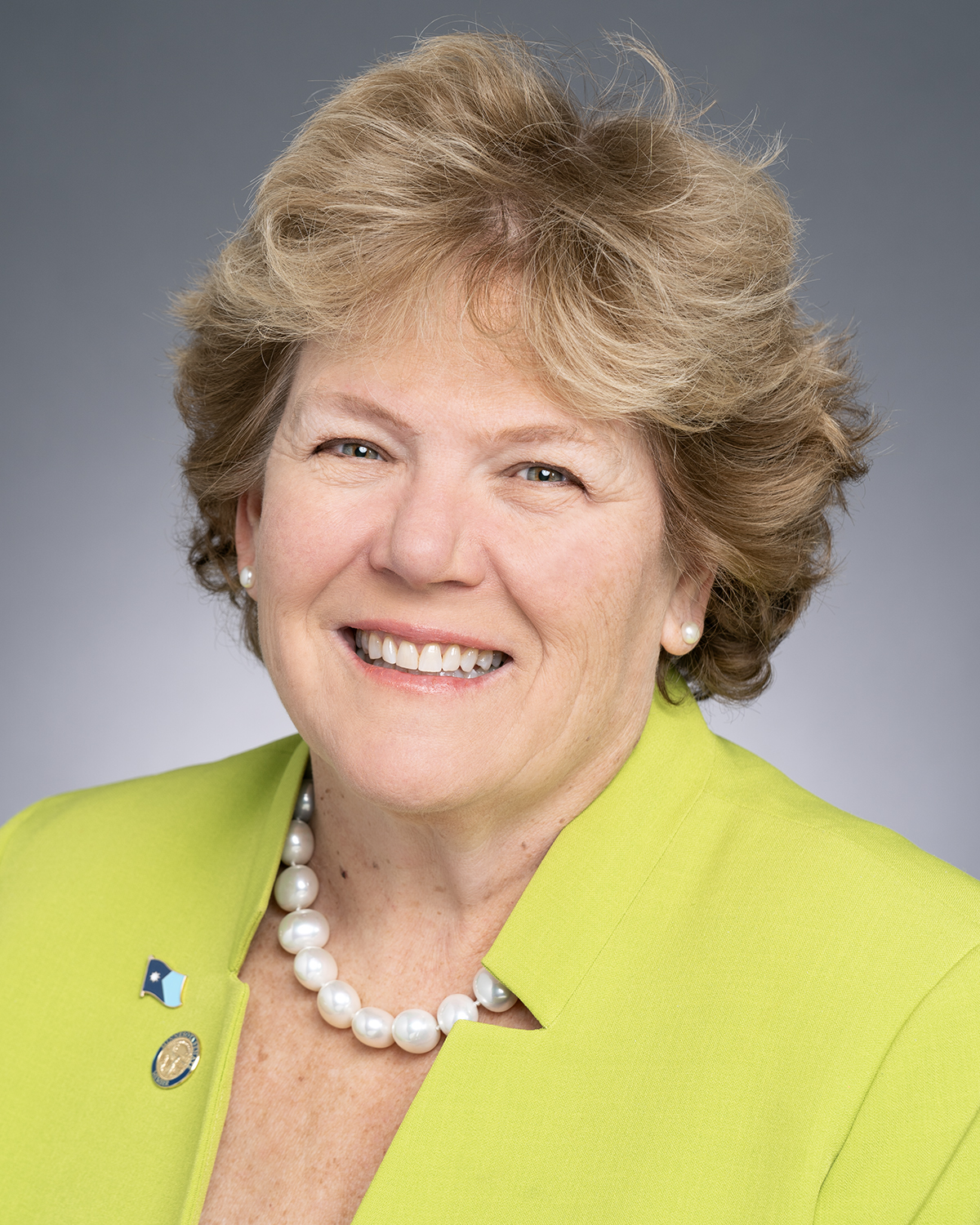
Sen. Ann Johnson Stewart
Sponsored bills
Maddy summarySF 1480 would require all-electric vehicle owners in Minnesota to pay a new road usage charge based on miles driven within the state, in addition to existing registration fees. The charge is calculated using a formula comparing Minnesota's gasoline tax rates to the vehicle's "analogous fuel economy" (using EPA data for similar vehicles), with a base rate of $0.065 per mile. This applies to all-electric vehicles registered for periods starting before June 30, 2026, and creates a new system managed by the state with account providers handling billing. The revenue must be deposited into the highway user tax fund, replacing the previous $75 electric vehicle surcharge. The bill also mandates a report on the program's implementation.
Maddy summarySF 42 appropriates $2,026 from the general fund to the Minnesota Department of Health for a one-time grant to the Division of Indian Work. The funds will support developing and piloting a culturally specific suicide prevention curriculum for Native American youth. The curriculum must cover mental health, emotional intelligence, depression, and suicide prevention to help students understand mental wellness and learn practical support tools. This bill directly affects Native American youth in Minnesota through targeted educational programming.
Maddy summaryThis bill requires Minnesota's Commissioner of Transportation to apply for federal funding to develop two passenger rail corridors: one extending from St. Paul to Fargo, North Dakota, and another from St. Paul to Kansas City, Missouri (with stops in Northfield, Albert Lea, and Des Moines, Iowa). It appropriates $1 million for fiscal year 2026 to cover application costs, planning, environmental analysis, and matching federal grants for these routes. The funds are specifically for Phase I corridor planning under Minnesota's 2015 rail plan and must be used for state share of project costs. The bill directly affects Minnesota's transportation department and communities along the proposed rail routes.
Maddy summaryThis bill amends Minnesota's sustainability requirements for state buildings and operations. It establishes a new "shared savings program" where public utilities implement energy efficiency upgrades in state buildings, repaid through energy savings (no interest), aiming to reduce energy use by 30% per square foot. State agencies must now report energy/water usage data, develop conservation plans for existing buildings with a 15-year payback, and maintain sustainability benchmarks. The bill also creates an Office of Enterprise Sustainability to coordinate state-wide sustainability goals and publish annual progress reports for public tracking. These changes directly affect all state agencies managing buildings, requiring new reporting, planning, and efficiency measures.
Maddy summarySF 3595 allocates $9 million to provide direct grants to Minnesota housing providers who received federal Continuum of Care funding but face budget gaps due to expired contracts before December 2026. The bill allows noncompetitive awards to existing federal grantees to cover these shortfalls without competitive bidding, supporting permanent supportive housing, rapid rehousing, and transitional housing programs. Recipients must report quarterly on fund usage and people served, with reports shared with lawmakers and the public. This one-time appropriation aims to maintain housing services for vulnerable residents without disrupting ongoing programs.
Maddy summaryThis bill modifies regulations for large data centers in Minnesota. It requires preapplication discussions with the state for data centers exceeding 100 million gallons per year in water use to assess water availability, while specifying their environmental review requirements. The bill removes data centers' energy consumption from utility energy savings goals, exempts them from contributing to energy conservation plans, and imposes a new fee on data centers. It also establishes energy efficiency requirements for data centers, adjusts how they're classified as "large energy facilities," and mandates a new tariff for their electricity use through the Public Utilities Commission. These changes directly affect data center operators and utilities managing energy programs.
Maddy summaryThis bill modifies registration surcharges for electric vehicles (EVs) and plug-in hybrid electric vehicles (PHEVs) in Minnesota. It replaces variable calculations with flat fees: $100 annually for all-electric vehicles (reduced from a previous tiered system) and $50 for plug-in hybrids, with minimums adjusting after 2027. It also adds a new weight-based surcharge for passenger vehicles: 7% for 5,000-5,999 lbs and 10% for 6,000+ lbs, applied to the standard registration tax. These surcharges (for EVs, PHEVs, and weight) will fund highway maintenance and apply to registrations starting January 1, 2027. The bill directly affects owners of EVs, PHEVs, and heavier passenger vehicles.
Maddy summarySF 3945 renames Minnesota's "Local Optional Revenue Program" to the "Local Education Revenue Program" and increases its funding. It changes how school districts calculate local revenue by introducing a "geographic cost index" based on regional wage data from the Minnesota Department of Employment and Economic Development. The base allowance rises to $979 for fiscal year 2027, with annual adjustments tied to the state's general education formula, while capping second-tier local levies at $671,345 starting in 2027. This directly affects all Minnesota public school districts by altering their state revenue calculations beginning in 2027.
Maddy summaryThis bill authorizes $20 million in state bonds to fund safety and mobility improvements on U.S. Highway 12 in the City of Independence, specifically between County Line Road and County Road 90 in Hennepin County. It appropriates $4 million from general obligation bonds and $16 million from trunk highway bonds to cover predesign, design, and construction costs for the project. The funds directly support the city's infrastructure work to address road safety concerns along this corridor. The bond proceeds will be used exclusively for the specified highway segment, with bond sales governed by Minnesota statutes.