

Maddy summaryThis bill requires the Board of Architecture, Engineering, Land Surveying, Landscape Architecture, Geoscience, and Interior Design to publicly disclose when a complaint was initiated by the board's executive director - not by a member of the public. It mandates that the board and the person being complained about must be explicitly informed if the executive director filed the complaint. All documents related to such complaints must also be shared with the subject of the complaint. The requirement applies to complaints submitted or initiated on or after the bill's effective date.
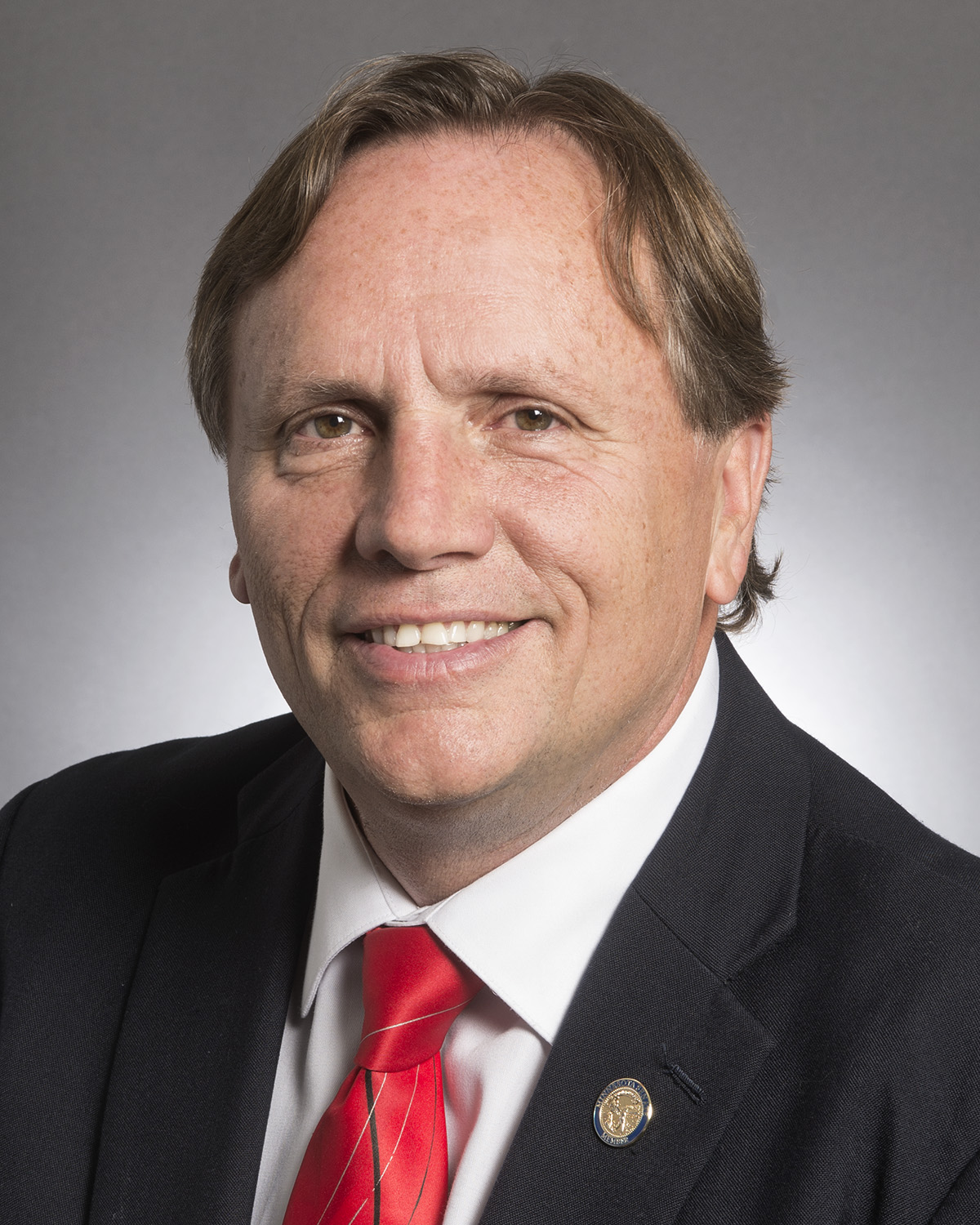
Sen. Jim Abeler
Sponsored bills
Maddy summaryThis bill repeals a specific rate calculation method for two disability waiver programs: the Community Access for Disability Inclusion and Brain Injury Home and Community-Based Waivers. It removes the requirement that program rates be calculated as 29.6% of new methodology rates plus 70.4% of rates from June 2017. The repeal takes effect January 1, 2026 (or after federal approval), ending the phased rate adjustment. This change affects how rates for these waiver programs are determined, not the programs themselves.
Maddy summaryThis bill modifies Minnesota's requirements for written housing support agreements between state agencies and housing providers. It mandates that agreements include specific details like provider licensing, bed counts, payment rates, and location addresses, while requiring providers to verify staff qualifications, medication management, and other service standards. The bill also prohibits agencies from refusing agreements based on a resident's medical assistance program or a facility's building type, size, or location (unless prohibited by other law). These changes aim to standardize agreements and prevent discrimination in housing support programs.
Maddy summarySF 289 authorizes Minnesota to issue up to $400 million in state bonds to fund local infrastructure. It appropriates $250 million for county road projects, prioritizing statewide/regional roads and rural safety improvements on county state-aid highways. An additional $150 million is allocated for bridge repairs, including matching federal funds to replace or rehabilitate deficient bridges, covering design, construction, and land acquisition costs. The funds directly support counties and local communities by improving road safety and bridge infrastructure. The bill enables these investments through bond financing rather than direct state budget spending.
Maddy summaryThis bill requires Minnesota's Commissioner of Human Services to draft legislation that would codify existing standards for integrated community supports in Minnesota Statutes. These supports include services covered under federal waiver plans for brain injury, community access for disability inclusion, community alternative care, and developmental disabilities. The commissioner must consult with disability advocates, service providers, and people using these supports before developing the draft. The draft must be submitted to legislative committees by January 1, 2026. The bill directly affects disability support programs and providers operating under these federal waiver plans.
Maddy summarySF 1282 would require mandatory minimum fines for street racing violations in Minnesota. It directly affects drivers convicted of street racing (operating vehicles to compare speeds on public roads), setting specific fines: $300 for first offenses, $550 for repeat violations within ten years, and $850 for two or more prior violations within ten years. The bill amends Minnesota Statutes section 169.13 to establish these fixed penalty amounts, replacing previous discretion for judges in setting fines for this offense. The law would take effect August 1, 2025, applying to violations occurring on or after that date.
Maddy summarySF 1288 establishes that direct primary care service agreements - where patients pay a flat fee directly to a provider for primary care services - are not considered insurance and are exempt from Minnesota's insurance regulations. This affects primary care providers (like physicians or nurse practitioners) who operate under this model and their patients, who pay a direct fee instead of traditional insurance. The bill amends statutes to clarify that such agreements are not subject to licensing requirements for insurance businesses (under chapters 60A, 62C, 62D, or 62N) and defines key terms like "direct primary care practice" and "direct fee." It creates a clear regulatory pathway for this care model without requiring insurance licenses. The policy change directly modifies how these agreements are classified under state law.
Maddy summarySF 1231 would amend Minnesota's tax code to allow taxpayers to subtract the full amount of their Social Security benefits from their state taxable income, removing current income-based phaseout limits and maximum subtraction amounts. This change directly affects Minnesota residents who receive Social Security benefits (including retirement, survivor, or disability payments) and file state income tax returns. The bill eliminates previous caps (e.g., $5,840 for joint filers) and phaseout thresholds, making the subtraction "unlimited" for all qualifying benefit recipients. It becomes effective for tax years beginning after December 31, 2024.
Maddy summarySF 1214 prohibits the use of regional transportation sales tax funds for light rail or passenger rail projects. Specifically, it amends Minnesota law to block the Metropolitan Council from spending these tax proceeds on the Southwest light rail project (Green Line Extension) and other similar passenger rail initiatives. The prohibition applies until the expiration date of the Metropolitan Governance Task Force under 2023 law, after which the restriction would no longer be in effect. This bill directly affects how transit funding is allocated for rail projects.
Maddy summaryThis bill modifies how Minnesota's Department of Human Services handles licensing violations for providers operating multiple sites under both Chapter 245 and Chapter 245D (home/community-based services). It requires correction orders and conditional licenses to apply only to specific service sites or programs where violations occurred, not the entire organization, unless the commissioner provides a clear reason. The bill also mandates annual reports to lawmakers on enforcement actions, includes new support options like legal referrals for affected providers, and allows conditional licenses to be shortened if providers demonstrate compliance early. These changes directly affect multi-site service providers facing licensing enforcement actions.