

Maddy summarySF 2124 appropriates funds from the general fund for fiscal years 2026 and 2027 to support emergency services, homelessness response, and provider capacity building. It provides grants to counties for interventions like low-barrier shelters, 24/7 operations, and housing-focused case management to address homelessness gaps, with priority given to applications backed by Tribal Nations. The bill also funds collaboratives to help service providers access stable funding streams, including Medicaid waivers, housing programs, and nutrition assistance. These provisions directly affect counties, homeless service providers, and people experiencing homelessness in Minnesota.
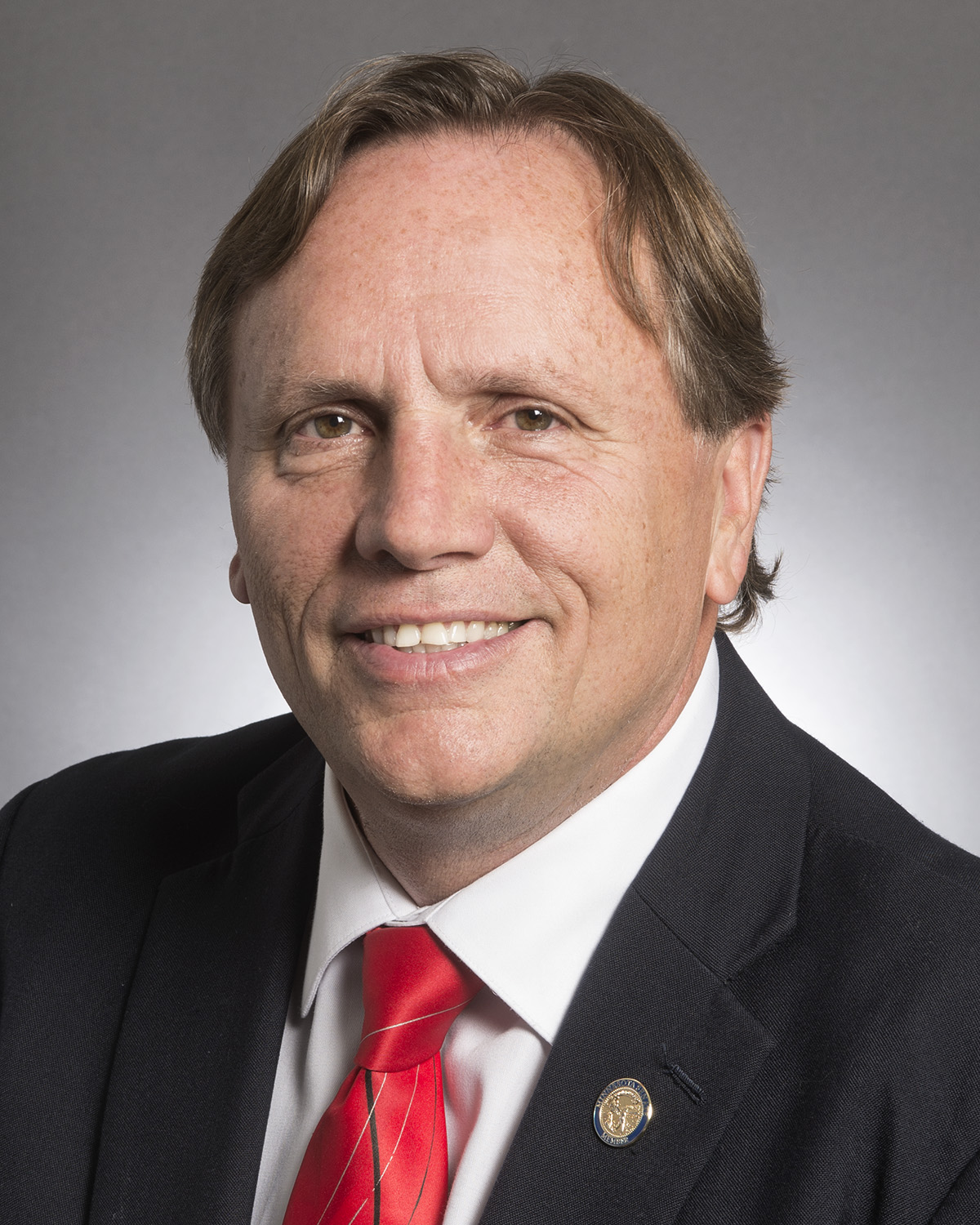
Sen. Jim Abeler
Sponsored bills
Maddy summaryThis bill modifies Minnesota's Teachers Retirement Association (TRA) benefits and funding. It allows teachers with 30 years of service to retire at age 60 with a full annuity (previously required age 62), reduces early retirement penalties, and increases postretirement adjustments. It also raises employer contribution rates: for most districts, the rate increases to 9.5% for coordinated members and 13.5% for basic members starting July 1, 2025. School districts receive adjusted pension revenue funding based on new rates (e.g., 3.25% for St. Paul districts starting 2026), effective for fiscal years 2026 and later. The bill directly affects public school teachers and school districts participating in the TRA.
Maddy summaryThis bill amends Minnesota's school finance law to adjust how local school districts calculate optional revenue from property taxes. It sets specific dollar amounts for first-tier ($300 in 2025-2026, rising to $550 in 2027) and second-tier ($424 in 2025-2027) local revenue allowances, based on student enrollment (adjusted pupil units). Districts can levy local taxes up to limits tied to property values per student, with equalizing factors increasing annually (e.g., $626,450 for second-tier in 2025). The changes take effect for fiscal year 2027, directly affecting all Minnesota public school districts receiving state education funding.
Maddy summaryThis bill appropriates $55,000 annually from the general fund to the Minnesota Association of Alternative Programs for its STARS program. The funds support students in alternative education programs (such as alternative schools or non-traditional settings) by helping them develop employment, academic, and social skills through trainings and conferences. The appropriation applies to fiscal years 2026, 2027, and establishes a $55,000 base amount for 2028 and later. It directly affects students in alternative programs by providing resources for skill-building activities.
Maddy summaryMinnesota Senate Bill SF 1138 allocates $500,000 for fiscal year 2026 and $500,000 for fiscal year 2027 from the general fund to the commissioner of health. This funding supports the nonprofit "Change the Outcome" to provide opioid prevention and education programs directly affecting Minnesota middle and high schools, communities, and individuals struggling with substance use. Key provisions include data-driven school and community workshops on opioid dangers, prevention strategies, overdose recognition, emerging drug trends (like fentanyl and xylazine), and access to treatment resources. The bill focuses on concrete funding for evidence-based education rather than changing existing laws.
Maddy summaryThis bill modifies Minnesota's requirements for providing cause of death information when a medical examiner or coroner declines jurisdiction over a natural death. It specifies that physicians present at death, those who provided medical treatment before death, or those with direct knowledge and access to medical records must provide the information. If no such physician exists, another physician has 72 hours to provide it after notification. If a physician refuses, the medical examiner or coroner may provide the information and recover costs from the refusing physician or their employer.
Maddy summarySF 554 establishes a $8.9 million grant program to expand Minnesota's community care hub model, which connects health care providers with community organizations addressing basic needs like food insecurity, housing instability, and transportation access. The grant supports eligible community care hubs (nonprofits with federal recognition and health plan contracts) to organize social care services, centralize administrative operations (like contracting and referrals), and create sustainable funding for these services. The program requires grantees to report outcomes and includes $1 million for evaluation, with funds available until 2030. This bill directly affects community-based organizations, health care providers, and Minnesotans facing health-related social needs.
Maddy summaryThis bill appropriates $7 million from the general fund for one-time road improvements in Blaine, Minnesota. The funds are specifically for the city of Blaine (or Anoka County) to address local road work connected to intersection upgrades on Trunk Highway 65, including temporary traffic mitigation during construction. The appropriation is available until June 30, 2029, and must be used for projects directly related to the Highway 65 construction. It affects Blaine residents and local infrastructure by providing dedicated funding for road maintenance during a major highway project.
Maddy summaryThis bill prohibits landlords in Minnesota from discriminating against tenants who use government rental assistance, housing choice vouchers, or other public aid programs to pay rent. It specifically bans landlords from denying viewings, applications, or rental opportunities to such tenants, or advertising that they won't rent to people using these programs. The law directly affects tenants relying on federal, state, or local housing assistance and requires landlords to comply with these non-discrimination rules. It amends Minnesota Statutes 363A.09 to add explicit protections against source-of-income discrimination in housing.
Maddy summarySF 1963 requires health insurance plans in Minnesota to cover self-measured blood pressure monitoring devices and related services for enrollees diagnosed with uncontrolled hypertension. This coverage is limited to one device every three years and includes reimbursement for providers who train patients, transmit blood pressure data, and deliver co-interventions. The bill amends Minnesota Statutes to add this requirement under medical equipment coverage, effective January 1, 2026. It directly affects individuals with uncontrolled hypertension who rely on insurance for these medical devices.