

Maddy summaryThis bill delays the implementation of new rates for family residential services and life sharing services in Minnesota from 2026 to 2029 (or until federal approval is obtained). It also establishes an Advisory Task Force on Family Residential Services to evaluate proposed rate changes and their impact on providers before final decisions are made. The Task Force includes representatives from foster care providers, county associations, service recipients, and state agencies, and must submit reports to the legislature. This directly affects licensed adult family foster care providers, family residential service agencies, and the Department of Human Services, which must provide administrative support and data for the Task Force's analysis.
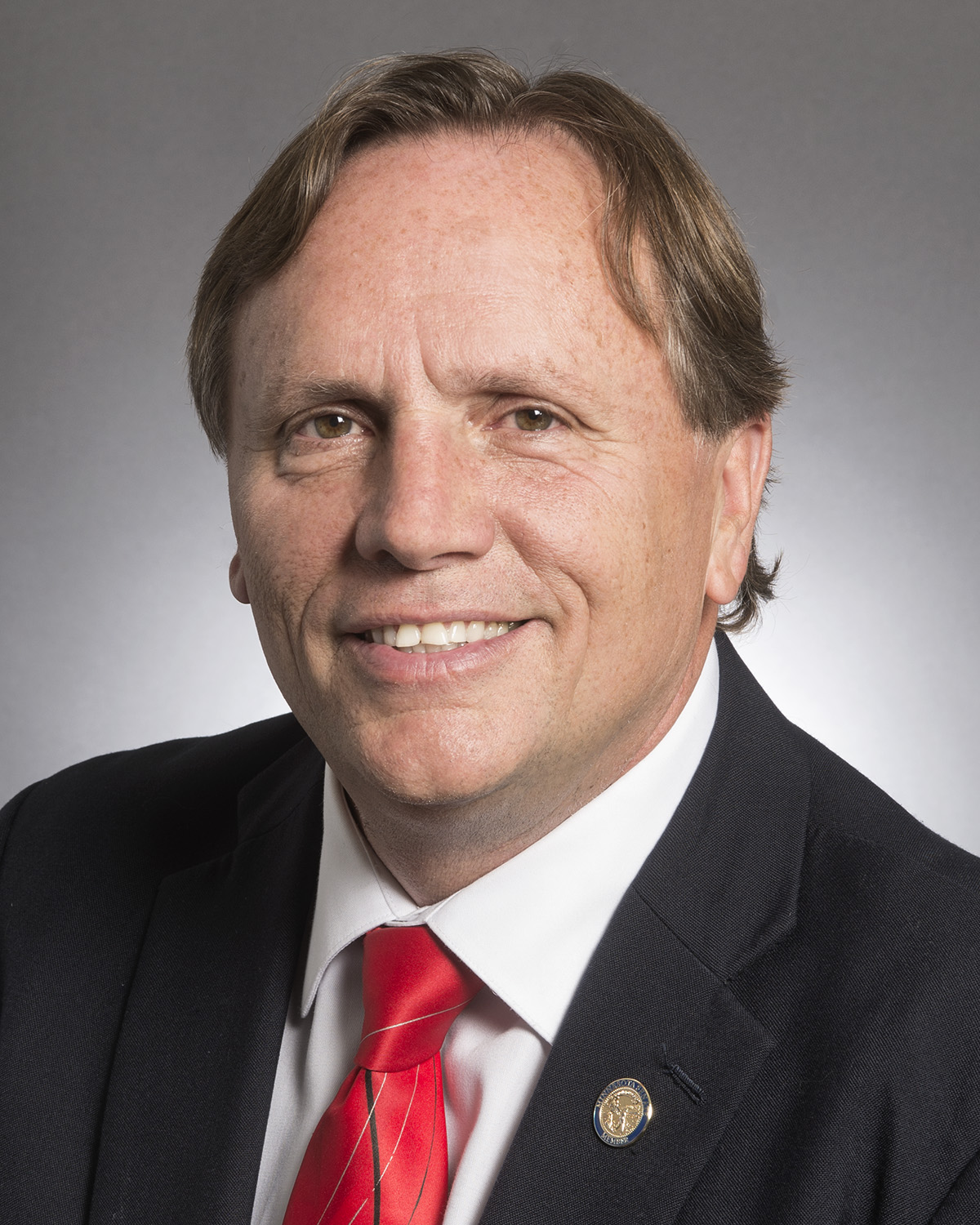
Sen. Jim Abeler
Sponsored bills
Maddy summaryThis bill transfers Minnesota's "Healthy Eating, Here at Home" program (which provides $10 vouchers for SNAP/Summer EBT users to buy fresh food at farmers' markets) from the Minnesota Humanities Center to the Department of Health. It also establishes the "Fresh Bucks" pilot program, allowing SNAP and Summer EBT participants to get a dollar-for-dollar match on fresh produce purchases (up to $20 daily/$80 monthly) at participating retailers like grocery stores. Both programs target low-income households using federal nutrition benefits, with the Fresh Bucks program specifically requiring produce to be fresh fruits/vegetables without added sugars or fats. The bill appropriates funds for implementation and requires annual reporting on program usage and effectiveness.
Maddy summaryThis bill establishes a $5 million grant program to help small businesses in Blaine affected by Trunk Highway 65 construction. It provides financial support to businesses employing up to 40 people that experience substantial access issues (like impaired road access, parking, or visibility) for at least one month during the project. Grants cover payroll, operating, or facility costs but cannot fund bonuses, new equipment, or construction. The Commissioner of Employment and Economic Development will prioritize awards based on revenue decline, construction duration, proximity, traffic disruption, and pedestrian access. Annual reports detailing all grants must be submitted starting January 2027.
Maddy summaryThis bill appropriates $1.8 million from the arts and cultural heritage fund to the Minneapolis Downtown Council for the Taste of Minnesota event. The funds cover specific infrastructure and operational costs like event setup, permits, waste management, staffing, security, and equipment rentals. The grant directly supports the event's physical execution and management in Minneapolis during fiscal year 2026.
Maddy summarySF 626 establishes a new Department of Direct Care and Treatment in Minnesota, replacing the existing Direct Care and Treatment Executive Board. The bill creates a commissioner to lead this department and amends multiple statutes across state agencies (including Health, Human Services, and Public Safety) to align with the new structure. It directly affects state agencies responsible for direct care services and the administration of related programs. The key mechanism is consolidating oversight under a single department with a commissioner, streamlining operations previously managed by the executive board. This bill does not change service eligibility or funding levels but reorganizes administrative responsibility.
Maddy summaryThis bill requires Minnesota long-term care facilities and assisted living facilities to allow one designated support person chosen by a resident to be physically present with them while at the facility. The designated support person can be a spouse, partner, family member, or someone related by affinity, but certified doulas or midwives don't count toward this limit. Facilities may restrict this presence only in treatment rooms, procedure rooms, or operating rooms when medically necessary, or if the support person is violent or threatening. The bill directly affects residents in these facilities by expanding their right to have a chosen person provide comfort during their stay.
Maddy summaryThis bill requires Minnesota's Commissioner of Human Services to set a minimum daily payment rate of $1,800 for a specific Clay County psychiatric residential treatment facility serving youth under 21. It appropriates $1 million in fiscal year 2026 for Clay County to purchase equipment and remodel the facility, and allocates $1 million each year for 2026-2027 for statewide start-up and capacity-building grants for similar facilities. The bill directly affects Clay County's facility conversion project and provides funding for new psychiatric residential treatment services. It does not establish statewide rate standards but mandates a specific rate for this facility and funds related infrastructure.
Maddy summaryThis bill appropriates $5 million for fiscal year 2026 and $5 million for fiscal year 2027 from the general fund to fund "community solutions for healthy child development grants" under Minnesota Statutes §145.9285. It directly provides funding to community organizations offering services focused on child development, including early learning, health, and family support programs. The key mechanism is the dedicated state funding allocation for these specific grants, administered by the commissioner of health. This is a funding measure, not a new policy, with no changes to existing program requirements.
Maddy summaryThis bill establishes a state grant program to help ambulance services train and staff emergency medical technicians (EMTs). Licensed ambulance services that maintained at least 50% EMT staffing in the prior year can apply for grants covering tuition for EMT training programs, certification exam fees, background checks, and wage costs during training (capped at $26/hour). The program allocates $750,000 for fiscal year 2026 and $750,000 for fiscal year 2027 from the general fund. Grants must be used solely for these specified training and staffing costs, with applicants required to detail planned hires and training hours.
Maddy summaryThis bill (SF 2699) amends Minnesota Statutes section 144.145 to clarify that municipalities operating public water systems cannot be required to add fluoride if the water naturally contains fluoride within the levels set by the state commissioner of health. It directly affects public water suppliers, which retain the choice to fluoridate but must stop adding fluoride when natural levels meet health standards. The bill specifies that the commissioner must establish rules for fluoride content, testing methods, and record-keeping for systems that choose to fluoridate, while explicitly prohibiting mandatory fluoridation. The key change prevents unnecessary fluoridation when natural fluoride levels are already sufficient.