

Maddy summaryThis bill appropriates $1.5 million for a study on microplastics in meat and poultry sold in Minnesota. The Minnesota Department of Agriculture must conduct the study, working with the Department of Health and the University of Minnesota, by February 1, 2026. The study will examine microplastic presence in these products and produce findings for legislative committees. It does not regulate microplastics but funds research to inform potential future policies. The $1.5 million is a one-time appropriation from the general fund.
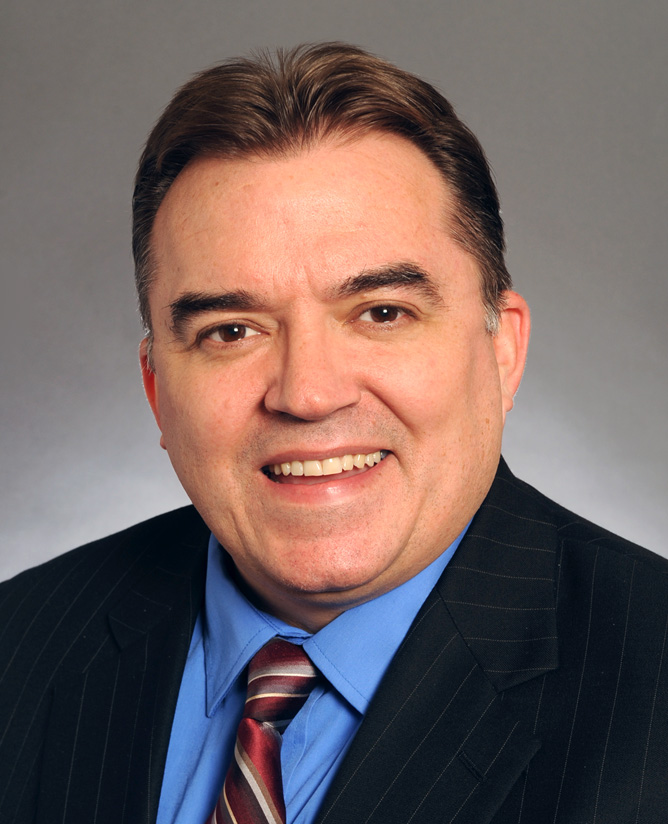
Sen. John Hoffman
Sponsored bills
Maddy summaryThis bill appropriates $5 million from state transportation funds to reconstruct Main Street (CSAH 150) in Rogers, Minnesota, from Territorial Road to John Deere Lane. The funds will cover street reconstruction, utility replacements, pedestrian safety upgrades, and improvements aligned with the safe routes to school program. The state will issue $5 million in bonds to finance this project, as authorized under Minnesota Statutes. The direct beneficiary is the city of Rogers, which will use the grant to complete the infrastructure work.
Maddy summaryThis bill appropriates $4.5 million from state bonds to fund Brooklyn Park's water infrastructure improvements. It directly affects the city of Brooklyn Park and its biotech innovation district by financing the predesign, construction, and equipment for two new water mains crossing under U.S. Highway 169 and Trunk Highway 610, plus connecting infrastructure. The key mechanism is authorizing the state to sell bonds to provide these funds, with the money specifically allocated for these water system upgrades. The bill does not create new regulations or alter existing laws, focusing solely on funding a defined infrastructure project.
Maddy summaryThis bill modifies how Minnesota's Department of Human Services handles licensing violations for providers operating multiple sites under both Chapter 245 and Chapter 245D (home/community-based services). It requires correction orders and conditional licenses to apply only to specific service sites or programs where violations occurred, not the entire organization, unless the commissioner provides a clear reason. The bill also mandates annual reports to lawmakers on enforcement actions, includes new support options like legal referrals for affected providers, and allows conditional licenses to be shortened if providers demonstrate compliance early. These changes directly affect multi-site service providers facing licensing enforcement actions.
Maddy summaryThis bill (SF 1136) requires long-term care facilities and assisted living facilities in Minnesota to allow residents to have one designated support person physically present with them while at the facility. The designated support person must be chosen by the resident and can include family members, partners, or others related by affinity, but not certified doulas or midwives. Facilities may restrict this right only for medical procedures (like surgery) or if the support person acts violently - restrictions must follow the facility’s grievance process. It directly affects residents of these facilities by expanding their right to choose personal support during care.
Maddy summarySF 1190 increases property tax relief for Minnesota veterans with service-connected disabilities. The bill raises the homestead market value exclusion from $150,000 to $375,000 for veterans with a 70%+ disability rating, and from $300,000 to $420,000 for veterans with a total (100%) permanent disability. This directly benefits qualifying veterans, their surviving spouses (if they meet residency and ownership requirements), and primary family caregivers living with the veteran. The policy change modifies Minnesota Statutes § 273.13, subdivision 34, to provide higher tax savings on their primary residence. The exclusion requires application to the local assessor and verification of disability status by the U.S. Department of Veterans Affairs.
Maddy summarySF 592 adds a $45 surcharge to the registration fee for all-terrain vehicles (ATVs) used on public land, increasing the total fee for public use from $60 to $105. It also raises the fee for nonresident all-terrain vehicle state trail passes from $30 to $45. The collected surcharge and increased trail pass fees will fund grants to counties and municipalities for building and maintaining ATV trails. This bill directly affects ATV owners who register vehicles for public use and nonresident trail users.
Maddy summaryThis bill modifies a $26 million appropriation to fund Hennepin County's new anaerobic digestion recycling facility in Brooklyn Park. It directs funds for predesign, construction, and equipment of the facility, which requires demolishing the existing Hennepin County Sheriff's facility on the site. The bill also mandates that Hennepin County must submit a plan to close the Hennepin Energy Recovery Center before the funds become available. The change affects Hennepin County directly as the recipient of the grant and impacts local waste management operations.
Maddy summarySF 1177 establishes a $500,000 annual grant program (funding through fiscal year 2030) to expand access to assistive technology and remote support services for Minnesotans with disabilities. The grant, awarded to eligible statewide nonprofit organizations, funds training for service providers, schools, and individuals with disabilities; resources for disability advocacy groups; accessible technology materials; research on emerging solutions; and outreach to rural and underserved communities. Recipients must submit annual reports tracking participants, outcomes like improved independence, and final evaluations after the grant period ends. This bill directly affects people with disabilities, their families, disability service providers, and advocacy organizations by increasing access to technology-driven support services.
Maddy summarySF 1195 modifies Minnesota's individual income tax brackets to adjust for inflation. It sets new base tax brackets for married couples filing jointly ($38,770 at 5.35%), single filers ($26,520 at 5.35%), and heads of household ($32,650 at 5.35%), effective for 2025 tax years. The bill also requires annual inflation adjustments to these brackets starting in 2026, rounding amounts to the nearest $10 (with $5 amounts rounded up). This directly affects all Minnesota individual income taxpayers by preventing "bracket creep" as income rises with inflation. The changes apply to both standard tax calculations and the tax tables for low-income filers under section 290.06, subdivision 2c.