

Maddy summarySF 2651 modifies Minnesota’s long-term care consultation services under statute 256B.0911 to improve service quality and consistency. It requires all lead agencies to use only MnCHOICES-certified assessors who must hold specific degrees (like social work or nursing), complete state training, and recertify every three years. The bill clarifies key terms like "cost-effective" (community care costing no more than institutional care) and emphasizes person-centered planning to help Minnesotans with long-term care needs make informed choices. These changes directly affect service providers, certified assessors, and older adults or people with disabilities seeking community-based care options. The goal is to prevent unnecessary institutional placements while ensuring equitable access to qualified consultation services statewide.
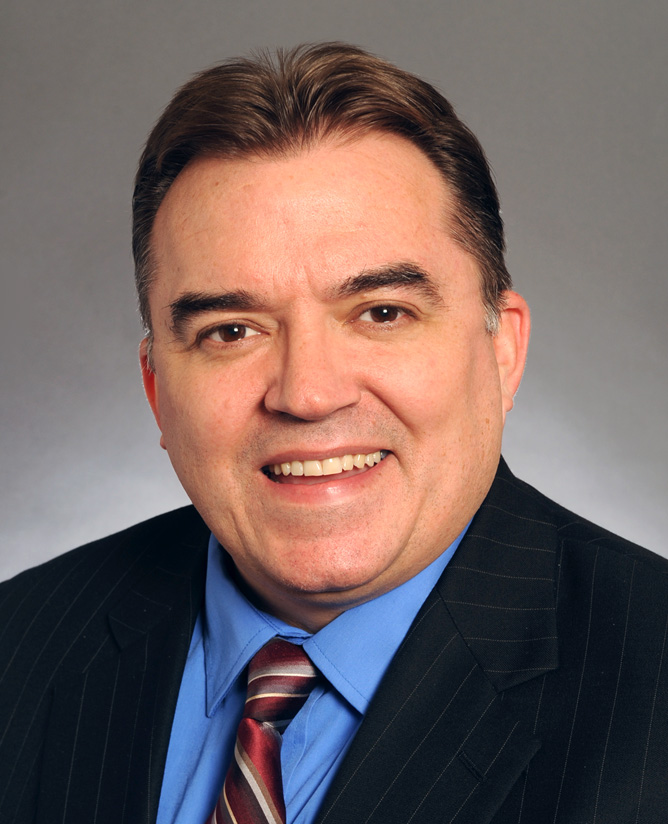
Sen. John Hoffman
Sponsored bills
Maddy summarySF 2670 requires Minnesota's medical assistance program to individually price phototherapy lights (along with other specific medical equipment like customized tracheostomy tubes and electric patient lifts) instead of using bulk pricing. This change applies to providers billing under Minnesota's medical assistance program for services provided on or after July 1, 2015. The bill mandates that phototherapy lights be listed as individually priced items in reimbursement rates, excluding items covered under volume purchase contracts or specific programs like the preferred diabetic testing supply program. This directly affects medical suppliers and providers who bill for these items under Minnesota's health assistance programs. The requirement is part of an amendment to Minnesota Statutes section 256B.766, specifically under subdivision 9.
Maddy summarySF 2604 requires Minnesota's education commissioner to commission an independent cost-benefit analysis of the state's special education system. The analysis must identify Minnesota-specific special education requirements that exceed federal standards and evaluate both their educational benefits and associated costs. The resulting report, due to legislative education committees by February 2026, will help lawmakers assess potential trade-offs between student outcomes and cost efficiencies. This bill directly affects Minnesota's K-12 special education system and the legislative process for education funding and policy decisions. It does not change existing laws but mandates a review to inform future budget and policy choices.
Maddy summarySF 2606 modifies how funds are distributed through Minnesota's Corridors of Commerce transportation program. It sets specific regional funding targets: at least 25-27.5% for projects near I-494/I-694 (Metro Projects), at least 35-37.5% for projects in the broader metro area (Metro Connectors), and at least 35-40% for other regional projects (Regional Centers). The commissioner must calculate these percentages using funds from the current and prior two project rounds. This applies to all future funding awards starting the day after the bill becomes law.
Maddy summaryThis bill establishes the Council on Direct Support Professionals to address staffing shortages in the field. The council, made up of 18 members including state agency representatives, service providers, consumers, and advocates, will develop a statewide strategic plan to improve the availability of direct support services. These services help seniors and people with disabilities with daily living needs like personal care and community access. The bill also appropriates funds for this council's work, which directly affects direct support professionals and the individuals they serve.
Maddy summaryThis bill appropriates $500,000 from state bond funds to the city of Champlin for land purchases and planning to extend the Elm Creek Greenway Trail Corridor. The funds will connect Mississippi Crossings to Elm Creek Park Reserve, supplementing prior 2023 funding. The state will issue up to $500,000 in bonds under Minnesota law to cover this cost. The direct beneficiary is the city of Champlin, which will use the funds for trail development.
Maddy summaryThis bill modifies Minnesota's Board of Animal Health by increasing its membership from seven to eleven members. It establishes new requirements: three livestock producers, one tribal member with animal husbandry experience, three veterinarians (including one specializing in companion animals), two at-large members, one additional tribal member, and eight regional members (with no two from the same congressional district). The board must also include at least two public representatives not employed in agriculture or veterinary fields, and appointments must aim for gender and geographic balance. The changes take effect July 1, 2026, for new appointments, and the board will appoint a non-member veterinarian as executive director for one year.
Maddy summaryThis bill appropriates $450,000 for fiscal years 2026-2027 and $250,000 for fiscal year 2026 to fund employment support services for individuals with disabilities in Minnesota. It directs funds to Minnesota Diversified Industries (MDI) for two specific programs: (1) grants to create inclusive employment opportunities, and (2) career skills training using virtual reality tools. MDI must report on participant demographics, program hours, employer outreach, and recommendations by January 2028. The funding is one-time and focuses on expanding accessible job training and placement services for people with disabilities.
Maddy summaryThis bill amends Minnesota's social work licensure laws to clarify requirements for provisional licenses. It specifically adds eligibility for students graduating from social work programs in "candidacy status" (pending full accreditation) to obtain temporary licenses, alongside existing requirements like passing exams and completing degree coursework. The changes apply to both baccalaureate and graduate students, requiring them to submit similar documentation as fully accredited program graduates. Provisional license holders must identify as "Temporary License Baccalaureate Social Worker" or similar, cannot use licensed credentials until full licensure, and must follow supervision rules. The bill does not create new license types but streamlines existing processes for a specific group of applicants.
Maddy summaryThis bill appropriates $2.5 million from the general fund for the Minnesota Black Farmers Association to purchase advanced farming equipment (including skid steers and John Deere tractors with attachments) for a cooperative of Black veteran farmers. The funds would be awarded by the Commissioner of Agriculture as a grant to the Association, which would then provide the equipment for use by the cooperative members. The bill directly affects Black veteran farmers through this cooperative and the Minnesota Black Farmers Association as the grant recipient. It is a funding measure with no policy changes beyond the allocation of state resources for equipment access.