

Maddy summaryThis bill requires Minnesota driver's licenses issued to individuals without lawful immigration status to display their immigration status on the card. The amendment modifies state statutes governing driver's license applications and license design to ensure noncompliant licenses clearly indicate the holder's immigration status while maintaining existing requirements for citizenship verification on enhanced licenses. The legislation affects all applicants seeking driver's licenses or identification cards in Minnesota, with specific provisions for how applications must be processed and what information must appear on issued licenses. The bill does not change residency requirements or the ability to obtain a license, but adds a new disclosure requirement for those whose immigration status does not meet federal standards.
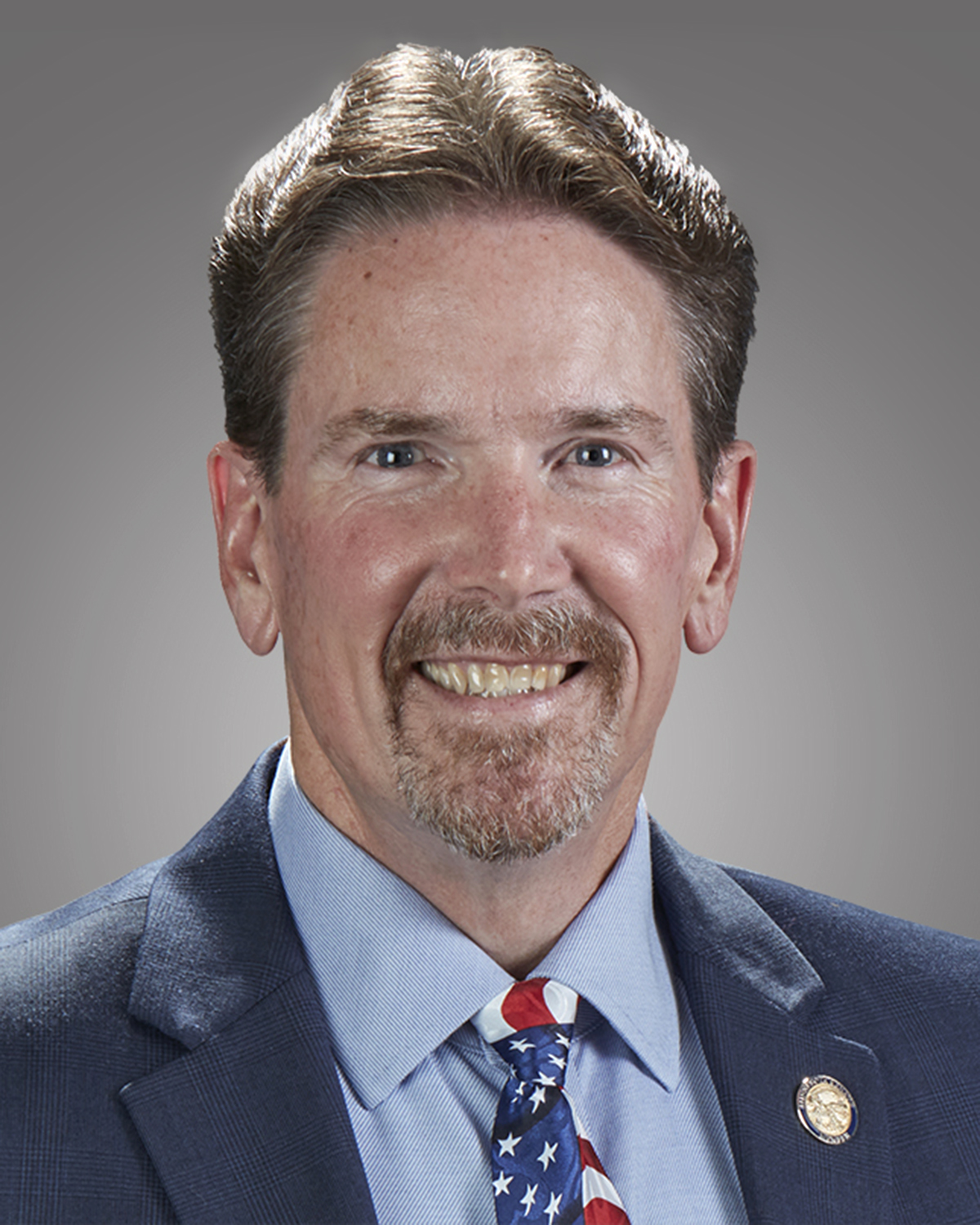
Sen. Mark Koran
Sponsored bills
Maddy summaryThis bill modifies Minnesota's requirements for marriage and family therapists to obtain a license through reciprocity with other states. It allows the state board to issue licenses to out-of-state therapists who meet specific criteria, including holding a current unrestricted license in their home jurisdiction, maintaining good standing without disciplinary actions, having no disqualifying criminal convictions, and passing a Minnesota jurisprudence examination. The legislation updates Minnesota Statutes 148B.35 to establish these new conditions for obtaining a license through reciprocity rather than completing the full Minnesota licensure process.
Maddy summaryThis bill modifies Minnesota family law to establish a rebuttable presumption that it is in a child's best interest to maximize their time with each parent, aiming to maintain strong parent-child relationships. It requires courts to include specific schedules for regular parenting time, including holidays and school breaks, and mandates written findings when deviating from the 50 percent time presumption. The bill outlines specific circumstances under which courts may deviate from equal time, such as parental mental illness, substance use issues, scheduling conflicts, distance between parents, or special needs of the child. Additionally, it creates a standardized form for self-represented parents to request parenting time modifications and requires courts to assess each parent's ability to comply with the awarded schedule.
Maddy summaryThis bill authorizes Chisago County to implement a local sales and use tax of 0.5% to fund specific county projects and administrative costs. The tax would apply to purchases made within the county and would be collected alongside existing state and local taxes. Revenue from the tax must be used for tax administration, eligible projects under state law, and any associated bond payments. The county retains the authority to issue bonds to finance these projects without requiring a separate voter election. The county may also end the tax at any time through a new ordinance.
Maddy summaryThis bill exempts elected officials in Minnesota from the state's Paid Leave Law, meaning they would not be required to participate in or contribute to the paid leave program. The legislation directly affects state and local government officials, including members of the legislature and judiciary, by removing them from the definition of covered employees under the law. Key provisions amend existing statutes to explicitly exclude elected officials, legislative members, and judicial members from paid leave coverage while allowing certain entities to opt into the program if they choose. The bill also clarifies that seasonal employees remain excluded from coverage, maintaining the current structure for that category of workers.
Maddy summaryThis bill establishes the Transactional Gold and Silver Act in Minnesota, which would recognize gold and silver bullion as legal tender for private transactions and state obligations if the state agrees to accept it. The legislation requires the commissioner of commerce to authorize a bullion depository that stores physical gold and silver, operates an electronic payment system backed by actual metal reserves, and allows account holders to buy, sell, save, or spend these metals. While gold and silver would be recognized as legal tender, the bill explicitly states that individuals and businesses are not required to accept them as payment. The commissioner must also create rules for depository operations and submit a report on the implementation of the system.
Maddy summaryThis bill authorizes the city of Taylors Falls to impose a 0.5% local sales and use tax if approved by voters in a special election. The tax revenue must be used to cover the costs of collecting the tax and to fund specific projects, including $600,000 for a community center, $1,000,000 for a river walk and trail system, and $400,000 for a town square. The legislation also allows the city to issue up to $2,000,000 in bonds to help finance these projects, with repayment coming from the tax revenue or other city funds. The tax would expire after 20 years or once the projects are fully funded, whichever comes first, with any remaining funds going to the city's general fund.
Maddy summarySF 3750 would require Minnesota's commissioner of labor and industry to update state building rules, specifically removing a requirement for Group E schools to construct storm shelters. This change directly affects Minnesota schools classified as Group E under current building codes, meaning those schools would no longer need to build storm shelters per the amended rules. The bill modifies Minnesota Rules part 1305.0423 to exclude Group E schools from the storm shelter mandate, using an existing rulemaking exemption process. The policy change simplifies construction requirements for these specific schools without creating new obligations.
Maddy summarySF 3849 requires Minnesota's Department of Human Services (DHS) and Department of Children, Youth, and Families (DCYF) to disclose the existence of ongoing investigations into possible overpayments of public funds to service providers or recipients within 30 days of a written request. This affects service providers and recipients who may be under investigation for potential overpayments of state benefits. The bill amends existing law to mandate this 30-day disclosure timeline, replacing previous requirements that allowed agencies to withhold such information without a specific time limit. It does not change the substance of investigations or payment decisions, only the disclosure process for the investigation's existence.
Maddy summaryThis bill requires Minnesota licensing boards to automatically suspend or revoke a license, or refuse license renewal, when a licensed professional or applicant is convicted of specific theft or fraud offenses. It directly affects individuals holding state-licensed professions (like healthcare, finance, or trades) who face convictions under listed statutes, including fraud (e.g., 609.23, 609.52) or theft (e.g., 609.2231, 609.496). The key provision mandates that boards take this action without discretion upon a court conviction for any of the 14 specified offenses. The law applies to all licensed professionals covered under Minnesota Statutes 214.10, effective immediately after enactment.