

Maddy summaryThis bill (SF 1221) modifies Minnesota law to allow lawful firearm carry and possession at the State Fairgrounds. It amends statutes so that the State Agricultural Society (which operates the fairgrounds) cannot prohibit firearms in fairgrounds bylaws, as long as the prohibition aligns with Section 624.714. The key mechanism requires any private establishment (like the fairgrounds) to follow strict posting rules - using a specific sign at every entrance - to legally restrict firearms; otherwise, firearm possession remains permitted. The law applies specifically to the State Fairgrounds and takes effect August 1, 2025.
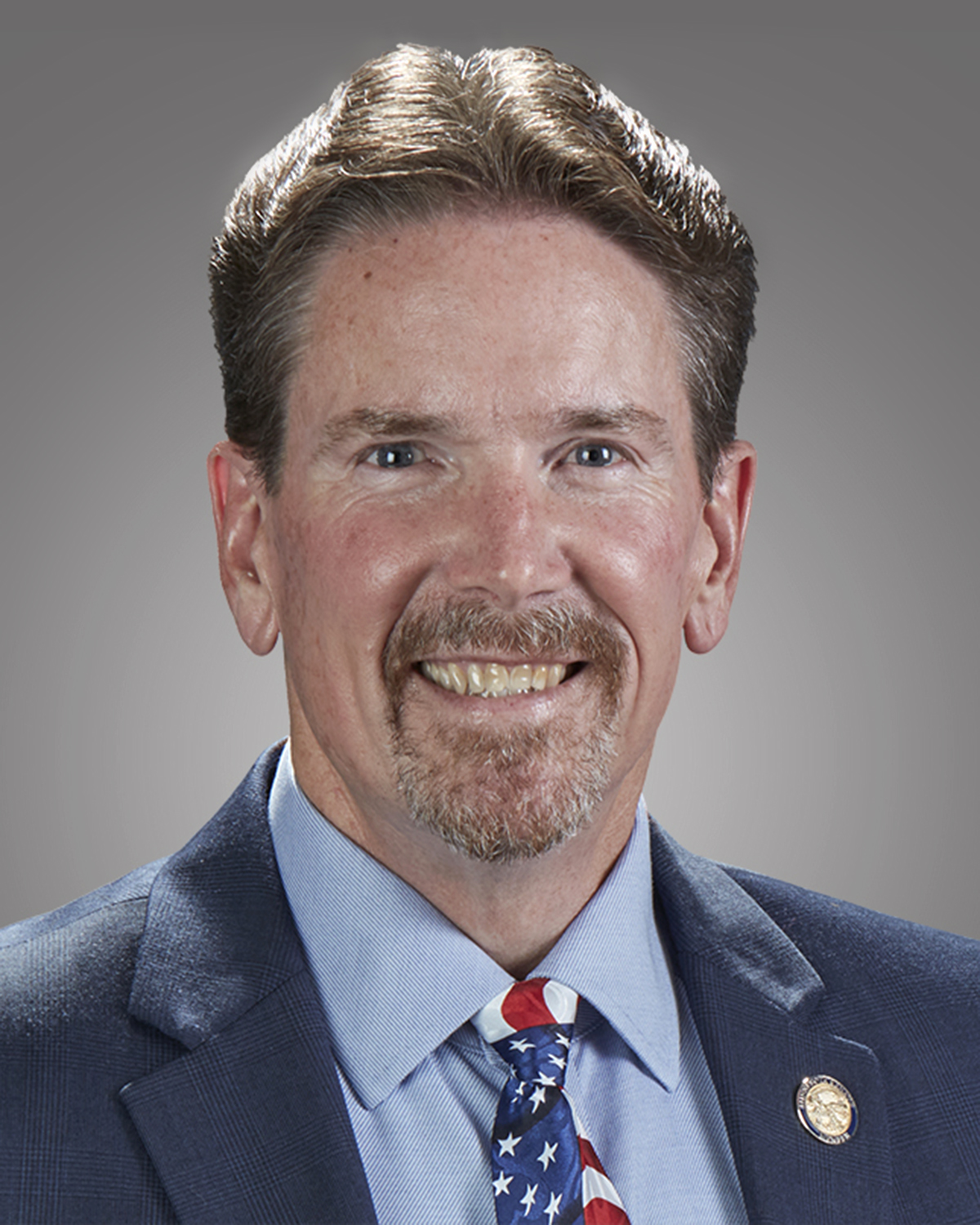
Sen. Mark Koran
Sponsored bills
Maddy summaryThis bill authorizes political parties, candidates, or local officials to appoint voters as "challengers" to observe early and absentee voting locations. For partisan elections, each major party can appoint one challenger per precinct; for nonpartisan races, each candidate can appoint one. Challengers must be Minnesota residents (proving residency via state ID), cannot use undeliverable mail lists to challenge voters, and are barred from interfering with voting or handling voter records. The bill updates election law to explicitly include early/absentee voting locations under existing challenger rules.
Maddy summaryThis bill repeals the Minnesota Rehabilitation and Reinvestment Act (Minnesota Statutes 2024, sections 244.40-244.51) and related provisions from Laws 2023, chapter 52, article 12. It directly affects the state corrections system by removing the legal framework for rehabilitation programs, including definitions and mechanisms like earned incentive release credits. The bill does not create new policy but eliminates existing statutes governing incarcerated individuals' rehabilitation plans and supervision terms. This is a procedural repeal with no new provisions.
Maddy summarySF 1020 establishes a standardized 7- to 10-day filing period (excluding holidays) for candidates seeking to fill legislative vacancies through special elections in Minnesota. This bill directly affects voters and candidates in special elections for state legislative seats, applying to all vacancy scenarios covered under current law. The key change is replacing flexible filing period language with a fixed minimum and maximum window, ensuring consistency regardless of when the vacancy occurs or whether the legislature is in session. The policy takes effect for vacancies occurring on or after the bill's final enactment date.
Maddy summaryThis bill appropriates $2,023,000 from state bond proceeds to fund the reconstruction of Myrtle Street in Stillwater, Minnesota, between Owens Street and Main Street. The funds will cover design, reconstruction, and replacement of sidewalks, curbs, gutters, and associated public infrastructure on this specific street segment. The state will issue up to $2,023,000 in bonds under Minnesota law to provide this funding, with the money granted directly to the City of Stillwater. The appropriation becomes effective upon final enactment.
Maddy summarySF 1004 proposes a constitutional amendment that would limit Minnesota's state spending growth to match inflation plus population growth. If adopted, it would require the state to calculate annual spending limits using the U.S. Bureau of Labor Statistics' Consumer Price Index for Minneapolis-St. Paul and federal population estimates. The amendment excludes federal funds, tax refunds, and certain other spending categories from the calculation. It would require voter approval in the 2026 election and allows temporary exceptions with a 60% legislative vote. The bill directly affects how the state budgets for all programs except those specifically excluded.
Maddy summaryThis bill authorizes $1,550,000 in state bonds to fund the design and engineering work for Oak Park Heights' water infrastructure improvements targeting PFAS chemicals (commonly called "forever chemicals") in drinking water. The funds will go directly to the city for planning upgrades to municipal wells and treatment systems to remove PFAS. The state will sell bonds under existing law to cover this cost, with the money coming from the bond proceeds fund. The bill focuses solely on the planning phase, not construction or operational costs. It affects Oak Park Heights residents by addressing PFAS contamination in their local water supply.
Maddy summaryThis bill requires Minnesota's Commissioner of Revenue to create an online system for taxpayers to claim refunds on political contributions. It directly affects individuals who contribute $10+ to candidates or parties (eligible for up to $75 individually or $150 for couples) and political organizations that must issue electronic refund receipts. Key provisions include mandating unique receipt validation numbers, enabling secure electronic data sharing between the Campaign Finance Board and Revenue Department, and classifying receipt data as nonpublic. The system becomes effective January 2027, with civil penalties of up to $3,000 for improper receipt issuance.
Maddy summarySF 1021 would repeal Minnesota's current authorization for absentee ballot drop boxes. The bill amends statute 203B.08 to remove the option for voters to deposit ballots in drop boxes and repeals statute 203B.082, which established security requirements for those drop boxes (like 24-hour recording and weatherproofing). This change directly affects voters who use drop boxes and election officials who manage them, eliminating a method for returning absentee ballots. The bill makes no new provisions for ballot return; it simply removes the existing drop box authorization.
Maddy summarySF 997 amends Minnesota law to require that subscribers to community solar gardens must reside in the same county as the solar facility, removing the previous allowance for subscribers in contiguous counties. This change directly affects potential subscribers who currently live in neighboring counties but would no longer qualify under the new requirement. The bill modifies Minnesota Statutes section 216B.1641, specifically changing the residency rule from "same county or contiguous county" to "same county" for all community solar garden subscriptions. The policy change applies to all new and existing community solar programs under this statute, limiting participation to residents within the facility's immediate county. This is a straightforward geographic eligibility adjustment with no other changes to subscription size, ownership limits, or program structure.