

Maddy summaryThis bill authorizes $47 million in state bonds to fund highway improvements on Interstate 35 and two county roads (CSAH 19 in Stacy and CSAH 22 in Wyoming) in Chisago County. The funds will cover environmental analysis, design, engineering, and construction for these corridor projects. The money comes from bond sales, with $30 million allocated for CSAH 19 and $17 million for CSAH 22. It directly affects Chisago County residents and travelers using these specific roadways. The bill does not change traffic laws or regulations but provides funding for physical infrastructure upgrades.
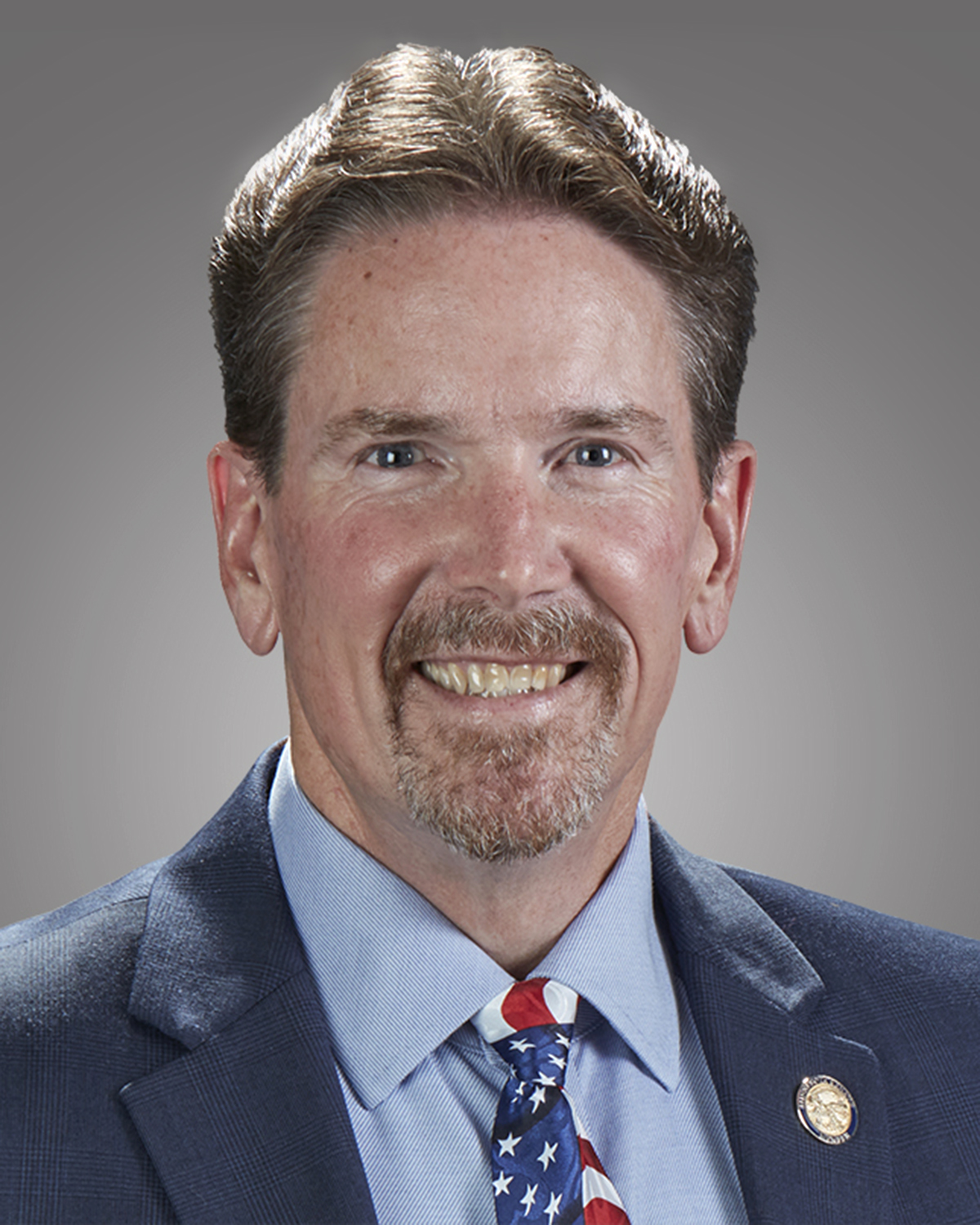
Sen. Mark Koran
Sponsored bills
Maddy summarySF 379 establishes a $20 million state-funded grant program to help Minnesota counties and cities improve cybersecurity. It provides grants covering up to $25,000 per project for eligible local governments that lack resources to access existing federal or state cybersecurity programs. Grants can fund specific cybersecurity tools and services like firewalls, data backups, email security, and professional consulting, with a total cap of $1 million per jurisdiction. Recipients must report annually on fund usage, and the commissioner must submit an annual report to the legislature detailing all grants awarded. The program targets critical infrastructure protection and equitable geographic distribution of funds.
Maddy summarySF 2693 modifies Minnesota's requirements for verifying a candidate's residence on an affidavit of candidacy. Candidates must now submit proof of address (such as a driver's license or approved documentation) and can request privacy for their address if they provide safety documentation (e.g., police report or order for protection). False statements on these forms carry criminal penalties, including up to 90 days in jail or a $10,000 fine. The bill applies to most elected offices, excluding judicial, county attorney, and sheriff positions.
Maddy summaryThis bill requires voters who register in person on election day to cast provisional ballots instead of regular ballots. It directly affects voters who register at polling places on Election Day but do not present acceptable identification documents at the time of registration. The key provision amends election statutes to mandate that these voters receive provisional ballots, which must later be verified for eligibility by election officials. This change ensures that same-day registrants' votes are counted only after verification, aligning with existing provisional ballot procedures for other voter registration scenarios.
Maddy summarySF 2702 changes Minnesota's state primary election date from August to May, affecting all voters participating in statewide primaries and requiring adjustments for city and town primary elections in specific circumstances. The bill amends multiple election statutes (including sections on polling place rules) to adjust administrative deadlines, such as moving the deadline for establishing combined polling places from November 1 to February 1 for non-presidential primaries. These changes ensure election logistics align with the new May primary timing. The bill does not alter voting eligibility, procedures, or voter requirements.
Maddy summarySF 2697 modifies Minnesota's election administration rules, primarily affecting voters registering on election day and residential facilities. It expands election day registration by allowing registered voters to vouch for up to eight residents in their precinct (e.g., in nursing homes or shelters) using a sworn statement, while requiring residential facilities to provide employee lists to county auditors 20 days before elections. The bill also clarifies election judge party affiliation rules, adds reporting requirements for election day registration, and specifies acceptable proof of residence. These changes directly impact voters seeking same-day registration, residential facility operators, and election judges handling registration at polling places.
Maddy summaryThis bill requires city officials in Minnesota cities classified as first, second, or third class to file a statement of economic interest with the state Campaign Finance and Public Disclosure Board within 60 days of taking office. It updates existing state law to explicitly include these local city officials under the economic interest filing requirement. The filing aims to increase transparency about potential conflicts of interest for officials in these municipalities. The requirement applies to all such city officials upon assuming their roles, not just those running for office. This is a routine disclosure measure focused on accountability, not policy changes to services or programs.
Maddy summarySF 2696 allows candidates, their representatives, and political parties (those appearing on the ballot) to observe absentee ballot board operations and election recounts. It requires ballot boards to permit one candidate representative during envelope acceptance/rejection and a second during ballot opening and counting, while allowing observation of other election materials handled by the board. For recounts, the bill mandates unsealing/resealing ballots in public view, designates a public observation area (with cell phones permitted if non-disruptive), and lets each candidate have one representative for precinct sorting and an additional one for counting. The bill does not alter voting procedures but establishes specific, structured rules for transparency during these processes. Ballot boards and recount officials must ensure observation does not interfere with ballot handling.
Maddy summaryThis bill appropriates $18 million from state transportation funds to construct roundabouts at four specific intersections in Chisago County: Shafer (U.S. Highway 8 and County Highway 21), Almelund (U.S. Highway 95 and County Highway 12), Sunrise (U.S. Highway 95 and County Highway 9), and North Branch (U.S. Highway 95 and County Road 67). The funds cover environmental analysis, design, engineering, and construction for these safety improvements. The state will issue bonds up to $18 million to finance the project, with proceeds deposited into the trunk highway fund. These changes directly affect drivers and residents in those four Chisago County communities by upgrading traffic intersections.
Maddy summaryThis bill requires voters to verify their identity when applying for absentee ballots in Minnesota. It mandates that applicants provide either a Minnesota driver's license number, state ID number, or the last four digits of their Social Security number during the application process. The Secretary of State must then verify this information against government databases before mail delivery of the ballot. This applies directly to voters submitting absentee ballot applications electronically or by mail, ensuring only verified applicants receive absentee ballots by mail.