

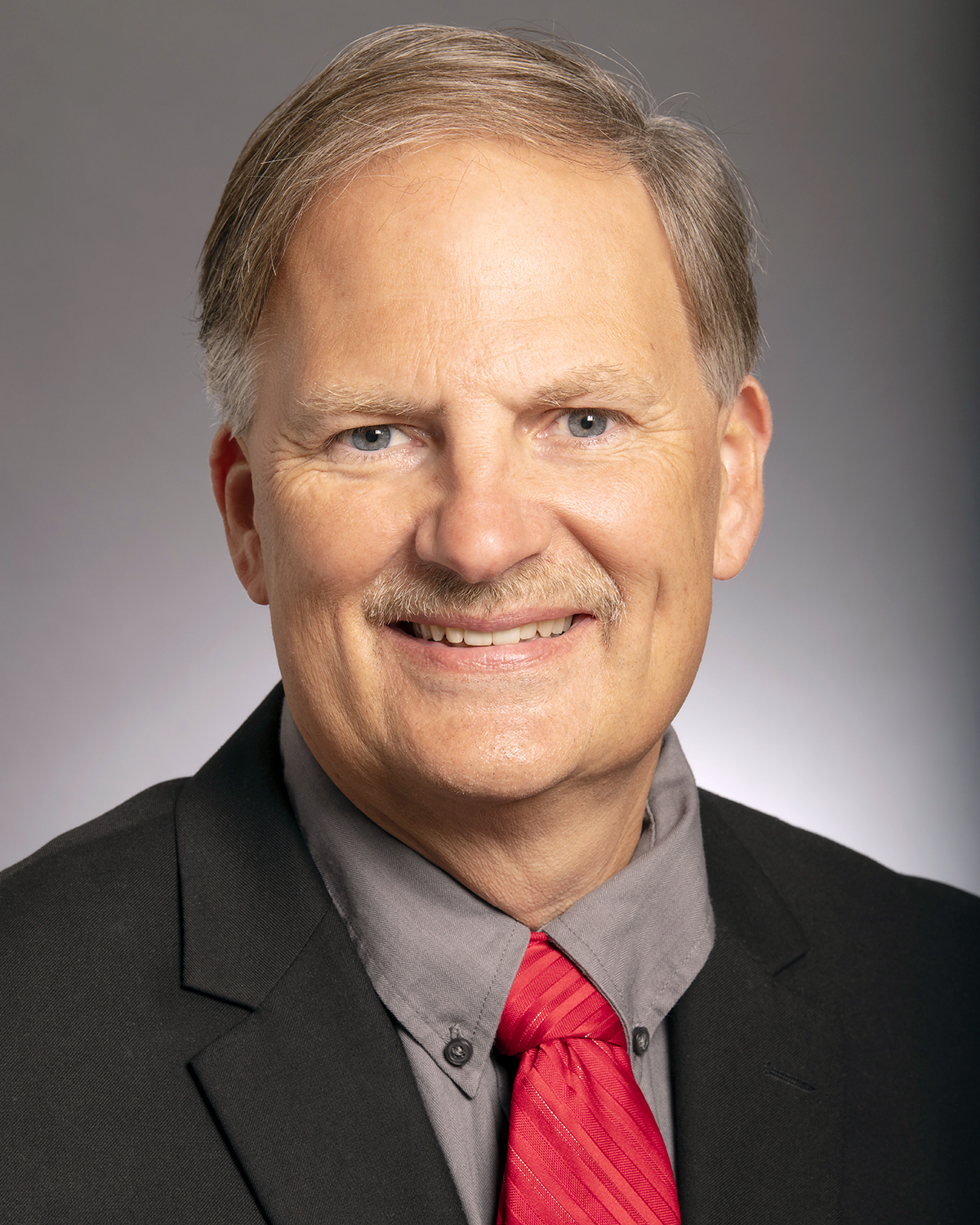
Photo of Gene Dornink
R Minnesota Senate · District 23 On the 2026 ballot

Sen. Gene Dornink

Compare
Total votes
26
all sessions
Attendance
100%
of floor votes
Near the chamber average
With party
96%
of cast votes
Near the chamber average
Bipartisan score
2%
crosses aisle rarely
Near the chamber average
Sponsored
381
bills & resolutions
Lower than 92% of chamber peers
Committees
2
assignments
381 bills and resolutions

Sponsored bills

Total
381
Primary
148
Co-sponsor
233
This page
381
matching current filters
Co-sponsor SF 4118
In committee · Minnesota Senate · Co-sponsor
Health professional education loan forgiveness program for physicians licensed to practice medicine in the area of obstetrics and gynecology appropriation

Maddy summaryThis bill appropriates state funds to expand a loan forgiveness program specifically for physicians specializing in obstetrics and gynecology who practice in designated rural areas of Minnesota. The funding, allocated for fiscal years 2027 and 2028, will be used to repay education loans for eligible OB/GYN doctors working in rural communities. If there are not enough qualified OB/GYN applicants to use all the funds, the remaining money will be transferred to other eligible medical professions for loan forgiveness. The bill is currently in the early stages of the legislative process and has been referred to the Health and Human Services committee for review.

In committee Mar 4, 2026 1 co-sponsor
Co-sponsor SF 4049
In committee · Minnesota Senate · Co-sponsor
Waseca County authorization to impose a local sales tax

Maddy summarySF 4049 would allow Waseca County to impose a local sales tax of up to 0.375% (three-eighths of one percent) on retail purchases, subject to voter approval. The tax revenues must cover collection costs and finance up to $45 million for a new judicial center, including associated bond costs. The county may issue bonds to fund this project without triggering standard debt limits or requiring a separate bond election. The tax would expire after 30 years or once the project costs are fully covered, whichever comes first. This bill directly affects Waseca County residents and businesses through the new local tax.

In committee Mar 4, 2026 1 co-sponsor
Primary SF 3782
In committee · Minnesota Senate · Lead sponsor
Certain S corporations exemption from the paid leave program

Maddy summarySF 3782 exempts certain corporate officers of S corporations from Minnesota's paid leave program. Specifically, it adds a provision stating that corporate officers who own 25% or more of their S corporation (directly or through subsidiaries) are excluded from the definition of "employee" under the law. This means these officers would no longer qualify for paid leave benefits under the program. The bill amends Minnesota Statutes 2024, section 268B.01, subdivisions 15(c)(4) and 17(d), to include this exclusion.

In committee Mar 2, 2026 0 co-sponsors
Co-sponsor SF 3683
In committee · Minnesota Senate · Co-sponsor
New residential energy code adoption requirement repealer

Maddy summaryThis bill repeals a requirement that would have mandated Minnesota to adopt new residential energy codes starting in 2026. It deletes the specific provision (previously section 326B.106, subdivision 1(g)) that required the commissioner to adopt codes aiming for a 70% reduction in residential building energy use by 2038. The repeal eliminates future updates to residential energy standards, removing a requirement that would have affected builders, developers, and local jurisdictions implementing construction codes. This change directly alters the process for updating Minnesota's residential energy efficiency rules without establishing new targets.

In committee Mar 2, 2026 1 co-sponsor
Co-sponsor SF 3686
In committee · Minnesota Senate · Co-sponsor
Rotational grazing pilot program establishment and appropriation

Maddy summarySF 3686 establishes a rotational grazing pilot program in Minnesota, providing grants to farmers for implementing or improving rotational grazing systems. The program awards up to $25,000 per farmer (requiring a 50% match from the farmer) to establish perennial forages or purchase infrastructure like fencing and watering systems, with funds reimbursed after implementation. It aims to enhance prairie/woodland use and protect water sources by controlling livestock density and rotation. The program is funded with $2 million from the environment trust fund for fiscal year 2027, requiring a 2028 report on grant distribution and results.

In committee Mar 2, 2026 1 co-sponsor
Primary SF 4016
In committee · Minnesota Senate · Lead sponsor
Grain indemnity account usage modification

Maddy summaryThis bill modifies Minnesota's grain indemnity account rules to prevent funds from being moved out of the account unless it holds over $15 million. It directly affects the state agency managing grain indemnity payments by requiring a minimum balance before any transfers can occur. The bill clarifies existing uses of the account, including paying valid claims, premium refunds, and administrative costs like processing fees and record keeping. It does not create new programs but sets a specific threshold to ensure sufficient funds remain in the account for ongoing operations.

In committee Mar 2, 2026 0 co-sponsors
Co-sponsor SF 3730
In committee · Minnesota Senate · Co-sponsor
Commissioner of labor and industry requirement to adopt rules about unvented attics and enclosed rafter assemblies

Maddy summarySF 3730 requires Minnesota's Commissioner of Labor and Industry to adopt rules for unvented attics and enclosed rafter roof systems in residential buildings. The bill mandates that these systems must use air-impermeable insulation with an R-30 rating (or equivalent U-Factor of 0.038) to meet energy code standards, but only if heating, cooling, and ductwork equipment is located inside the attic. This directly affects residential builders, inspectors, and property owners subject to Minnesota's State Building Code. The rulemaking will clarify specific insulation and air-sealing requirements for these roof systems, ensuring compliance with energy efficiency standards.

In committee Feb 23, 2026 1 co-sponsor
Primary SF 3689
In committee · Minnesota Senate · Lead sponsor
City of Austin local sales and use tax authorization provision

Maddy summarySF 3689 authorizes the City of Austin, Minnesota, to impose a 0.5% local sales and use tax, subject to voter approval, to fund a specific law enforcement center project. The tax revenues must cover the costs of land purchase, site work, construction, and maintenance for the center, up to $28.4 million plus associated bonding costs. The city may issue bonds to finance the project without triggering debt limits or requiring additional voter approval for the bonds. The tax expires after 20 years or once the $28.4 million project cost is fully covered, whichever comes first. This bill directly affects Austin residents through the new tax and the city’s use of funds for the law enforcement facility.

In committee Feb 19, 2026 0 co-sponsors
Co-sponsor SF 449
In committee · Minnesota Senate · Co-sponsor
Public television grants appropriation

Maddy summaryThis bill appropriates $1.75 million annually for fiscal years 2026-2027 for matching grants to public television stations, $350,000 for equipment grants, and $1 million for block grants. The commissioner of administration must consider recommendations from the Minnesota Public Television Association when distributing these funds. The grants directly support public television stations across Minnesota under existing law (Minnesota Statutes, section 129D.13).

In committee Feb 17, 2026 1 co-sponsor
Co-sponsor SF 908
Signed into law · Minnesota Senate · Co-sponsor
Provisions governing the certification of underground telecommunications installers modification

Maddy summaryThis bill requires underground telecommunications installers working near existing utilities to be "safety-qualified" starting in 2025. It mandates that certified installers must perform utility location checks (via hand/hydro-excavation) and monitor directional drilling operations, with at least two certified installers present during drilling. Installers must complete a 40-hour training course covering utility safety, incident response, and equipment use, pass an exam, and take 4-hour refresher courses every three years to maintain certification. The rule applies to all installations within 10 feet of existing utilities or crossing them, beginning July 1, 2025, in the seven-county metro area and January 1, 2026, statewide - excluding private property installations under 36 inches deep.

Signed into law May 20, 2025 1 co-sponsor
Showing 21 to 30 of 381 bills
Previous 1 2 3 4 39 Next