

Maddy summarySF 1834 creates a Commercial Driver Training Assistance Program to provide financial aid for individuals pursuing commercial driver's licenses (CDLs), requiring applicants to have job-shadowed with motor carriers and hold a valid Minnesota driver's license. The program allocates funds on a first-come, first-served basis, with no more than 3% of funds used for administration. It also amends road test procedures to allow school districts, school bus companies, and driver education programs to partner for administering road tests, with reimbursement for testing services. Additionally, the bill adds a new definition for "road test" and clarifies that the commissioner cannot schedule recurring testing times with driver education programs.
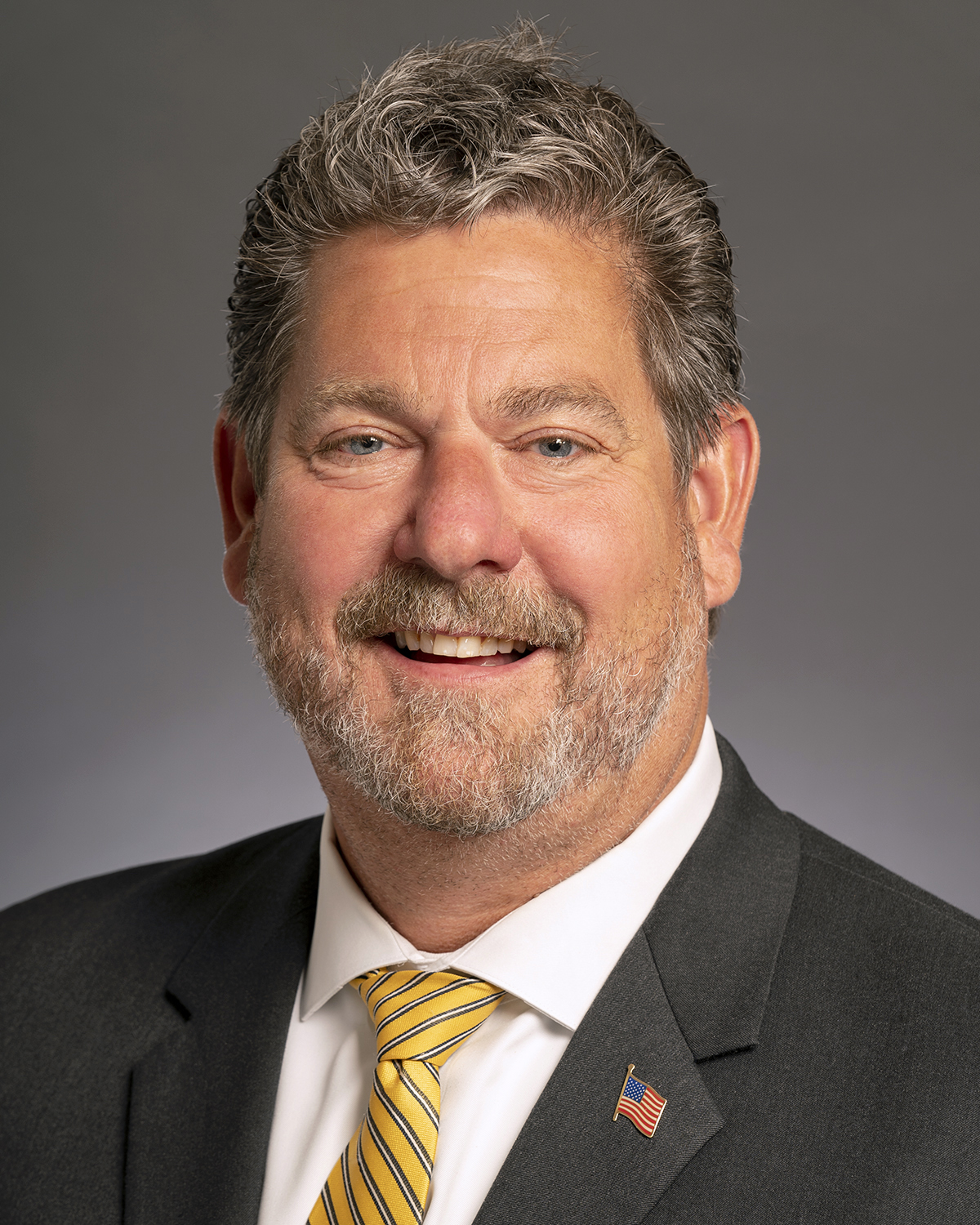
Sen. John Jasinski
Sponsored bills
Maddy summarySF 1339 appropriates $20 million from state bonds to fund the Greater Minnesota Housing Infrastructure grant program, administered by the Minnesota Housing Finance Agency. The bill authorizes the sale of up to $20 million in state bonds to provide these funds specifically for housing infrastructure projects in Greater Minnesota (non-Metro areas). This funding supports housing development through grants under Minnesota Statutes section 462A.395, targeting infrastructure needs like water, sewer, or site preparation for housing projects. The bill directly affects eligible housing developers and communities in Greater Minnesota by providing dedicated capital for infrastructure improvements.
Maddy summaryThis bill eliminates all-terrain vehicle (ATV) registration fees for Minnesota veterans with a 100% service-connected disability. Specifically, it exempts these veterans from the $60 public-use or $6 private-use registration fees under Minnesota Statutes §84.922, providing a three-year free registration. To qualify, veterans must provide proof of their 100% disability rating from the U.S. Department of Veterans Affairs or military retirement board. The exemption directly affects eligible veterans, not all ATV owners or general veterans.
Maddy summaryThis bill, SF 1159, changes Minnesota's state income tax law to allow veterans and surviving spouses of veterans to fully subtract their taxable Social Security benefits from their state taxable income. Currently, most taxpayers face income-based phaseouts that reduce this subtraction; this bill removes that limitation specifically for veterans and surviving spouses. It directly affects eligible veterans and surviving spouses who receive Social Security benefits and file Minnesota state income tax returns. The change applies to tax years beginning after December 31, 2024, and eliminates the income thresholds that previously reduced the subtraction amount for this group.
Maddy summaryThis bill appropriates $10.8 million from state bond proceeds to reconstruct County State-Aid Highway 50 from Kenrick Avenue to Klamath Trail in Dakota County, as part of the Interstate 35 interchange project. The funds will cover design, construction, right-of-way acquisition, pedestrian/bike facilities, utility relocation, and stormwater management for the corridor. Dakota County and the city of Lakeville are the direct recipients for these mobility and safety improvements. The state will issue up to $10.8 million in bonds under existing statutes to finance this project, effective upon final enactment.
Maddy summarySF 1321 modifies Minnesota's definition of "motor vehicle dealer" to include dealers licensed under the laws of contiguous states (like North Dakota or South Dakota). This change directly affects out-of-state dealers operating near Minnesota borders, allowing Minnesota officials to treat them as licensed dealers for specific purposes. The bill amends Minnesota Statutes section 168.002, subdivision 6, enabling the commissioner to consider these out-of-state licensed dealers as "dealers" under sections 168.27, 168.33, 168.345, and 168.346. The change takes effect October 1, 2025.
Maddy summarySF 289 authorizes Minnesota to issue up to $400 million in state bonds to fund local infrastructure. It appropriates $250 million for county road projects, prioritizing statewide/regional roads and rural safety improvements on county state-aid highways. An additional $150 million is allocated for bridge repairs, including matching federal funds to replace or rehabilitate deficient bridges, covering design, construction, and land acquisition costs. The funds directly support counties and local communities by improving road safety and bridge infrastructure. The bill enables these investments through bond financing rather than direct state budget spending.
Maddy summarySF 1280 prohibits local governments in Minnesota from adopting ordinances or policies that refuse to enforce traffic laws. It directly affects cities, towns, and local law enforcement agencies by banning any rules that restrict enforcement of traffic violations. The bill makes such policies void if enacted, requiring local authorities to enforce all traffic laws uniformly. This changes local policy by eliminating the ability to create "no enforcement" zones for traffic regulations.
Maddy summaryThis bill appropriates $10 million from state bonds to fund capital improvements for publicly owned transit systems in Greater Minnesota. It authorizes the state to sell up to $10 million in bonds, with the funds directed to the commissioner of transportation for projects like acquiring property, constructing facilities, and equipping transit systems under existing law. The funds would support capital projects for transit systems outside major urban areas. The bill creates a dedicated funding stream for infrastructure upgrades in rural and suburban transit networks.
Maddy summaryThis bill increases fines for driving without a valid license in Minnesota. It sets minimum fines at $300 for first offenses, $550 for offenses within 10 years of a prior violation, and $850 for two or more prior violations within that timeframe. The changes apply to drivers operating vehicles while their license is revoked, canceled, or disqualified (e.g., for commercial vehicles), with an exception for licenses expired less than three months. The new penalties take effect August 1, 2025, and directly affect individuals convicted of these driving violations.