

Maddy summaryMinnesota Senate File 395 creates special veterans' license plates for each branch of the U.S. armed forces (Army, Navy, Air Force, Marine Corps, Coast Guard, and Merchant Marine). It allows eligible veterans who do not qualify for existing veteran plates to obtain free plates displaying "VETERAN" and their branch's emblem, provided they pay standard registration fees and meet ownership criteria for passenger vehicles, motorcycles, or specific trucks. The plates must be designed in consultation with veterans' organizations and can be transferred to another qualifying vehicle owned by the same person. The bill takes effect January 1, 2026.
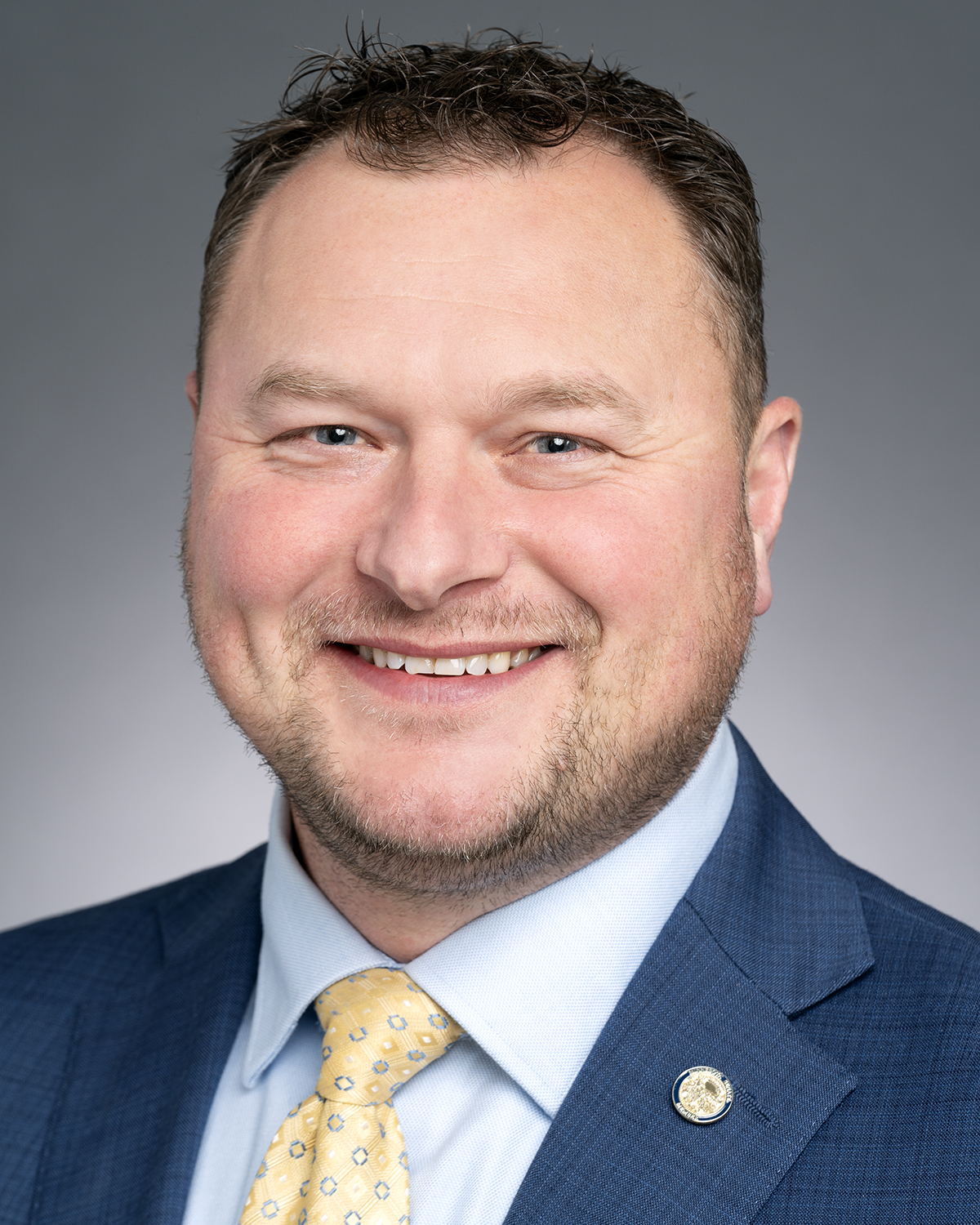
Sen. Andrew Lang
Sponsored bills
Maddy summaryThis bill amends Minnesota's public waters inventory process to update how certain wetlands are categorized. It requires the commissioner to reclassify types 3-5 wetlands as either public waters or wetlands based on three specific criteria: shoreland management classification, Cowardin wetland classification, or government ownership of the water body. Local governments, counties, and landowners receive 60 days to object to reclassifications before changes take effect. The bill also authorizes $1 million annually through 2032 to fund these map updates, which will correct errors, adjust trout stream tributaries, and add large quarries or pits meeting zoning criteria.
Maddy summaryThis bill allocates $2.5 million total ($1.25 million for each of fiscal years 2026 and 2027) from Minnesota's general fund to provide grants for meat, poultry, egg, and milk processing facilities. The funds support start-up costs, modernization, or expansion projects at these facilities, with each grant capped at $200,000. Unspent funds from these appropriations may roll over until June 30, 2028, for continued use under this program. The grants are administered by the Minnesota Department of Agriculture under an existing agricultural program.
Maddy summarySF 323 amends Minnesota law to create a new felony charge for drivers who flee police officers while operating a vehicle in a culpably negligent manner - defined as driving recklessly and creating an unreasonable risk of death or serious injury to others. It specifically targets cases where drivers knowingly flee officers but operate vehicles with reckless disregard for safety, adding a distinct penalty category under Minnesota Statutes § 609.487, subdivision 3a. This new offense carries a potential sentence of up to four years in prison or an $8,000 fine, separate from existing fleeing penalties. The bill modifies license revocation rules for such offenses and takes effect August 1, 2025, applying to crimes committed after that date.
Maddy summarySF 388 removes burial fees for spouses and dependents of eligible veterans at Minnesota state veterans cemeteries. The bill amends Minnesota Statutes 197.236, subdivision 9, to prohibit charging any fees for these groups' interment, replacing the previous fee schedule and waiver process. It appropriates funds from the general fund for fiscal years 2026 and 2027 to cover these uncompensated burial costs. This directly affects spouses and dependent children of veterans meeting eligibility criteria under U.S. Code, title 38, section 101(2). The policy change eliminates a cost barrier for families of veterans, ensuring no burial fees apply to these specific groups.
Maddy summaryThis bill authorizes Minnesota to issue free "Legion of Merit" special license plates to qualifying individuals. It directly affects recipients of the Legion of Merit military decoration who own eligible vehicles (passenger cars, pickup trucks, motorcycles, or RVs) for personal use. Key provisions include: the plates are issued at no cost, can be transferred to another vehicle owned by the same person without fee, and are exempt from certain registration fees. The plates must display "LEGION OF MERIT" and are effective for vehicles registered on or after January 1, 2026.
Maddy summarySF 306 appropriates $10 million from the general fund for the city of Litchfield's First District Association dairy cooperative to build a new wastewater industrial pretreatment facility. The funding covers design, construction, equipment, and furnishings for the facility, which treats wastewater from industrial sources before it enters public systems. This appropriation is in addition to prior funding from 2023 for the same project. The bill directly affects the cooperative and Litchfield's wastewater infrastructure, with funds allocated for fiscal year 2026.
Maddy summaryThis bill appropriates $3.5 million from state bonds to fund infrastructure upgrades in Lake Lillian, Minnesota. The funds will directly support the city's replacement of aging water pipes, sewer systems, and storm drains, plus street reconstruction. The Public Facilities Authority will administer the grant, with the money coming from state bond sales authorized under Minnesota law. The project specifically targets failing municipal infrastructure to improve public services. This is a direct funding allocation for one city's local infrastructure needs.
Maddy summaryThis bill appropriates $3 million from state bond proceeds to fund infrastructure improvements in Sacred Heart, Minnesota. The funds will directly support the city's aging water treatment system, water tower rehabilitation, wastewater system upgrades, and street reconstruction. The state will issue up to $3 million in bonds to cover these costs, following standard bond procedures under Minnesota law. The project aims to replace failing municipal infrastructure, benefiting Sacred Heart residents through improved water, sewer, and road systems.
Maddy summaryThis bill appropriates $500,000 from state bond proceeds to fund the renovation of an airplane hangar at the Little Falls/Morrison County Airport (also called Lindbergh Field). It authorizes the state to issue bonds to cover this cost, with funds going directly to the city of Little Falls, Morrison County, or both for activities like predesign, construction, and equipment. The project specifically targets the airport's hangar facility, not broader airport operations. The bill does not affect general public policy but provides targeted capital investment for local infrastructure.