

Maddy summaryThis bill appropriates $634,000 for fiscal year 2026 and $634,000 for fiscal year 2027 from the general fund to continue Minnesota's existing dairy development and business planning grant programs. It directly supports Minnesota dairy farmers by funding services like business planning grants under Minnesota Statutes §32D.30. The funding ensures ongoing access to technical assistance and financial support for dairy operations seeking to improve profitability and long-term planning. This is a continuation of current programs, not a new initiative, with no changes to eligibility or program structure.
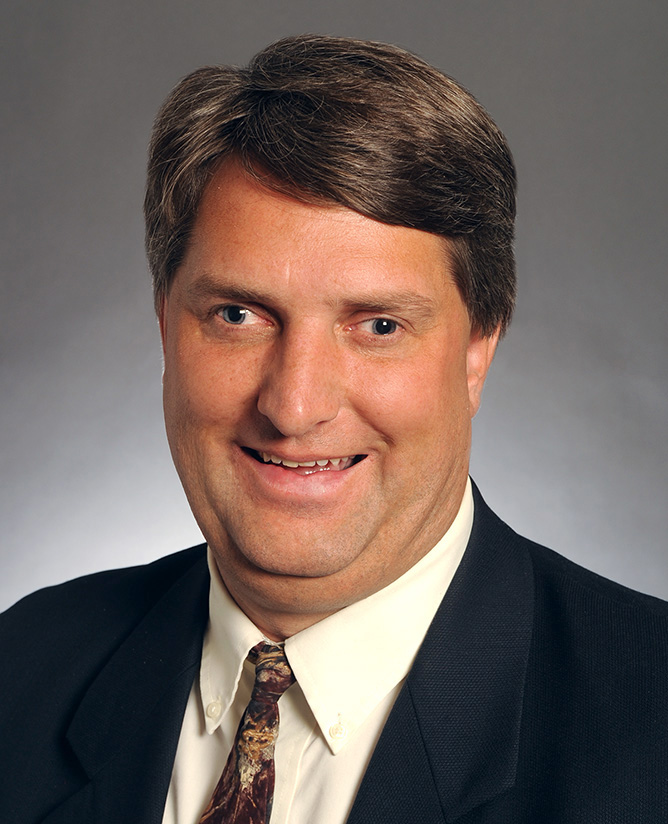
Sen. Torrey Westrom
Sponsored bills
Maddy summaryThis bill appropriates funds from the general fund for grants to Minnesota retail gas stations that sell fuel for vehicles manufactured after 2000. The grants help upgrade equipment to dispense E25 biofuel, covering up to 65% of costs (max $200,000 per station), to meet state biofuel goals. Eligible stations must have no more than ten locations in Minnesota and replace non-certified equipment. The commissioner must report annually on funded projects, including geographic distribution, metrics on leveraged funding, and support for minority- or women-owned businesses. The program directly supports fuel retailers expanding biofuel access while tracking program impact.
Maddy summaryThis bill creates a property tax exemption for agricultural lands used as riparian buffers (vegetated areas along waterways that protect water quality) on designated class 2a and 2b farmland. Landowners must apply through county assessors and maintain compliance with buffer requirements to qualify. Local governments lose tax revenue from the exemption but will receive annual reimbursements from the state, paid in two installments each year starting in 2026. The reimbursement amount equals the actual tax revenue lost due to the exemption.
Maddy summaryThis bill authorizes $1.5 million in state bonds to fund flood hazard mitigation projects in Area II of the Minnesota River Basin. It requires that for every $3 in state funds provided, $1 must be committed from nonstate sources (e.g., local governments or private partners) before state money is released. The funds will be administered by the Board of Water and Soil Resources to support capital improvements aimed at preventing or reducing flood damage in the specified basin area. This is a funding mechanism, not a new policy, focused on concrete flood risk reduction efforts.
Maddy summaryThis bill appropriates $6 million from state bond proceeds to fund a new interchange at the intersection of Interstate Highway 94 and 1st Avenue in Freeport. The funds cover design, engineering, demolition of an existing bridge, construction of the new interchange, and related infrastructure like pedestrian safety features and stormwater management. The city of Freeport will receive the grant to complete this transportation project, which directly affects local drivers, pedestrians, and businesses in the area. The state will issue bonds up to $6 million to cover the cost, following standard bond procedures for capital investments.
Maddy summarySF 590 would amend Minnesota Statutes section 624.714, subdivision 2, to lower the minimum age for applying for a permit to carry a pistol from 21 to 18 years old. This change would directly affect Minnesota residents aged 18 or older who meet other eligibility requirements, such as completing firearm safety training and passing background checks. The bill maintains existing requirements, including citizenship/residency status, prohibitions under specific criminal statutes, and not being listed in criminal gang databases. The key provision is solely the age reduction in the application criteria for permit-to-carry permits.
Maddy summaryThis bill adds a new tax subtraction for overtime pay in Minnesota's individual income tax code. It allows workers to subtract overtime earnings (wages, salaries, tips, or other compensation for hours over 40 in a workweek) from their taxable income. The provision directly affects Minnesota residents who earn overtime pay under state or federal wage laws. It becomes effective for tax years starting after December 31, 2024, reducing the taxable income for qualifying workers.
Maddy summaryThis bill (SF 655) does not regulate fireworks manufacture, sale, or use as its title suggests. Instead, it amends Minnesota tax statutes to change how revenues from specific sales are allocated. Key provisions direct 43.5% of tax revenues from motor vehicle repair and replacement parts (including parts sold with fireworks) to the highway user tax distribution fund, with additional percentages increasing annually through 2033. The bill affects state tax collection processes and funding for highway infrastructure, not fireworks consumers or vendors. The title is misleading; the bill’s actual focus is tax revenue allocation, not fireworks regulation.
Maddy summarySF 587 amends Minnesota's tax code to allow individuals to subtract gratuities (tips) received from employees when calculating their taxable income. This change directly affects Minnesota residents who earn tips as part of their income, such as servers or bartenders. The bill adds a new provision (subdivision 36) to Minnesota Statutes section 290.0132, defining "gratuities" per existing law and specifying they are deductible. The policy takes effect for taxable years starting after December 31, 2024. This is a concrete tax code adjustment, not a procedural change.
Maddy summaryThis bill modifies grant requirements for Minnesota's border-to-border broadband development program. It adds new priority considerations for grant applications, including projects serving unserved/underserved areas, community institutions, and telehealth needs. Most significantly, it requires grant recipients to commit to "workforce best practices" - either paying prevailing wages with enforcement or providing 40+ hours of annual skills training, employer-paid health insurance, and 15% retirement contributions. These requirements must be an express condition of grant agreements, and the state must award at least 50% of general fund grants to applicants who adopt these practices. The bill directly affects broadband project applicants and contractors receiving state grants under this program.