

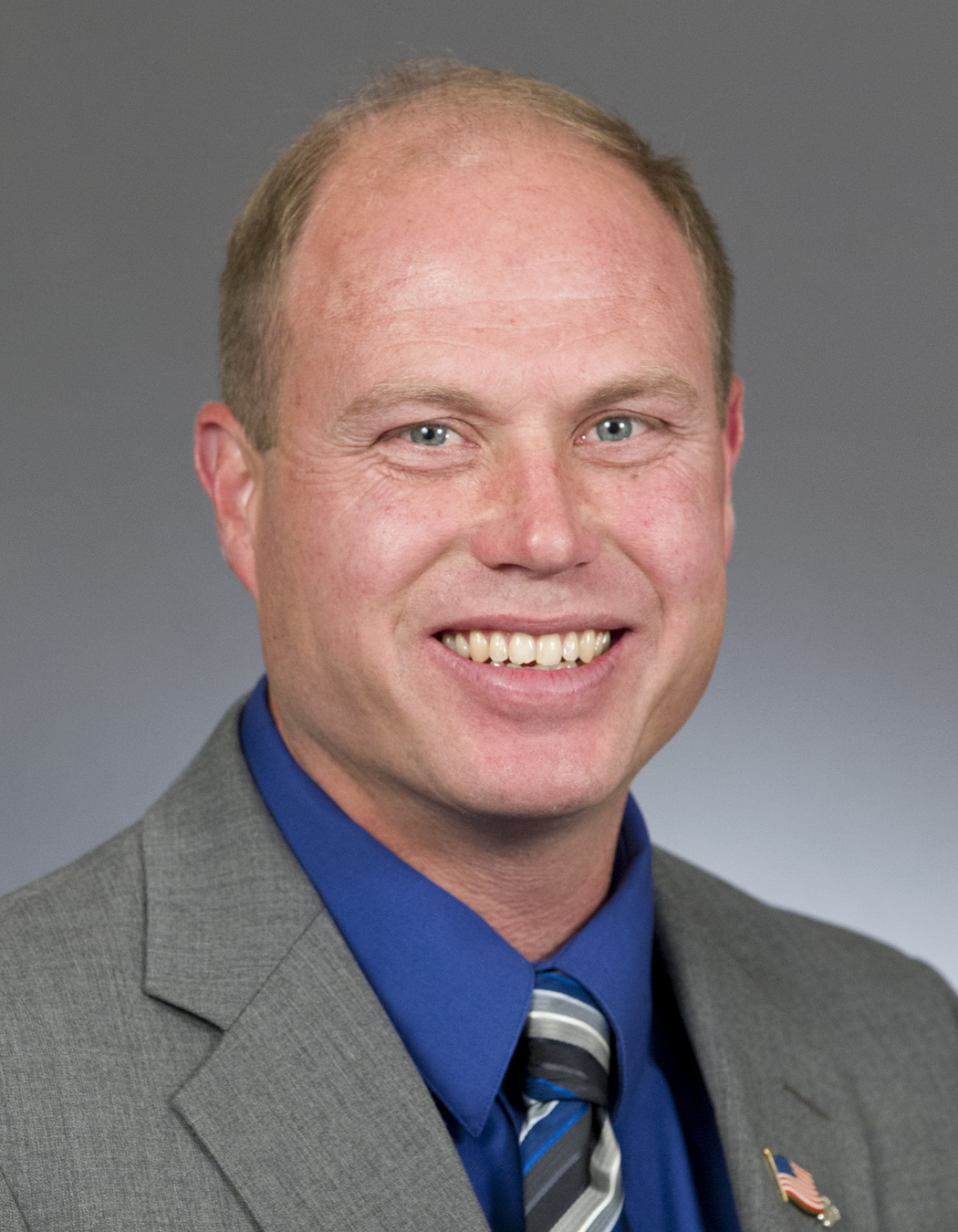
Photo of Jason Rarick
R Minnesota Senate · District 11 On the 2026 ballot

Sen. Jason Rarick

Compare
Total votes
507
all sessions
Attendance
100%
of floor votes
Near the chamber average
With party
99%
of cast votes
Higher than 75% of chamber peers
Bipartisan score
0%
crosses aisle rarely
Lower than 92% of chamber peers
Sponsored
666
bills & resolutions
Near the chamber average
Committees
3
assignments
666 bills and resolutions

Sponsored bills

Total
666
Primary
282
Co-sponsor
384
This page
666
matching current filters
Co-sponsor SF 3949
In committee · Minnesota Senate · Co-sponsor
Depredation compensation payments appropriation

Maddy summaryThis bill appropriates $125,000 for fiscal year 2026 to compensate Minnesota farmers for livestock damaged or destroyed by wolves, and another $125,000 for crop or fence damage caused by elk. It directly affects farmers who experience wildlife-related losses, allowing the Agriculture Commissioner to reimburse costs for livestock valuation, claim investigations, and grants for elk-damage prevention measures like crop protection. Funds can be transferred between the wolf and elk programs if claims become unusually high, and the one-time appropriation expires on June 30, 2027. The bill provides specific financial support for agricultural losses without changing existing wildlife management statutes.

In committee Apr 7, 2026 1 co-sponsor
Co-sponsor SF 2484
In committee · Minnesota Senate · Co-sponsor
Digital Fair Repair Act addition of motorcycles provision

Maddy summaryThis bill adds motorcycles to Minnesota's Digital Fair Repair Act, expanding the law to cover motorcycle repair. It requires manufacturers to provide independent repair shops (unaffiliated with the manufacturer) with diagnostic tools, parts, and documentation on "fair and reasonable terms," meaning at the same price and without restrictive conditions like mandatory registration or forcing shops to become authorized dealers. The law directly affects motorcycle owners and independent repair businesses by ensuring they have equal access to necessary repair resources as dealership shops. Key provisions prevent manufacturers from imposing unnecessary costs or restrictions on parts, tools, or documentation for motorcycles, aligning motorcycle repair with existing digital electronics coverage.

In committee Apr 7, 2026 1 co-sponsor
Co-sponsor SF 3623
Signed into law · Minnesota Senate · Co-sponsor
Vehicles approaching school buses to stop for flashing red lights requirement

Maddy summaryThis bill requires drivers to stop at least 20 feet away from a school bus displaying flashing red lights while children are boarding or exiting. It directly affects all drivers approaching school buses on Minnesota roads, mandating they remain stopped until the red lights cease flashing. The bill also adds a new provision warning drivers that amber lights indicate red lights will soon activate, requiring them to prepare to stop. These changes aim to improve safety for children near school bus stops. The bill is currently pending passage after committee approval.

Signed into law Mar 28, 2026 1 co-sponsor
Primary SF 4892
In committee · Minnesota Senate · Lead sponsor
Willard Munger state trail rehabilitation appropriation and bond issuance authorization

Maddy summaryThis bill authorizes the issuance of up to $5,250,000 in state bonds to fund the rehabilitation of the Willard Munger state trail system in Pine County, Minnesota. The funds will be used by the commissioner of natural resources to design and construct improvements on the trail between the cities of Hinckley and Finlayson. The legislation directs the commissioner of management and budget to sell and issue the bonds according to existing state statutes and constitutional requirements. Once enacted, the appropriation becomes effective the day following final passage by the legislature.

In committee Mar 26, 2026 0 co-sponsors
Primary SF 4794
In committee · Minnesota Senate · Lead sponsor
Exemption modification for certain property owned by an Indian tribe

Maddy summaryThis bill creates a property tax exemption for specific property owned by federally recognized Indian tribes in Minnesota. The exemption applies only to property used to store medical clinic equipment and materials, located in cities with populations between 12,400 and 12,800 based on the 2020 census. The law limits the exemption to one parcel per tribe and excludes any property used for housing, parking, agriculture, or forestry. The exemption becomes effective for property taxes payable in 2027.

In committee Mar 25, 2026 0 co-sponsors
Co-sponsor SF 4800
In committee · Minnesota Senate · Co-sponsor
Exception to inquiring into pay history that is a matter of public record modification

Maddy summaryThis bill modifies Minnesota's existing rule that generally prohibits employers from asking about job applicants' past pay history. It creates an exception allowing employers to inquire about pay history when that information is already a matter of public record under federal or state law, provided the employer did not seek access specifically to determine the applicant's compensation. The legislation also clarifies that applicants can voluntarily share their pay history without being prompted, and employers may consider such voluntarily disclosed information to offer higher wages. Additionally, the bill preserves existing rights to bring wage discrimination claims and allows employers to discuss wage expectations and provide information about offered compensation.

In committee Mar 25, 2026 1 co-sponsor
Primary SF 4793
In committee · Minnesota Senate · Lead sponsor
Exemption modification for certain property owned by an Indian tribe

Maddy summaryThis bill modifies Minnesota's property tax exemption rules for certain properties owned by federally recognized Indian tribes. It allows property used exclusively as medical clinics to qualify for tax exemption if located in cities with fewer than 100,000 people and owned by a tribe within Minnesota. The exemption is limited to no more than five contiguous parcels totaling 30,000 square feet and excludes properties used for housing, apartments, agriculture, or forestry. The changes take effect starting with the 2027 tax assessment year and extend the exemption period to 2038.

In committee Mar 25, 2026 0 co-sponsors
Co-sponsor SF 4780
In committee · Minnesota Senate · Co-sponsor
Misuse of earned sick and safe time definition provision

Maddy summaryThis bill defines misuse of earned sick and safe time in Minnesota and outlines specific situations where employers may request documentation from employees. It states that misuse occurs when employees use this leave for purposes not covered by the law, removing certain employee protections in such cases. The bill also allows employers to ask for reasonable documentation when there is a pattern of suspected misuse, such as repeatedly taking leave before or after scheduled days off, using small increments of time at shift boundaries, or taking leave on days when other paid leave was previously denied. Employers must follow existing rules when requesting documentation and cannot be considered retaliatory for doing so.

In committee Mar 25, 2026 1 co-sponsor
Co-sponsor SF 4864
In committee · Minnesota Senate · Co-sponsor
Chisago County authorization to impose a local sales and use tax

Maddy summaryThis bill authorizes Chisago County to implement a local sales and use tax of 0.5% to fund specific county projects and administrative costs. The tax would apply to purchases made within the county and would be collected alongside existing state and local taxes. Revenue from the tax must be used for tax administration, eligible projects under state law, and any associated bond payments. The county retains the authority to issue bonds to finance these projects without requiring a separate voter election. The county may also end the tax at any time through a new ordinance.

In committee Mar 25, 2026 1 co-sponsor
Co-sponsor SF 4681
In committee · Minnesota Senate · Co-sponsor
Various data center exemptions and provisions modifications

Maddy summaryThis bill modifies regulations related to data centers in Minnesota by adjusting water use evaluation requirements, providing certain tax and fee exemptions, and clarifying how data centers participate in clean energy programs. It directly affects data center operators, water resource managers, public utilities, and local communities by changing how water permits are assessed and how data centers are treated under solar energy standards and utility tariffs. Key provisions include establishing preapplication water evaluation processes for large data centers, exempting qualified large-scale data centers from specific clean energy tariff requirements and sales taxes, and defining criteria for what constitutes a qualified data center. The law also clarifies that certain data centers already in the permitting process or located in eligible communities are exempt from new regulatory requirements.

In committee Mar 23, 2026 1 co-sponsor
Showing 11 to 20 of 666 bills