

Maddy summaryHF 2082 authorizes the sale of $200 million in state bonds to fund trunk highway construction and improvements in Minnesota. The bill appropriates these bond proceeds to the commissioner of transportation for building, reconstructing, and upgrading state highways, including design-build projects and associated program costs. It specifies that up to 17% of the funds can cover internal department expenses and consultant fees for project delivery. The money will be deposited into the trunk highway fund, with bond proceeds used exclusively for transportation infrastructure projects.
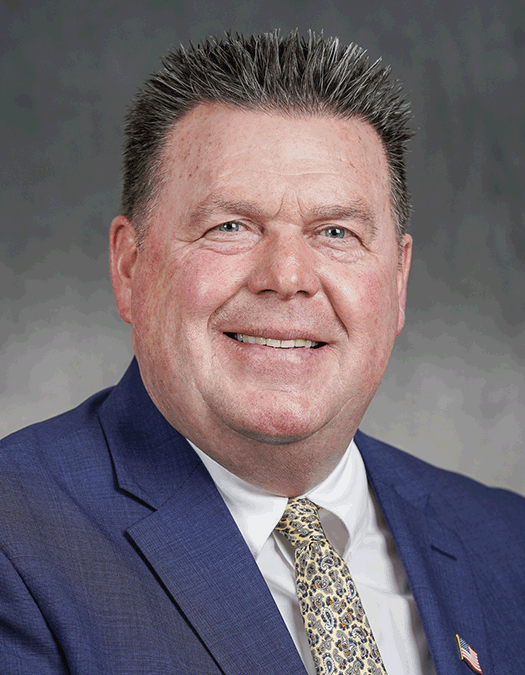
Rep. Tom Murphy
Sponsored bills
Maddy summaryHF 2076 appropriates $250 million for local road construction and safety projects, and $150 million for bridge replacement and rehabilitation, all funded by up to $400 million in state bonds. It directly affects Minnesota counties and local governments by providing money to repair roads of statewide significance, expand the ten-ton road system, and improve rural road safety on county highways. The bill requires the state transportation commissioner to prioritize projects using existing lists and match federal funds for bridge work. This legislation authorizes bond sales to cover these costs, with funding effective immediately upon enactment.
Maddy summaryHF 1063 modifies Minnesota's financial reporting requirements for licensed grain buyers. It mandates that grain buyers submit annual financial statements - including a balance sheet, income statement, and cash flow statement - prepared by an independent accountant. The required review level depends on annual grain purchases: buyers handling $7.5 million or more must undergo a review or audit, while those handling $20 million or more must have a full audit with an opinion statement. Small buyers purchasing under $1 million annually and paying with cash or certified checks are exempt from these reporting rules.
Maddy summaryHF 3 requires Minnesota's legislative auditor to annually report to the legislature by February 1 on whether state agencies have implemented audit recommendations from the prior five years. The bill mandates that agencies' commissioners must also submit detailed reports by September 1 each year, specifically itemizing unaddressed recommendations and explaining why they weren't implemented. This directly affects all state agencies subject to legislative auditor reviews and their commissioners, who must now document progress on audit findings. The law creates a structured process for tracking accountability without altering agency funding or creating new programs.
Maddy summaryHF 983 appropriates $15 million from bond proceeds and $11.5 million from the general fund for fiscal year 2026 to fund Minnesota's Local Road Wetland Replacement Program. This program replaces wetlands drained during public road repairs, as required by state law (Minnesota Statutes §103G.222), and is administered by the Board of Water and Soil Resources. The bill authorizes the sale of $15 million in state bonds and allocates an additional $7.5 million annually from 2026-2027, plus $2 million yearly for program administration. It requires fair market value pricing for land/easement purchases and allows the Board to acquire wetland replacement credits through agreements with federal agencies or private entities.
Maddy summaryHF 22, titled "Parent's Bill of Rights," establishes specific rights for parents of minor children (under 18) in Minnesota. It requires schools and healthcare institutions to respect parental authority over education, access to school/medical records, moral/religious training, and consent for medical procedures or recordings of minors. The bill prohibits employees from coercing children to withhold information from parents or discriminating against parents who exercise these rights. It explicitly states these rights do not override child abuse laws or court orders, and does not limit other existing parental rights. This bill directly affects parents, schools, and healthcare providers serving minors.
Maddy summaryHF 10 prohibits Minnesota state-funded financial assistance, including health coverage and college scholarships, for undocumented noncitizens. The bill explicitly excludes undocumented noncitizens (defined as those residing without U.S. Citizenship and Immigration Services approval) from MinnesotaCare (state health insurance) and the North Star Promise scholarship program. It amends state statutes to require that these programs deny eligibility to individuals without lawful immigration status. The policy change takes effect upon final enactment, with scholarship eligibility applying to awards beginning in the 2025-2026 academic year.
Maddy summaryHF 484 prohibits local governments (like cities or counties) from banning new natural gas hookups in residential construction after July 1, 2025. It directly affects local regulations and residential builders by preventing municipalities from requiring all-electric new homes. The bill requires that new residential units must allow natural gas connections, removing local authority to restrict this energy source. It applies only to new construction, not existing homes or other building types. The law takes effect the day after it is enacted.
Maddy summaryHF 1463 appropriates $25 million annually (fiscal years 2026-2027) from the general fund for Minnesota town roads and $10 million annually for town bridges. The funds will be distributed under existing rules in Minnesota Statutes section 162.081 to support local road and bridge maintenance programs. This bill directly affects Minnesota's town road and bridge systems by providing dedicated state funding for upkeep. It does not create new policies or alter current distribution methods, only allocating existing budget resources.
Maddy summaryHF 483 prohibits local governments (like cities or counties) from banning natural gas or propane hookups to any building. It directly affects municipalities that might have tried to restrict these energy services through local ordinances, as well as building owners and utility companies seeking connections. The bill explicitly bans any local rule that prevents utilities from connecting, reconnecting, or supplying natural gas or propane to buildings. This creates a statewide standard, ensuring consistent access to these energy sources regardless of local restrictions. The policy change takes effect immediately after the bill is enacted.