

Maddy summaryHF 1763 appropriates $25 million from the general fund for fiscal year 2026 to replace old aircraft shelters and construct new universal parking shelters at the Duluth Air National Guard Base for the 148th Fighter Wing, Minnesota Air National Guard. The funding covers removal of existing single-bay shelters and construction of new facilities. This is a one-time appropriation available until spent, specifically targeting infrastructure improvements at the Duluth base. The bill directly affects the 148th Fighter Wing's operations and maintenance at that location.
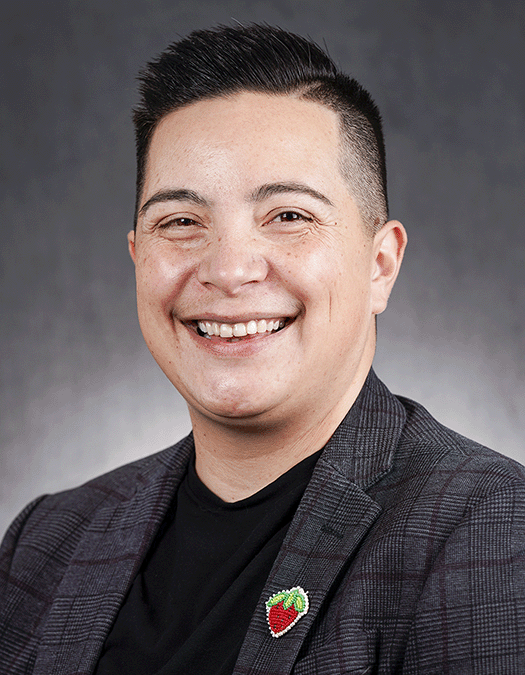
Rep. Liish Kozlowski
Sponsored bills
Maddy summaryHF 1981 appropriates $1,100,000 from Minnesota's arts and cultural heritage fund for fiscal year 2026 to Zeitgeist Arts in Duluth. The bill directly provides funding to this nonprofit organization for restoring and renovating its historic downtown Duluth building. The specific purpose is to improve community arts access through this facility renovation project. The funds are allocated via the commissioner of administration as a grant to Zeitgeist Arts.
Maddy summaryHF 1980 appropriates $500,000 from the general fund for fiscal year 2026 and another $500,000 for fiscal year 2027 to support the Center of American Indian and Minority Health at the University of Minnesota Medical School in Duluth. This funding is directly provided to the University of Minnesota Board of Regents to sustain the center's operations. The bill makes no changes to existing policies but allocates specific state funds for this designated health center, which focuses on American Indian and minority health initiatives. The funding is targeted for two consecutive fiscal years without additional policy provisions.
Maddy summaryHF 1126 creates a property tax exemption for specific land owned by federally recognized Indian Tribes in Minnesota. It exempts one parcel (max 40,000 sq ft) that was classified as class 3a in 2025, located in a city over 400,000 population (like Minneapolis), owned by a tribe as of January 1, 2024, and used exclusively for tribal purposes or public charities. Properties used for housing, apartments, farming, or forestry do not qualify. The exemption applies starting with tax assessments in 2026. This directly affects eligible tribal entities owning qualifying property in designated urban areas.
Maddy summaryHF 967 creates a property tax exemption for specific land owned by federally recognized Indian Tribes in Minnesota. It directly affects tribal properties meeting four conditions: classified as "class 2b" for 2025 taxes, located in a county with 5,580-5,620 residents (2020 census), within an unorganized territory of under 800 residents (2020 census), and owned by a tribe as of January 2, 2023. The exemption applies to these properties for all future tax assessments starting in 2026. This change modifies Minnesota’s property tax law to exclude qualifying tribal land from local taxation.
Maddy summaryThis bill modifies Minnesota's remediation fund to allow reimbursement for PFAS contamination cleanup at emergency response training centers. It specifically covers costs incurred on or after January 1, 2023, for investigations, remediation, and related activities at centers that stopped using PFAS-containing firefighting foam by January 1, 2015. The bill appropriates $1 million in fiscal year 2026 for grants to qualifying state colleges or universities operating these centers. It directly affects emergency response training centers that used PFAS firefighting foam before 2015 and now seek cleanup funding. The policy change expands the fund's eligible uses to include PFAS remediation at these specific facilities.
Maddy summaryHF 1812 establishes a state-run Minnesota Health Plan to guarantee comprehensive, affordable health care for every Minnesota resident. The plan covers all necessary medical, dental, vision, mental health, and long-term care services without co-pays, with premiums based on income. It creates new state entities including the Minnesota Health Board, Health Fund, Office of Health Quality and Planning, a patient advocacy ombudsman, and an auditor for the plan. The bill also requests a federal waiver under the Affordable Care Act to modify certain health insurance requirements and appropriates funding for implementation.
Maddy summaryHF 1842 authorizes sports betting and fantasy contests in Minnesota while establishing licensing requirements for operators and prohibiting local governments from banning these activities. The bill creates a tax system for sports betting and fantasy contests, requires operators to obtain state licenses, and includes specific rules for mobile betting applications and in-game wagers. It clarifies that standard fantasy sports contests (based on real athlete performance) are permitted, but esports events must meet additional criteria. The legislation also updates tax rates for pari-mutuel horse racing and requires reports on gambling revenue, affecting operators, tribal casinos, and residents aged 21+ who place bets.
Maddy summaryHF 1548 authorizes housing and redevelopment authorities in Minnesota to establish local housing trust funds using dedicated public revenue. These funds, defined in the bill, would support housing initiatives like affordable housing development and tenant assistance. The legislation amends Minnesota Statutes section 462C.16 to clarify that local governments (including cities, counties, and authorities) can create such funds with dedicated revenue streams. This change expands options for communities to locally fund housing programs without requiring new state-level funding.
Maddy summaryHF 1506 appropriates $1,000,000 from the general fund for a one-time grant to the Entrepreneur Fund in fiscal year 2026. This funding will capitalize the Entrepreneur Fund's revolving loan program to address unmet financing needs for for-profit business startups, expansions, and ownership transitions in northeast Minnesota. The bill directly affects small businesses in that region that struggle to secure traditional financing. The key mechanism is using the $1 million grant to expand the Fund's existing loan program, which repays and reuses funds for future business support.