

Maddy summaryHF 1508 appropriates $15 million from state bond proceeds to fund predesign, design, and preconstruction work for a new Academic Health Center facility at the University of Minnesota-Duluth. The facility will house the Duluth College of Pharmacy and Medical School, colocated in downtown Duluth's emerging Medical District. The bill authorizes the state to issue up to $15 million in bonds to cover these costs, following Minnesota's bond issuance procedures. This funding directly supports the University of Minnesota-Duluth's planning for a new health-focused campus building.
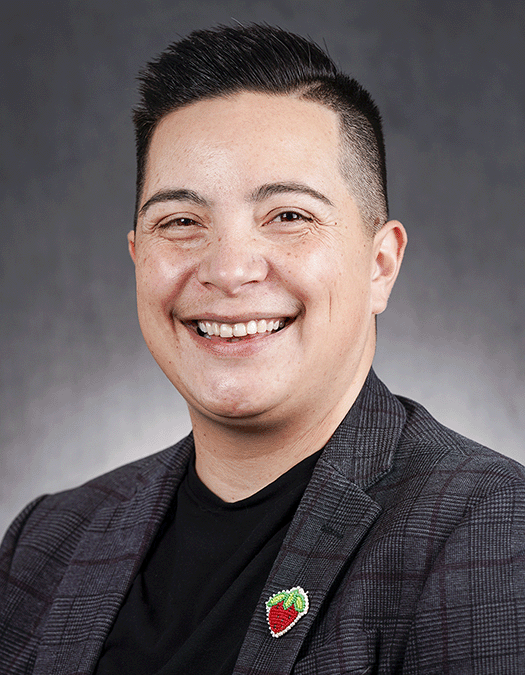
Rep. Liish Kozlowski
Sponsored bills
Maddy summaryHF 2184 exempts the Office of Ombudsperson for American Indian Families from paying court fees when accessing court systems. This directly affects the office, allowing it to operate without incurring these costs for its services. The key provision removes a specific fee requirement that previously applied to the office, streamlining its ability to support American Indian families. The bill became law on April 30, 2025, and took effect on August 1, 2025.
Maddy summaryHF 1143 modifies the expiration dates for certain state aid accounts and adjusts related appropriations. It adjusts how funds are handled for specific aid programs by changing when account balances expire and modifying budget allocations. The bill directly affects state agencies managing these aid programs and their funding streams. It passed unanimously and took effect on July 1, 2025, but the context provided does not specify which exact aid programs or appropriation details were modified.
Maddy summaryHF 3344 creates a new "LGBTQIA2S+ and HIV long-term care bill of rights" in Minnesota. It directly affects residents of long-term care facilities, home care clients, and home and community-based services recipients who are LGBTQIA2S+ or living with HIV. Key provisions require facilities to provide staff training in LGBTQIA2S+ and HIV cultural competency, prohibit specific discriminatory acts (like forcing clothing against gender identity or refusing chosen names/pronouns), mandate clear notices of residents' rights, and allow civil lawsuits if rights are violated. The bill appropriates funds to support these changes, aiming to prevent discrimination in care settings.
Maddy summaryHF 457 proposes a refundable tax credit of up to 30% of qualifying conversion costs for developers converting underutilized buildings in Minnesota. Eligible projects must convert buildings first placed in service at least 15 years ago, either by changing to a new commercial use (not previously intended for that purpose) or by restoring at least 50% of vacant space to income-producing use, while retaining 75% of external walls and internal structure. Applicants must apply for an allocation certificate before starting work and can choose a credit, a grant, or both. The credit is claimable in the year the project is completed, with annual reporting required to the state.
Maddy summaryThis is a procedural resolution (not a bill with policy changes), passed by the Minnesota House. It urges Congress to exercise its constitutional authority to oversee the Executive branch and defend the Constitution. The resolution specifically cites concerns about the Executive branch allegedly bypassing courts, impounding funds, and infringing on free speech, and asks Congress to "assert its constitutional oversight authority." It directs Minnesota's Secretary of State to send copies to Congress and Minnesota's federal representatives.
Maddy summaryHF 724 modifies Minnesota's water infrastructure funding programs to increase support for local governments. It raises the maximum grant amount for wastewater and drinking water projects from $5 million to $10 million per project (or $20,000 per connection), while adding a new "emerging contaminants grant program" to address newer water quality threats. The bill authorizes the sale of state bonds to fund these clean water initiatives and adjusts eligibility rules to help communities where system costs exceed 1.4% of median household income for wastewater or 1.2% for drinking water. These changes directly affect cities, counties, and water utilities seeking funding for infrastructure upgrades under existing revolving fund programs.
Maddy summaryThis bill appropriates $2 million from state bond proceeds to fund cleanup efforts at Lake Superior College's Emergency Response Training Center, specifically targeting PFAS contamination. The funds will cover designing, engineering, and constructing infrastructure like wells, equipment, and treatment facilities to remove PFAS from the site. The state will issue up to $2 million in bonds to finance this project, as authorized under Minnesota's bond laws. The funding is directly tied to the college's campus improvements for environmental remediation.
Maddy summaryThis is a symbolic House resolution (H.R. No. 5) passed by the Minnesota House of Representatives, not a binding law. It condemns federal executive orders targeting immigrants and expresses support for immigrant communities in Minnesota. The resolution urges federal lawmakers to oppose current immigration policies, calls for comprehensive reform including a pathway to citizenship, and specifically references the Neighbors Not Enemies Act (which would repeal the Alien Enemies Act of 1798). It directs Minnesota's congressional delegation to actively oppose these policies and sends copies to the President and federal legislators. The resolution has no legal effect but formally states the House's position.
Maddy summaryThis is a symbolic resolution, not a law. Minnesota's legislature formally urges the President to respect and comply with federal court rulings, specifically referencing the Trump administration's refusal to follow a court order regarding an immigration case. The resolution directs Minnesota's Secretary of State to send copies to the President, Congress, and Minnesota's congressional delegation. It has no legal effect but serves as a formal statement supporting judicial independence.