

Maddy summaryHF 1997 appropriates $25,000 for fiscal year 2026 and $25,000 for fiscal year 2027 from the general fund to provide a grant to Fishing with Vets, a nonprofit organization. The grant funds guided fishing trips for veterans across Minnesota, directly benefiting veterans seeking recreational therapy. The bill requires the commissioner of veterans affairs to submit annual reports by January 15 detailing how the grant money was spent, including any administrative costs, to legislative committees and the Legislative Reference Library. Fishing with Vets must provide necessary information to support these reports.
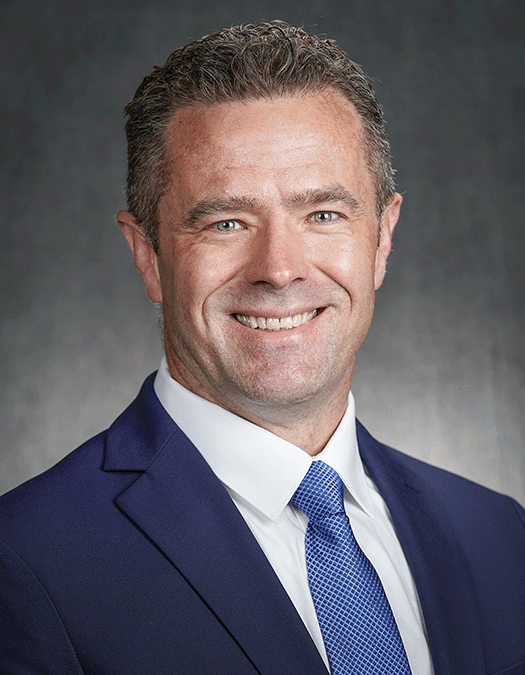
Rep. Pete Johnson
Sponsored bills
Maddy summaryHF 2043 appropriates $250,000 from the general fund to the Minnesota Department of Education for a three-year student attendance marketing campaign. The campaign must raise awareness about attendance importance and absenteeism consequences, address barriers to school attendance, and be inclusive for all public school students. The Department must issue a request for proposals, award contracts to organizations with proven outreach capacity, and require post-campaign reports detailing goals, strategies, outcomes, and fund usage. This one-time funding is available only for fiscal year 2026 and expires June 30, 2028.
Maddy summaryHF 1582 modifies Minnesota's Teachers Retirement Association (TRA) benefits for educators. It allows teachers with 30 years of service to retire at age 60 without reduced annuity payments (previously requiring 35 years), adjusts early retirement penalties, and increases postretirement cost-of-living adjustments. The bill also raises employer contribution rates for school districts (from 13.3% to 17.3% for basic members) and increases pension adjustment revenue rates for school districts starting in 2026. These changes directly affect current and future TRA members, school districts funding retirement costs, and the state's retirement system budget.
Maddy summaryHF 1763 appropriates $25 million from the general fund for fiscal year 2026 to replace old aircraft shelters and construct new universal parking shelters at the Duluth Air National Guard Base for the 148th Fighter Wing, Minnesota Air National Guard. The funding covers removal of existing single-bay shelters and construction of new facilities. This is a one-time appropriation available until spent, specifically targeting infrastructure improvements at the Duluth base. The bill directly affects the 148th Fighter Wing's operations and maintenance at that location.
Maddy summaryHF 2144 appropriates unspecified funds from the general fund for the Family Homeless Prevention and Assistance Program under Minnesota Statutes § 462A.204, for fiscal years 2026 and 2027. The bill directly affects families in Minnesota at risk of homelessness by providing funding for prevention and assistance services. Key provisions include directing the Housing Finance Agency to administer the program using these allocated funds. This is a funding bill with no new policy requirements, solely authorizing budget resources for an existing state program.
Maddy summaryHF 1981 appropriates $1,100,000 from Minnesota's arts and cultural heritage fund for fiscal year 2026 to Zeitgeist Arts in Duluth. The bill directly provides funding to this nonprofit organization for restoring and renovating its historic downtown Duluth building. The specific purpose is to improve community arts access through this facility renovation project. The funds are allocated via the commissioner of administration as a grant to Zeitgeist Arts.
Maddy summaryHF 1980 appropriates $500,000 from the general fund for fiscal year 2026 and another $500,000 for fiscal year 2027 to support the Center of American Indian and Minority Health at the University of Minnesota Medical School in Duluth. This funding is directly provided to the University of Minnesota Board of Regents to sustain the center's operations. The bill makes no changes to existing policies but allocates specific state funds for this designated health center, which focuses on American Indian and minority health initiatives. The funding is targeted for two consecutive fiscal years without additional policy provisions.
Maddy summaryHF 1928 requires Minnesota school districts to provide special education teachers who work with students having Individualized Education Programs (IEPs) or Individualized Family Service Plans (IFSPs) with four dedicated contract days each school year to complete due process forms and procedures. Districts must negotiate staffing plans with teacher representatives for these days, and if agreement isn't reached, they must use state funds for substitute teachers. The bill establishes a state-funded "due process aid" program, calculating a per-student allowance based on average costs to reimburse districts for these additional days starting in fiscal year 2026. This directly affects special education teachers, school districts, and students relying on IEP/IFSP services, ensuring dedicated time for legal compliance without disrupting classroom instruction.
Maddy summaryThis bill appropriates $238,000 for fiscal year 2026 and $238,000 for fiscal year 2027 from the workforce development fund to support the Minnesota Helmets to Hardhats program. The funds will help Building Strong Communities connect National Guard members, military reservists, active duty personnel, and veterans to construction industry apprenticeships and career training through the Department of Labor and Industry. The program must not discriminate based on protected characteristics like race, religion, or gender. It directly affects military-connected individuals seeking careers in building and construction trades.
Maddy summaryHF 1941 provides $500,000 in fiscal year 2026 and $500,000 in fiscal year 2027 from the workforce development fund to the American Indian Opportunities and Industrialization Center. The bill directly funds the Center for its workforce development programming, including job training and economic opportunities for American Indian communities in Minnesota. This is a one-time appropriation, meaning the funds are provided only for those two fiscal years. The bill does not create new requirements or change existing laws - it simply allocates specific funds for a designated purpose.