

Maddy summaryHF 1821 appropriates $ for fiscal years 2026 and 2027 from Minnesota's general fund to provide supplemental security grants to nonprofits. It directly affects nonprofits that have already received federal grant approval through the Emergency Management Agency's nonprofit security program, allowing them to access state funds without submitting new applications. The bill limits total funding per nonprofit to $75,000 across both federal and state programs, with grants awarded based on the federal program's ranking order. This ensures nonprofits can cover security costs without extra paperwork, using funds already allocated by the federal government.
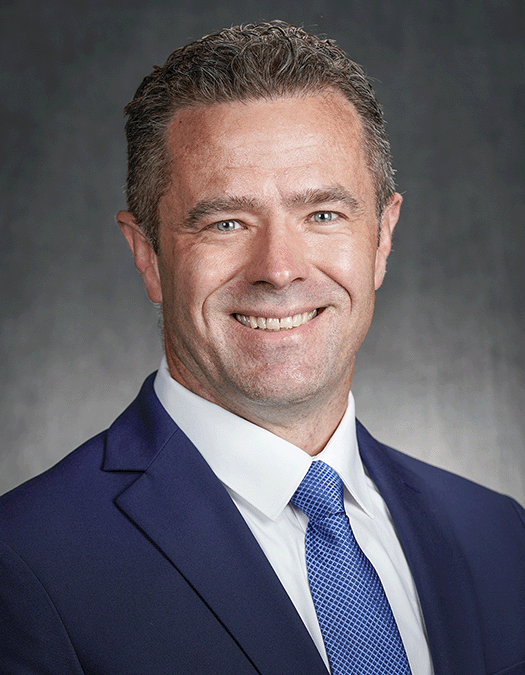
Rep. Pete Johnson
Sponsored bills
Maddy summaryHF 573 appropriates $6 million from state bonds to fund a new integrated solid waste management campus in St. Louis County. The grant will help the county acquire land, design, and build the campus to manage waste from closed landfills and prevent hazardous chemicals like PFAS from contaminating Lake Superior. The bill authorizes the state to issue up to $6 million in bonds to cover these costs, following standard state bond procedures. This directly affects St. Louis County residents and the environmental protection of Lake Superior. The project aims to address waste management from existing landfills while safeguarding water quality.
Maddy summaryHF 107 modifies Minnesota's unemployment insurance rules for workers involved in labor disputes. It specifies that workers participating in or directly affected by a labor dispute can receive benefits until the end of the week the dispute was active, while those not involved are eligible until the dispute began. The bill clarifies that certain situations - like employer safety violations, lockouts, or being fired before a dispute starts - do not make applicants ineligible. This directly affects workers who stop working due to labor conflicts, ensuring they maintain eligibility under defined conditions. The changes amend Minnesota Statutes section 268.085, subdivision 13b.
Maddy summaryThis bill extends the deadline for using a $17.5 million 2023 grant to the Western Lake Superior Sanitary District for wastewater clarifier projects. It amends existing law to keep the funding available until December 31, 2029, ensuring the district can complete the design, construction, and rehabilitation of four secondary clarifiers at its wastewater treatment system. The bill directly affects the district's infrastructure project without creating new policy or altering funding amounts.
Maddy summaryHF 2765 modifies Minnesota's optometry scope of practice by adding specific restrictions to the existing law. The bill directly affects licensed optometrists by prohibiting them from administering prescription medications via injection (except for anaphylaxis treatment), performing invasive surgeries (including laser procedures), prescribing certain strong oral medications (like Schedule II/III drugs or steroids), and extending the duration of some prescriptions (limiting oral antivirals to 10 days and oral carbonic anhydrase inhibitors to 7 days). These changes clarify the boundaries of optometric practice under Minnesota Statutes 148.56. The bill does not alter optometrists' core duties like vision testing, lens prescribing, or diagnosing eye conditions.
Maddy summaryHF 1003 appropriates $500,000 from the workforce development fund to Independent School District 294 in Houston for its Minnesota Virtual Academy career pathways program, in partnership with Operating Engineers Local 49. The program provides up to five semesters of courses leading to eligibility for the Operating Engineers apprenticeship program. It requires targeted outreach to students of color, Indigenous students, low-income students, and other underserved groups, and mandates an annual report to legislative committees detailing participant demographics, program spending, and recommendations for statewide improvements. This bill specifically supports one school district's program, not a statewide initiative.
Maddy summaryHF 1093 directs Minnesota's Commissioner of Human Services to create a centralized prescription drug purchasing program for medical assistance and MinnesotaCare enrollees (who receive state-funded health coverage). The program requires the commissioner to negotiate lower drug prices, develop a preferred drug list, manage pharmacy participation, and coordinate prescription benefits. It mandates the commissioner to seek federal approval for implementation (effective January 2027) and submit expansion recommendations by December 2027 to include health plan companies administering drug benefits. The bill focuses on lowering costs for covered individuals through coordinated purchasing and price negotiations.
Maddy summaryHF 1985 allocates $2.5 million for fiscal year 2026 and $2.5 million for fiscal year 2027 from the general fund to support employment programs for Minnesotans with mental illness. The funds must be used by the commissioner of employment and economic development to provide evidence-based job support services through existing or new programs, including expanding services to areas without current programs. This appropriation is specifically intended to sustain current services, grow access in underserved regions, and support programs that previously received no state funding. The bill directly affects service providers and individuals seeking employment assistance under Minnesota Statutes sections 268A.13 and 268A.14.
Maddy summaryHF 1216 appropriates $400,000 for fiscal year 2026 and $400,000 for fiscal year 2027 from the workforce development fund to fund a statewide apprenticeship readiness program. The grant supports Building Strong Communities, Inc. to prepare women, Black, Indigenous, and People of Color, and veterans for careers in the building and construction industries. This one-time funding creates a targeted initiative to increase workforce diversity in skilled trades through program access and training. The bill directly affects the specified demographic groups and the organization administering the program.
Maddy summaryHF 61 requires Minnesota school districts and charter schools to provide approved mental health instruction for students in grades 4-12 starting in the 2026-2027 school year. It also mandates youth sports programs (for which fees are charged) to train coaches and officials on recognizing mental illness warning signs and suicide prevention. The bill modifies emergency intervention rules for schools, updating requirements for physical holding or seclusion. These changes directly affect public schools, charter schools, and youth sports organizations across Minnesota.