

Maddy summaryThis bill appropriates $175,000 for fiscal year 2026 and $175,000 for fiscal year 2027 from the general fund to the Mississippi Headwaters Board. The funds are intended to cover up to 50% of the costs for implementing the Board's comprehensive plan to manage the upper Mississippi River. The Board must submit a report by December 15, 2027, detailing activities funded and progress made under this appropriation.
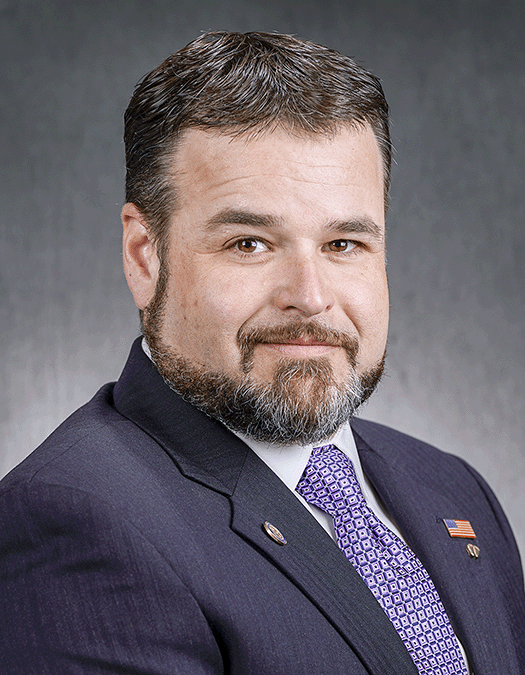
Rep. Josh Heintzeman
Sponsored bills
Maddy summaryHF 3031 appropriates $300,000 from Minnesota's arts and cultural heritage fund for fiscal year 2026 to support the Upsala Area Historical Society. The funding directly supports the society's museum operations to preserve historical artifacts and the area's immigrant history. The bill provides concrete financial support for ongoing preservation efforts within the Upsala community. This is a direct funding allocation with no additional policy changes beyond the specified grant.
Maddy summaryHF 1332 appropriates $18 million from state bonds to fund forest management on Minnesota's state forest lands. The funds cover reforestation activities (like planting native seeds and trees), site preparation, and forest stand improvement, including treatment for pests like emerald ash borer and spruce budworm. The state will issue bonds up to $18 million to finance these projects, administered by the commissioner of natural resources under Minnesota Statutes. This bill directly affects state forest management operations and the use of public funds for forestry capital projects.
Maddy summaryHF 2826 provides a refundable sales tax exemption for construction materials used in specific projects at Pequot Lakes schools. It directly affects Independent School District No. 186 by exempting sales tax on materials purchased between 2026 and 2036 for additions/renovations at Eagle View Elementary, Pequot Lakes Middle School, Pequot Lakes High School, and outdoor facilities. The bill requires sellers to collect the tax initially but then refund it to the school district, funded from the state general fund. This exemption applies only to projects meeting the specified criteria within the defined timeframe.
Maddy summaryHF 2548 creates the Outdoor School for All grant program to fund immersive, multiday outdoor educational experiences for Minnesota students in grades 4-8. The program provides grants to accredited overnight outdoor schools and nonprofit learning centers meeting specific criteria, including research-based curricula, integration with school standards, skill development (like leadership and critical thinking), and accessibility for underserved students. It appropriates $2.5 million for fiscal years 2026 and 2027 from the general fund. The bill directly affects public school students and providers offering equitable outdoor education, aiming to address declining outdoor engagement and access disparities.
Maddy summaryThis bill appropriates $675,000 for fiscal year 2026 and $729,000 for fiscal year 2027 from Minnesota's arts and cultural heritage fund. The funds will support two outdoor education programs: Wilderness Inquiry's Canoemobile and Pyramid of Outdoor Engagement. These programs provide statewide, sequential outdoor educational experiences for youth and families, aligning with Minnesota graduation standards and connecting participants to the state's natural resources, outdoor traditions, and public lands. The funding directly supports these programs' operations to expand access to nature-based learning across Minnesota.
Maddy summaryHF 2676 exempts food and beverage service establishments (like restaurants, cafes, and hotels) from a Minnesota law requiring clear disclosure of mandatory fees, such as automatic gratuities, in advertisements. The bill amends Minnesota Statutes 325D.44 to add these establishments to a list of exempt entities under the "mandatory fee advertisement" rule. This means restaurants no longer need to display details about automatic service fees in their marketing materials or online menus, as the requirement no longer applies to them. The exemption directly affects businesses operating under Minnesota's food service definition (section 157.15, subdivision 5).
Maddy summaryHF 2423 appropriates $5 million from the state fund for fiscal year 2026 to help a specific biomass energy plant in Shakopee purchase equipment for disposing of wood infested with emerald ash borers. The funding is directed through the Pollution Control Agency to support the plant's use of waste heat from electricity generation during malting to process infested wood. This bill directly affects the Shakopee biomass facility by providing targeted financial support for disposal equipment, without creating new regulations or broad policy changes. It is a funding measure focused solely on enabling a single facility to manage emerald ash borer-infested tree waste.
Maddy summaryHF 566 amends Minnesota law to clarify rules for operating all-terrain vehicles (ATVs) on public roads. It specifies that ATVs may be operated on the right shoulder or extreme right side of county/state highways (for accessing businesses/trails) and in ditches/slopes under certain conditions, while restricting operation in agricultural zones (April 1-August 1) and between sunset and sunrise. The bill also updates local government authority to allow ATVs on roads for access to businesses/residences via ordinance, with specific speed and access requirements for smaller communities. These changes directly affect ATV operators, local municipalities creating ordinances, and agricultural workers using ATVs for farm access.
Maddy summaryHF 837 requires Minnesota's commissioner of commerce to apply to the federal government by December 31, 2026, for a waiver continuation under federal law (42 U.S.C. § 18052). This waiver is needed to keep Minnesota's premium security health insurance plan operating after 2027, as its future depends on federal approval. The bill also directs a one-time transfer of $413 million from the state general fund to the premium security plan account in fiscal year 2026. This funding supports the state's health insurance program for qualifying residents. The bill directly affects Minnesota's health insurance program and state budget management.