

Maddy summaryHF 2219 regulates surrogacy in Minnesota by making traditional surrogacy arrangements invalid (meaning parental rights automatically remain with the birth mother unless she voluntarily terminates them) and establishing enforceable rules for gestational surrogacy. It requires gestational surrogacy contracts to be in writing, signed by all parties including the surrogate's spouse, notarized, and accompanied by separate legal counsel for all parties and written acknowledgment of rights/obligations. The bill also creates a new criminal offense for operating a for-profit surrogacy agency (defined as entities connecting intended parents with surrogates, excluding licensed attorneys handling contracts). This directly affects intended parents, gestational surrogates, and surrogacy agencies seeking to facilitate such arrangements in Minnesota.
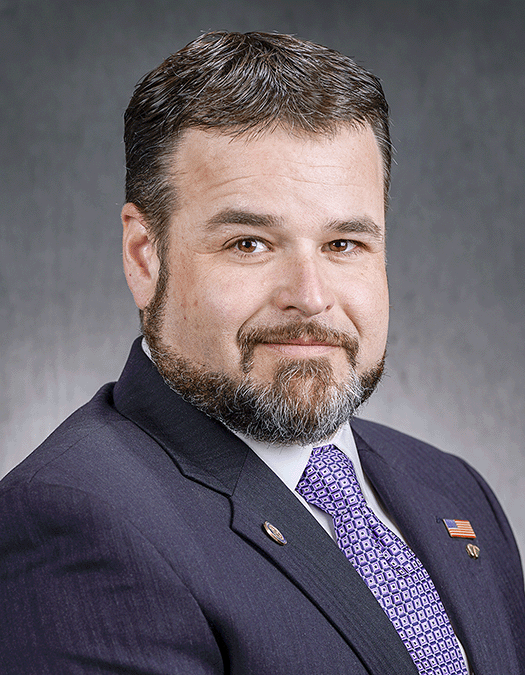
Rep. Josh Heintzeman
Sponsored bills
Maddy summaryHF 2809 establishes a new crime for protesting directly in front of or about a person's home (excluding homes used as businesses). It makes this a misdemeanor, escalating to a gross misdemeanor if the person has a prior conviction under this law or ignores court orders like protection orders. The bill specifically allows peaceful protests about community meetings or assemblies held at locations commonly used for public discussion. This law applies to residential properties only and takes effect August 1, 2025.
Maddy summaryHF 3649 modifies Minnesota's requirements for businesses labeling products as "biodegradable" or "compostable." It requires that any entity selling such products in Minnesota must have them certified by a specific type of nonprofit organization. These certifiers must primarily focus on promoting biodegradable materials and be technically capable of testing product compliance. The bill directly affects manufacturers, distributors, wholesalers, and sellers of labeled biodegradable or compostable products in Minnesota. The certification requirement is effective upon final enactment.
Maddy summaryHF 3647 requires Minnesota's Natural Resources commissioner to study trumpeter swans, including assessing the state's population and evaluating whether a hunting season would be feasible. The bill appropriates a one-time $ amount from the general fund for this study, to be completed by January 15, 2027. The commissioner must submit findings and policy recommendations to key legislative committees on environment and natural resources. This bill directly affects state wildlife management practices and potentially future hunting regulations for trumpeter swans.
Maddy summaryHF 3648 modifies the process for using Minnesota's "emerging issues account" within environmental funding. It requires that recommendations for spending from this account must now receive approval from both the governor and the chairs/ranking minority members of the environment and natural resources finance committees, in addition to a 15-member commission vote. The bill directly affects the Minnesota Pollution Control Agency commission, the governor, and specific legislative committees. This change adds oversight for funds allocated to unexpected environmental projects that align with the commission's strategic plan. The bill does not create new funding but adjusts the approval process for existing emergency environmental spending.
Maddy summaryHF 1567 extends Minnesota's existing personal information protections for judicial officials to peace officers (including police officers). The bill defines protected information as residential addresses, family details, non-work contact information, and children's names/schools attended. It requires peace officers to submit written notification to request protection, which expires after five years unless renewed. The law prohibits government entities and others from publicly sharing this protected information online or through other means, with limited exceptions for news reporting. This directly affects Minnesota peace officers by safeguarding their personal details from public disclosure.
Maddy summaryHF 1066 increases annual funding for soil and water conservation districts in Minnesota. It amends state law to raise the annual appropriation from $15 million (for 2023-2024) to $20 million starting in 2025, paid from the general fund to the commissioner of revenue. This funding directly supports local soil and water conservation districts that provide technical assistance and cost-share programs for landowners. The bill takes effect for payments made in 2025 and subsequent years.
Maddy summaryHF 81 exempts off-highway vehicles, snowmobiles, and electric-assisted bicycles from Minnesota's PFAS (chemicals) restrictions that apply to juvenile products. The bill amends Minnesota Statutes § 116.943 by adding these vehicles to the list of items excluded from the definition of "juvenile product" (which otherwise covers items like cribs, strollers, and baby pillows). This means manufacturers of these vehicles are not subject to PFAS prohibitions that apply to other juvenile products. The change clarifies that PFAS rules for consumer goods do not extend to these specific recreational vehicles. The bill was referred to the Environment and Natural Resources Committee.
Maddy summaryHF 1372 allows Minnesota cities to create designated "social districts" where alcohol purchased at licensed bars or restaurants can be consumed in public areas adjacent to those venues. The bill requires cities to clearly mark district boundaries with signs showing permitted hours, include safety statements on containers (e.g., "Drink Responsibly - Be 21"), and restrict containers to non-glass, 16-ounce sizes with specific labeling. It mandates cities to report on community impact, safety concerns, and operational challenges within 24 months of implementation. This directly affects local governments, licensed businesses, and public safety management in areas where such districts are established.
Maddy summaryHF 3345 eliminates Minnesota's Clean Car rules and prohibits state agencies from adopting rules that restrict consumer choice of fuel types for specific motorized equipment. The bill directly affects consumers, retailers, and manufacturers by banning requirements for retailers to stock certain fuel types (like electric or gas) and preventing rules that limit which fuel sources consumers can purchase for items such as generators, lawn mowers, snowmobiles, and passenger vehicles. Key provisions include repealing specific Clean Car rulemaking authority (Minnesota Rules parts 7023.0150-7023.0300) and explicitly prohibiting agency rules that mandate fuel-source-based inventory or restrict fuel choices. This bill modifies regulatory authority to prioritize consumer choice over fuel-source mandates for the listed equipment categories.