

Maddy summaryThis bill modifies Minnesota's window tinting laws to explicitly include police vehicles regularly used for law enforcement activities as an exception to standard tinting restrictions. The change adds police vehicles to a list of vehicle types that may have tinted windows without meeting the usual light transmittance requirements, alongside existing exceptions for pickup trucks, vans, funeral hearses, and limousines. The legislation amends a specific section of the state vehicle code to clarify that these law enforcement vehicles fall under the same tinting exemptions as other specialized vehicles. This update ensures police vehicles are formally recognized in the statute alongside other vehicle categories that are permitted to have darker window tinting.
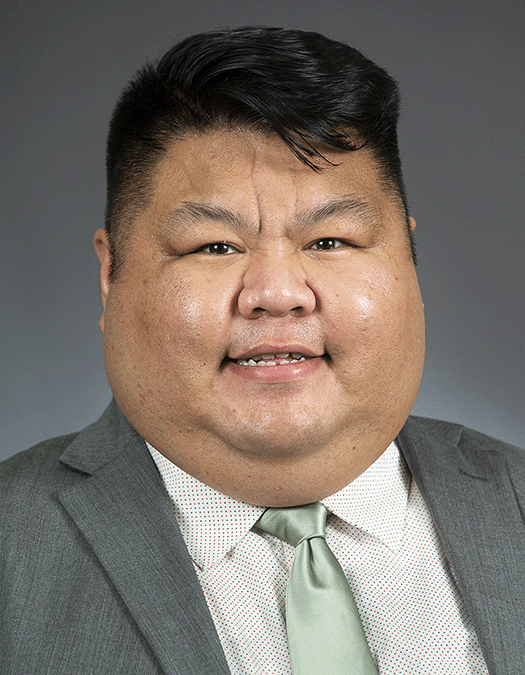
Rep. Jay Xiong
Sponsored bills
Maddy summaryThis bill introduces a new 50 percent tax on the gross revenues of private detention facilities operating in Minnesota that are contracted by government entities. The tax applies to all money received by these facilities for providing incarceration or detention services and begins taking effect after December 31, 2026. The legislation defines private detention facilities as for-profit entities that hold people awaiting trial or serving court-imposed sentences, while excluding residential facilities like halfway houses and work release centers. Facilities that have already paid similar taxes to other states can claim a credit for those payments to avoid double taxation. All tax revenues collected will be deposited into Minnesota's general fund.
Maddy summaryThis bill restricts access to Minnesota public libraries by federal, state, or local officials conducting immigration enforcement activities. It requires library staff to deny entry unless the official presents a valid judicial warrant, and mandates that staff request identification and limit access only to areas specified in the warrant. Additionally, the bill requires library employees to immediately notify their city mayor, county board representative, or regional system board when granting such entry, while allowing officials to enter for educational or library program administration. The law applies to all public libraries in the state and takes effect immediately upon final enactment.
Maddy summaryThis bill creates a new state trust fund to temporarily hold federal money when the governor believes it has been unfairly suspended, delayed, or withheld. The fund is designed to protect state programs and local services from disruptions while ensuring the money remains dedicated to its original federal purpose. State officials can place funds in the trust and release them once the federal government confirms the money is available again or when holding it risks legal problems. The bill also requires regular reports to the legislature on how much money is held and why, while explicitly stating the state cannot collect federal taxes or take on federal legal liabilities.
Maddy summaryThis bill prohibits Minnesota local governments from entering into contracts with the federal government to provide detention facilities for people held in custody for civil immigration violations. The law applies to counties, cities, and joint powers entities, making any such agreements void regardless of when they were signed. By banning these contracts, the legislation prevents local jurisdictions from being used to house individuals detained under federal immigration law. The bill takes effect immediately upon final enactment.
Maddy summaryThis bill authorizes the state of Minnesota to issue up to $95 million in bonds to fund road and utility infrastructure improvements at the Sears site in St. Paul. The funds will support construction of sanitary sewer and clean water systems, public utilities, streets, sidewalks, lighting, and streetscape improvements needed to prepare the area for future development. The legislation also defines the Sears site boundaries and establishes the legal framework for managing bond proceeds, including provisions for environmental remediation and demolition of existing structures. This measure is designed to provide necessary infrastructure support for the redevelopment of the former Sears property.
Maddy summaryThis bill authorizes the state to issue up to $16 million in bonds to fund an indoor recreational dome facility in St. Paul. The money would be used to design, build, and equip the facility at the West Minnehaha Recreation Center for year-round sports and community programs. The legislation directs the state commissioner of employment and economic development to provide the funds as a grant to the city. The bill also sets the effective date as the day following its final passage.
Maddy summaryHF 3424 amends Minnesota's eviction notice requirements for nonpayment of rent, directly affecting landlords and residential tenants. It increases the required notice period from 14 to 30 days before filing an eviction lawsuit, mandating landlords provide written notices detailing the exact amount owed, a specific accounting of rent, late fees, and charges, and information about free legal aid and financial assistance resources. The notice must also include specific statements about tenant rights and the 30-day deadline to pay or vacate. This change applies to eviction actions filed on or after July 1, 2026.
Maddy summaryHF 3410 updates Minnesota law to give tenants facing eviction for nonpayment of rent more options to avoid losing their homes. The bill allows tenants to pay overdue rent plus interest, court costs, and up to $5 in attorney fees using a written guarantee from a qualified nonprofit rental assistance program (like a 501(c)(3) organization) or a third party who swears they will pay the landlord. This replaces a previous option that permitted guarantees from government agencies. The changes apply to eviction cases filed after the bill's effective date.
Maddy summaryHF 3415 restricts federal immigration agents (like those from ICE, CBP, or USCIS) from entering Minnesota child care centers without specific authorization. Licensed or certified child care centers must require federal agents to present valid ID, a written purpose statement, a judicial warrant, and obtain approval from the center owner before entry. Even with these requirements, centers must limit agent access to areas where children are not present. This bill directly affects all licensed and certified license-exempt child care centers in Minnesota by establishing clear protocols for federal agent access.