

Maddy summaryHF 1764 appropriates $1.5 million from the state general fund for a one-time grant to the Coalition of Asian American Leaders. The funds will support outreach, training, technical assistance, peer networks, and direct financial help specifically for Asian Minnesotan women entrepreneurs and Asian-owned businesses. The grant is available until June 30, 2027, and must be used for these targeted support services. This bill directly affects Asian-owned businesses and women business owners in Minnesota by providing state-funded resources.
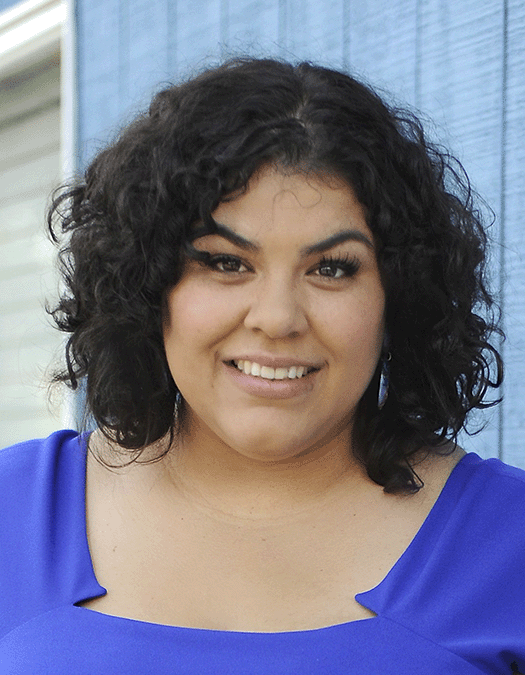
Rep. Athena Hollins
Sponsored bills
Maddy summaryHF 1777 appropriates $1 million from Minnesota's general fund to the Department of Health for a grant to the Birth Justice Collaborative. The funding supports planning and developing an African-American-focused "Homeplace" model in Hennepin County, aiming to improve maternal and child health outcomes through culturally centered care during pregnancy and postpartum. The grant requires the Birth Justice Collaborative to report on implementation and results by December 15, 2026, including recommendations for future expansion. This initiative directly affects African-American mothers and infants in Hennepin County by expanding access to specialized care. The appropriation is available until June 30, 2028.
Maddy summaryHF 1685 requires Minnesota's IT Services agency to combine the state's transit assistance program (currently managed by Metro Transit) into the existing Minnesota Benefits Web Portal by December 31, 2025. The bill mandates coordination with transportation, human services, and children's agencies to ensure seamless integration while allowing Metro Transit to continue processing applications. It also appropriates $1.2 million from the general fund in fiscal year 2026 specifically for this integration work. This change directly affects state agencies managing benefits and Metro Transit, aiming to streamline access for Minnesotans using transit assistance programs.
Maddy summaryHF 1656 appropriates $2.25 million from Minnesota's renewable development account to fund a geothermal energy system at Como Zoo's large cats building in St. Paul. The bill directs the commissioner of commerce to provide a grant for constructing this system, which uses underground piping and heat pumps to provide space heating and cooling. The project directly affects Como Zoo and its large cats building, replacing conventional heating and cooling systems. This is a targeted funding measure for a specific facility, not a broader energy policy change.
Maddy summaryHF 504 requires Minnesota's commissioner of health to establish a school-based telehealth program providing mental and physical health care to students through remote visits. The program will be run by a single telehealth provider selected via competitive bidding, with participating school districts (public and charter schools) required to offer services free of charge to all enrolled students, including waiving costs for uninsured students. Funding includes up to $22 per student annually, one-time setup costs, and program evaluation, with school districts prohibited from using the service to replace existing school health staff like nurses or counselors. The program mandates annual reports on student access to health care, starting in 2027.
Maddy summaryHF 1586 appropriates $800,000 from Minnesota's arts and cultural heritage fund for a commemorative project honoring Gordon Parks. The bill directs the Minnesota Humanities Center, working with Soul Touch Productions, to create an art installation and related programming celebrating Parks' life and legacy. This funding specifically supports cultural programming focused on Parks' contributions as a photographer, filmmaker, and civil rights advocate. The bill does not create new policy but allocates existing state funds for a specific cultural initiative.
Maddy summaryThis bill requires Minnesota courts to ask defendants convicted of felonies whether they have a history of stroke or traumatic brain injury. If a court believes a defendant's mental impairment from such an injury may have affected their judgment during the crime, it must order a specialized mental health assessment (unless a recent qualifying exam exists). The resulting report, along with medical recommendations, must be considered by the court during sentencing to determine if the defendant lacked substantial capacity for judgment due to their injury. This directly affects felony defendants in Minnesota's criminal justice system.
Maddy summaryHF 132 prohibits the open or concealed carry of firearms within 100 feet of polling places, ballot drop boxes, or counting centers during election hours (two hours before polls open to two hours after they close). It directly affects individuals carrying firearms near these locations during voting periods, with exceptions for law enforcement officers on duty, lawful possession on private property or in vehicles, and travel to/from private property. Violations are punishable as misdemeanors, with repeat offenses classified as gross misdemeanors. The bill creates a specific safety buffer zone around election sites to prevent firearm presence during voting, without altering broader gun laws.
Maddy summaryHF 1028 increases state funding for Minnesota school districts through multiple adjustments to education finance formulas. It raises the general education basic formula allowance, special education cross subsidy aid, English learner cross subsidy aid, school unemployment aid, and safe schools revenue. The bill modifies how compensatory revenue eligibility is calculated and allows school boards to renew voter-approved operating referendums more than once. These changes, effective for fiscal year 2027 and later, directly affect all Minnesota public school districts by altering their state funding calculations and administrative powers. The bill does not create new programs but adjusts existing funding mechanisms and eligibility rules.
Maddy summaryHF 1097 appropriates $200,000 from Minnesota's arts and cultural heritage fund to the nonprofit organization 30,000 Feet. The funding supports youth and community artists in developing artistic skills, creating community art projects, and producing performances centered on African American history and culture. The bill directly affects the nonprofit organization and the artists it serves through its grant program. It provides concrete financial support for specific arts initiatives without altering broader policy or regulations.