

Maddy summaryHF 2904 requires certain Minnesota school employers - including school districts, charter schools, and vocational education centers - to join the state's public employees insurance program. It establishes an "educator group insurance program" specifically for school employees, mandating coverage tiers that match existing school employee pool options and including high-deductible plans. The bill creates a labor management committee with 12 members (including seven from Education Minnesota and representatives from unions and school administrators) to study program issues like cost efficiency. It also requires mutual agreement between the commissioner and the committee before changing cost-sharing plans. This bill directly affects school employees and their employers by integrating them into the state's insurance framework with specific administrative structures.
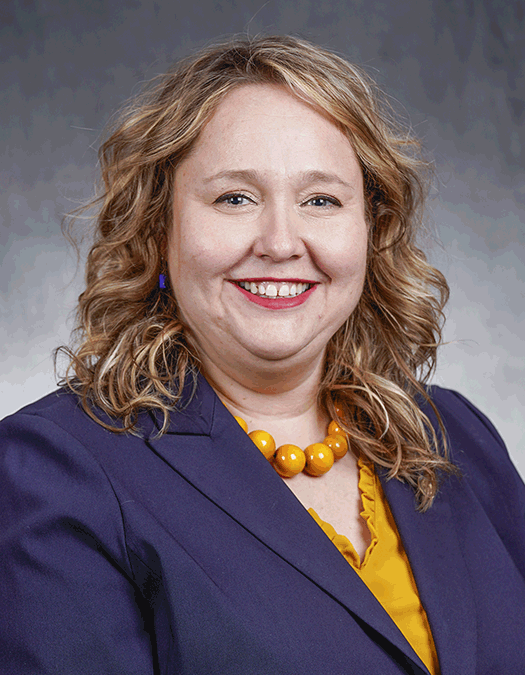
Rep. Emma Greenman
Sponsored bills
Maddy summaryThis bill prohibits businesses and individuals from operating prediction markets in Minnesota that allow wagers on outcomes related to sports, politics, people, catastrophes, or death. It makes it a felony to run platforms where participants place bets on these specific future events, with exceptions for private social bets and licensed horse racing. The law also criminalizes advertising these prohibited products during certain times, in media likely to reach minors, near schools, or on public property. Financial institutions and payment processors that continue to process payments for these activities after receiving a cease and desist order from the attorney general would also face felony charges.
Maddy summaryHF 76 limits how much Minnesota utility customers can pay for executive compensation. It prohibits utility regulators from approving rate increases that cover the top 10 executives' pay at public utilities with 300,000+ Minnesota retail customers if that pay exceeds the governor's annual salary. The bill defines "compensation" broadly to include salary, bonuses, and other pay, but excludes standard benefits and expense reimbursements. Utilities may still pay executives from non-ratepayer sources (like investor funds), but regulators must ensure this doesn't unfairly burden customers in other states.
Maddy summaryHF 3794 prohibits businesses from using automated systems to set individualized prices or wages based on surveillance data about consumers or workers. It directly affects companies that collect and analyze personal data like browsing history, location, biometrics, or purchase habits to adjust pricing or pay. The bill defines key terms (e.g., "surveillance data" includes inferred behaviors and biometrics) and allows exceptions for cost-based pricing, publicly available group discounts (like for veterans or seniors), and insurance risk assessments. It creates new legal standards to prevent discrimination tied to personal data collection, without banning all personalized pricing.
Maddy summaryThis bill expands the subpoena authority of Minnesota's attorney general and county attorneys to access records from a wider range of businesses and financial institutions during fraud and identity theft investigations. It allows these officials to request information from utility companies, hotels, pawn shops, transportation services, storage facilities, and various types of financial and employment records, including bank accounts, insurance claims, and wage data. The law requires that subpoenas be issued only for records relevant to ongoing legitimate law enforcement investigations and mandates probable cause for administrative subpoenas in wage theft, welfare fraud, and identity theft cases. Additionally, the bill modifies legal definitions related to identity theft and alters statutes of limitation for certain fraud-related offenses to support prosecution efforts.
Maddy summaryHF 3762 allows Minnesota chiefs of police and sheriffs to access certain expunged criminal records (those sealed after January 1, 2015) specifically to determine if a person is eligible to purchase, receive, or carry a firearm. This exception applies only during firearm background checks under Minnesota Statutes § 609A.037, not for general law enforcement purposes. The bill amends existing expungement law to permit this limited access while requiring law enforcement to handle these records carefully and restrict their use solely to firearm eligibility determinations. It directly affects individuals with expunged records who apply for firearms and law enforcement agencies conducting background checks.
Maddy summaryThis bill requires the Metropolitan Airports Commission to increase transparency regarding flights at Minneapolis-St. Paul International Airport that transport detained immigrants. Specifically, it mandates that the airport operator notify the commission whenever U.S. Immigration and Customs Enforcement arrives or departs with passengers being held in restraints. The legislation also requires the commission to install a live-streaming camera to record these flights and to submit monthly reports detailing the number of detained individuals, including minors, on each trip. These measures are designed to provide the public and state officials with real-time data and regular updates on immigration-related air traffic at the airport.
Maddy summaryThis Minnesota bill creates a $100 million relief program to help small businesses that experienced significant revenue declines between July 2024 and February 2026, which the bill attributes to federal enforcement activity. The program provides grants to operators of indoor retail or food market spaces with at least 25 small tenant businesses, requiring that most funds be used to offer rent forgiveness to existing tenants. To qualify, businesses must be Minnesota-based, have fewer than 50 employees, operate from a physical location, and show at least a 20 percent drop in revenue or sales during the specified period. Grant applications will be processed through a lottery system, with funds usable for payroll, rent, utilities, inventory, and other operational expenses, and the state must report on the program's outcomes by December 2026.
Maddy summaryThis bill requires Minnesota state agencies to pay certain interns at least $15 per hour. It applies specifically to interns who qualify for federal Pell Grants based on financial need and are enrolled full-time (nine semester credits or equivalent) in school. The law excludes interns already eligible for unpaid positions under federal labor rules. It defines "state intern" broadly to include those working in executive, legislative, or judicial branch roles. The policy directly affects student interns in state government positions meeting these financial and enrollment criteria.
Maddy summaryHF 3119 establishes minimum pay standards for Minnesota teachers and certain unlicensed school staff starting July 1, 2026. It sets teacher compensation thresholds at $60,000-$100,000 annually (based on education and experience) and a $25 hourly wage floor for unlicensed staff who regularly interact with students. The bill requires annual inflation adjustments using the Consumer Price Index, beginning in 2030, and creates state aid programs to help school districts cover these costs. School districts, charter schools, and other public education entities directly affected must meet these standards or receive state funding to do so.