

Maddy summaryHF 62 is a technical correction that moves references to existing student attendance laws from Minnesota Statutes Chapter 120A to their appropriate chapters elsewhere in the statutes. This bill does not change any attendance policies, rules, or requirements for students, schools, or families. It only reorganizes where these laws are codified in the state code for clarity and consistency. The bill has no substantive impact on education practices or student attendance.
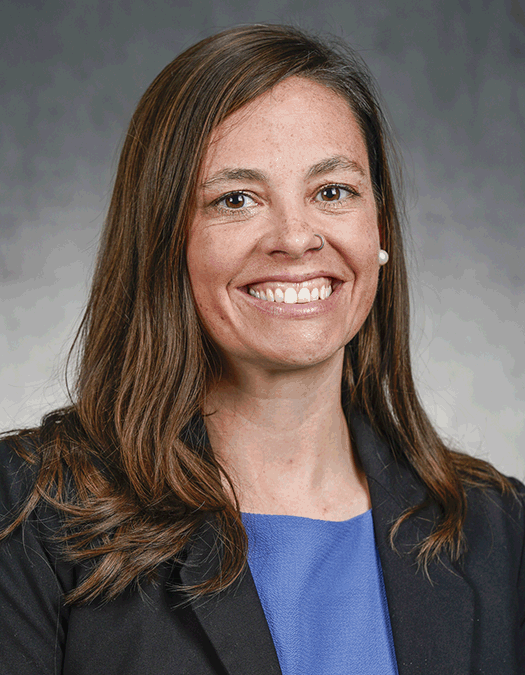
Rep. Kristi Pursell
Sponsored bills
Maddy summaryThis bill provides $1 million in fiscal year 2026 and $1 million in fiscal year 2027 to fund grants for county agricultural inspectors in Minnesota. To qualify, counties must employ an inspector or designated employee who has completed required training, coordinates with the state commissioner on enforcement, and submits annual weed inspection reports. The commissioner of agriculture will distribute available funds equally among all eligible counties that submit annual applications. This funding supports local agricultural inspection activities, including weed control enforcement and compliance with state agricultural laws.
Maddy summaryThis bill modifies Minnesota's definition of a "debt buyer" to clarify that businesses purchasing charged-off medical debts for collection purposes are considered debt buyers, while excluding nonprofits buying for charitable reasons. It appropriates $5 million from the general fund for a one-time grant to the nonprofit Undue Medical Debt to relieve medical debt for eligible residents who couldn't pay after hospitals completed reasonable collection efforts. The grant must be used by June 30, 2028, and Undue Medical Debt must report recipient demographics to state agencies. The bill directly affects low-income Minnesotans with unpaid medical bills and hospitals that previously pursued collections.
Maddy summaryHF 2147 exempts hot tubs or whirlpools on houseboats and single-unit rental properties from most public pool safety requirements in Minnesota. It requires property owners to ensure water temperature stays below 106°F, test chlorine/bromine, pH, and alkalinity before each rental, and provide renters with a specific notice about the exemption. The bill mandates a posted warning: "NOTICE: This spa is exempt from certain state and local sanitary requirements... USE AT YOUR OWN RISK." It directly affects rental property owners, resorts, and renters of these properties, while prohibiting local governments from adding extra requirements for qualifying hot water pools.
Maddy summaryHF 3007 establishes a preapplication evaluation process for projects requiring large water use (over 100 million gallons per year or 250,000 gallons per day), requiring applicants to consult with the state commissioner early in development and share details about water use, location, and source. The commissioner evaluates water availability at potential sites and responds in writing, with early communications kept confidential until a formal permit application is submitted. The bill also adds requirements for water permits to promote conservation and address conflicts, and mandates environmental impact statements for data centers expanding by 100 megawatts or more.
Maddy summaryHF 3158 proposes a constitutional amendment requiring a two-thirds vote in both the Minnesota House and Senate to authorize public funding for the design, construction, or renovation of a professional sports facility. Currently, a simple majority vote suffices for such funding. The amendment must be submitted to voters in the 2026 general election, where they will decide whether to adopt the two-thirds requirement. If approved by voters, this change would become part of the Minnesota Constitution, affecting future legislative decisions on sports facility funding.
Maddy summaryHF 3057 establishes a public option within MinnesotaCare, allowing Minnesotans to enroll in a government-run health plan alongside private insurers. It expands eligibility to more residents and sets income-based premiums for public option enrollees. The bill requires the commissioner of commerce to seek federal approval for a special waiver (Section 1332) and appropriates funding for implementation. This directly affects individuals purchasing health insurance in Minnesota's individual market, particularly low- and middle-income residents seeking affordable coverage options.
Maddy summaryHF 1598 establishes a low-cost financing program through Minnesota’s Climate Innovative Finance Authority to help school districts improve air ventilation systems and install geothermal energy systems on or near school buildings. It directly affects eligible Minnesota school districts (including independent, special, and cooperative districts) by providing loans to cover upfront costs, with priority given to schools in high-poverty areas (using Title I data), balanced project distribution between metro and non-metro areas, and cost-reduction goals. The program appropriates $1.5 million from the general fund and $1.5 million from the renewable development account for fiscal year 2026, requiring all funds to be used by June 30, 2027, or they cancel. This creates a structured financing mechanism focused on tangible infrastructure upgrades, not direct grants or policy changes.
Maddy summaryThis bill appropriates $1.5 million from the state general fund for Minnesota's Lawns to Legumes program, which supports homeowners in replacing grass lawns with soil-enriching legume plants like clover. The funds, available until June 2029, are administered by the Board of Water and Soil Resources and can be used to partner with local governments and organizations. The program aims to improve soil health and reduce fertilizer use by incentivizing legume-based lawn alternatives. This is a one-time funding allocation for fiscal year 2026.
Maddy summaryHF 1740 appropriates $X from Minnesota's arts and cultural heritage fund for fiscal year 2026 to support community cable television programming. The funds will be distributed through the Minnesota Association of Community Telecommunications Administrators to public, educational, and governmental cable channels across the state. This grant program specifically aims to fund local programming that promotes community and civic engagement. The bill directly affects community cable providers by providing dedicated funding for locally produced content, with no changes to existing regulatory frameworks.