

Maddy summaryHF 1485 requires Minnesota health insurers and medical assistance programs to cover over-the-counter (OTC) contraceptive drugs, devices, and products without cost-sharing (like co-pays or deductibles). It applies directly to health plans and enrollees, mandating coverage of all FDA-approved OTC contraceptives at the point of sale without prescription requirements or quantity limits. The bill also requires health plans to list covered contraceptive services accessibly and cover provider-recommended methods based on medical necessity. This law takes effect January 1, 2026, for health plans offered, issued, or renewed after that date.
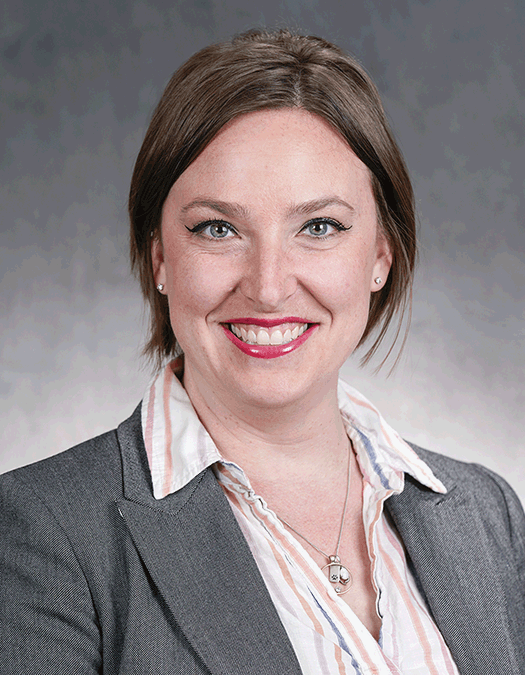
Rep. Carlie Kotyza-Witthuhn
Sponsored bills
Maddy summaryHF 2468 appropriates $500,000 for fiscal year 2026 and $500,000 for fiscal year 2027 from the general fund to support mental health initiatives in Minnesota's construction industry. The funds, available until June 30, 2027, are designated for outreach, education, stigma reduction programs, and worksite strategies to prevent suicide. They can be used for grants to industry groups and developing resources targeting construction workers. This bill directly affects construction industry workers by funding concrete mental health support services through state-administered programs.
Maddy summaryHF 1169 directs Minnesota's Commissioner of Children, Youth, and Families to create a plan by January 2026 to reduce paperwork in child protection cases. The plan must involve counties, local agencies, Tribal governments, and include specific changes, an implementation timeline, and ongoing input procedures to benefit foster care providers, tribes, counties, and child placement agencies. The bill also provides funding to improve the Social Services Information System and appropriates money for these efforts. This focuses on streamlining administrative processes without changing child protection standards.
Maddy summaryHF 805 establishes a property tax refund program for nonprofit child care facilities that rent their facilities. Eligible providers - nonprofits with 501(c)(3) status operating licensed child care centers or family day care that accept state child care assistance - receive a 10% refund on cash rent paid for their facility space. To claim the refund, providers must apply annually to the commissioner by the following year, with payments made according to state schedules. The bill appropriates funds for these refunds and requires reporting, effective for rent paid in 2024 and later.
Maddy summaryHF 2254 adds a $400 "baby bonus" to Minnesota's existing child credit for each qualifying child born during the tax year. This directly affects Minnesota taxpayers with newborn children, increasing their state income tax credit. The bill modifies the child credit calculation by adding the $400 per newborn (without reducing the minimum credit amount) and allows for potential advance payments. It takes effect for tax years beginning after December 31, 2024.
Maddy summaryMinnesota's HF 1384 expands the state's dependent care credit and creates a new "Great Start child care credit" for families with young children. It directly affects Minnesota taxpayers with children under age six who pay for child care, including parents using family day care homes or not enrolled in employer-dependent care plans. The bill increases the credit amount for one qualifying child to a maximum of $600 and for two or more children to $1,200, with phaseouts for higher-income households. These changes apply to 2025 tax returns and reduce the tax liability for eligible families based on their child care expenses.
Maddy summaryHF 2009 provides $240,000 in fiscal year 2026 and $240,000 in fiscal year 2027 from the general fund to the Office of the Foster Youth Ombudsperson. This funding directly supports foster youth in Minnesota by enabling the hiring of additional full-time staff. The key provision allows the Ombudsperson's office to conduct expanded outreach to foster youth. The bill focuses solely on authorizing these specific appropriations for staffing, with no other policy changes.
Maddy summaryThis bill (HF 2008) amends Minnesota Statutes section 135A.15 to clarify definitions and procedures for handling campus sexual misconduct complaints at Minnesota colleges and universities. It defines key terms like "incident" (one report covering multiple events), "advisor" (who may be an attorney providing support), and "intimate partner violence," and specifies that advisors can give opening/closing remarks during investigations. The bill requires institutions to provide equal opportunity for both parties to present evidence, ensure due process protections for responding parties (including written notice of allegations), and treat all participants with dignity. These changes directly affect students, staff, and institutions managing sexual misconduct cases under state law.
Maddy summaryHF 1926 allocates $1,000,000 from the state general fund for a one-time grant to the Greater Minneapolis Council of Churches to support food shelves. The funds must be distributed to food shelves enrolled in the Minnesota FoodShare program according to that program's existing distribution formula. The Council may use up to 5% of the grant for administrative costs and must report details on fund distribution to the state commissioner by August 1, 2026. This bill directly affects participating food shelves in the Minneapolis area through the Council of Churches' grant program.
Maddy summaryHF 1087 appropriates $300,000 for fiscal year 2026 and $300,000 for fiscal year 2027 from the general fund to the I-494 Corridor Commission. The funds are designated for the Commission's programming, staffing, communications, outreach, education program development, and operations management. This one-time appropriation requires full disbursement by July 31 each year, with no funds retained by the commissioner of transportation.