

Maddy summaryHF 470 appropriates $96.565 million from the general fund for each of fiscal years 2026 and 2027 to fund Minnesota's early learning scholarships program under Minnesota Statutes section 142D.25. This funding directly supports families with young children by providing financial assistance for early learning services. The bill establishes a specific, dedicated funding stream for the program, adding it to the base budget. It does not change eligibility criteria or program rules, only providing the necessary state funding to operate the existing scholarship program.
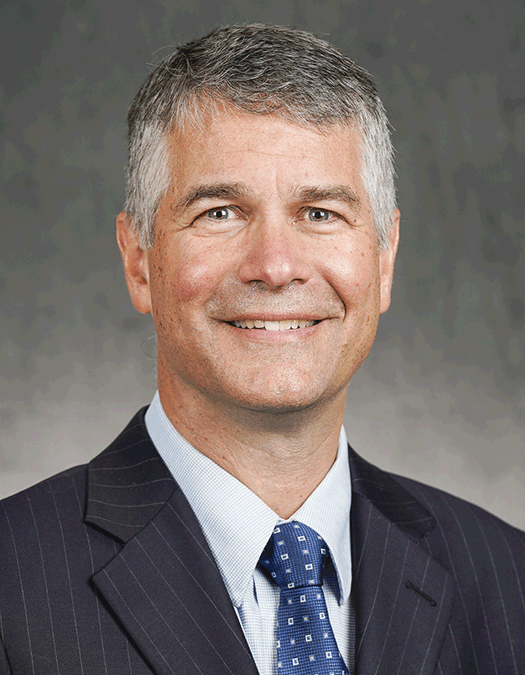
Rep. Larry Kraft
Sponsored bills
Maddy summaryHF 2505 allows local governments (cities and counties) to adopt alternative road design standards without needing state approval for projects using state-aid funding. It permits them to use specific, nationally recognized design guides (like AASHTO or NACTO standards) instead of following standard state engineering rules, eliminating the need for variance requests for these approved designs. The bill also requires the state transportation commissioner to notify legislators if a variance request is denied, establishes an advisory committee to review such requests, and specifies that certain safety-focused changes (like narrower lanes near schools) must receive special consideration. This directly affects how local road projects are designed and approved under state-aid programs, streamlining the process for communities using approved design frameworks.
Maddy summaryHF 2848 modifies reporting requirements for local transportation funds in Minnesota. It requires counties and other local transportation authorities to submit detailed annual financial reports by March 1, including five years of actual spending data, ten years of spending projections, and how funds were used across categories like highways, transit, and active transportation. The commissioner must compile these reports into a consolidated annual report for legislative committees. Counties failing to submit required reports face a 25% withholding of their apportioned transportation funds until they comply. This bill directly affects local governments managing state transportation funds.
Maddy summaryHF 2366 appropriates $3.5 million from Minnesota's renewable development account for the city of St. Cloud to fund its Green Hydrogen Project. The funds are specifically designated for integrating a battery system and renewable energy components into the project during fiscal year 2026. This is a one-time payment, not a new policy or ongoing funding mechanism. The bill directly affects St. Cloud's project implementation by providing targeted financial support from existing renewable energy funds.
Maddy summaryHF 683 allows Minnesota cities and counties to adopt ranked choice voting (RCV) for local elections, such as mayoral or city council races. It establishes rules for how RCV would work, including counting votes by voter preferences and reallocating votes when candidates are eliminated. The bill permits local jurisdictions to use electronic voting systems that automatically handle vote reallocation, and it appropriates funds for implementation. This bill directly affects local governments choosing to implement RCV and voters in those jurisdictions participating in local elections. It does not change state or federal election rules.
Maddy summaryHF 186 requires Minnesota's transportation department to conduct cumulative impacts analyses and alternative design studies for highway projects, incorporating community input through a new policy advisory committee. It creates a dedicated environmental justice ombudsperson position to address equity concerns and restricts highway funds from covering non-transportation uses like tourist kiosks, parades, or electric vehicle infrastructure. The bill directly affects highway planning decisions, funding allocations for the Minnesota Department of Transportation, and communities near proposed projects. Key provisions include mandating community input for project designs and clarifying eligible uses of highway funds under Minnesota Statutes.
Maddy summaryHF 422 appropriates $10 million for fiscal year 2026 and $10 million for fiscal year 2027 from state funds to support two existing Minnesota programs. The funding directly supports schools and communities by improving safe walking and biking routes to school (under Minnesota Statutes §174.40) and expanding broader active transportation infrastructure like bike lanes and pedestrian paths (under §174.38). This provides concrete financial resources for local projects that make it safer and easier for students and residents to walk or bike. The bill focuses on implementing specific, measurable infrastructure improvements rather than creating new policies.
Maddy summaryHF 1821 appropriates $ for fiscal years 2026 and 2027 from Minnesota's general fund to provide supplemental security grants to nonprofits. It directly affects nonprofits that have already received federal grant approval through the Emergency Management Agency's nonprofit security program, allowing them to access state funds without submitting new applications. The bill limits total funding per nonprofit to $75,000 across both federal and state programs, with grants awarded based on the federal program's ranking order. This ensures nonprofits can cover security costs without extra paperwork, using funds already allocated by the federal government.
Maddy summaryHF 679 increases funding for Minnesota's Innovative Service-Learning Grants program. The bill raises the maximum grant award amounts for partnerships between schools (including districts, charter schools, and tribal schools) and community organizations. These grants support K-12 student-led projects that connect classroom learning to community needs, such as addressing local issues or exploring career paths. The legislation appropriates additional state funds to expand this existing program without changing eligibility rules or application requirements.
Maddy summaryHF 54 authorizes $375,000 annually for 2026 and 2027 to fund the Minnesota Youth Council's activities through the Minnesota Alliance With Youth. The bill appropriates these funds from the state general fund to support youth-led initiatives and programming. This funding directly affects the Minnesota Youth Council and its partner organization, enabling them to carry out their work with youth engagement. The bill creates no new policy requirements, only providing dedicated financial support for existing council operations.