

Maddy summaryThis bill would exempt local governments in Minnesota from paying sales and use taxes when they purchase motor vehicle leases or construction materials through contractors or subcontractors. The exemption applies specifically to cities, counties, townships, special districts, and their instrumentalities, but excludes certain businesses like liquor stores and utilities from receiving this tax break. The law would take effect for purchases made after June 30, 2026, and amends existing state tax statutes to clarify these exemptions.
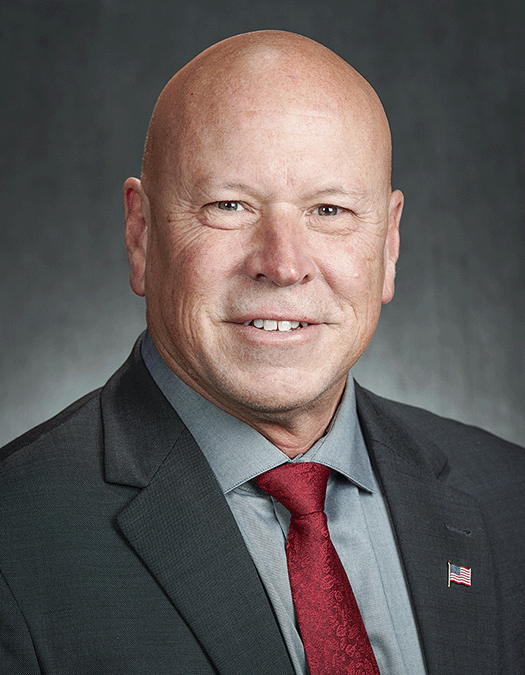
Rep. Wayne Johnson
Sponsored bills
Maddy summaryHF 3436 requires drivers approaching a stopped school bus displaying flashing red lights to stop at least 20 feet away. The bill amends Minnesota Statutes section 169.444 to mandate this stop until the bus retracts its stop arm and turns off the red lights. It also adds a new provision requiring drivers to prepare to stop within 20 feet when a bus shows prewarning amber lights, signaling red lights are about to activate. This law directly affects all drivers operating vehicles near school buses in Minnesota, aiming to improve safety for children boarding or exiting buses. The bill takes effect the day after final enactment.
Maddy summaryHF 2461 transfers $10 million from Minnesota's general fund to the housing development fund for one-time use in FY2026. It appropriates $5 million to fund a manufactured home down payment assistance program administered by NeighborWorks Home Partners, helping buyers cover down payments for manufactured homes. Another $5 million funds a program to convert manufactured home parks to cooperative ownership, managed by Northcountry Cooperative Foundation through loans, grants, or subsidies. All converted parks must remain as manufactured home parks for 30 years under a land covenant. The bill directly affects manufactured home buyers and park owners seeking affordable housing options.
Maddy summaryHF 1417 provides $15 million annually in state funding for infrastructure improvements in manufactured home parks across Minnesota, starting in fiscal year 2026. The bill directs the Minnesota Housing Finance Agency to offer grants and loans to park owners (including private, cooperative, and municipal operators) for essential infrastructure like water, sewer, and roads. Park owners must apply for these funds under existing law (Minnesota Statutes § 462A.2035), with the agency required to report annually by January 15 on fund usage, including breakdowns by ownership type, average grant/loan amounts, and loan terms. This funding aims to address aging infrastructure in manufactured home communities without altering eligibility or creating new requirements for park residents.
Maddy summaryThis bill directs $2 million from the state's general fund to the Emerging Entrepreneur Loan Program for fiscal year 2027, providing additional funding to support loans for new business owners in Minnesota. The legislation allows the commissioner of employment and economic development to allocate up to four percent of these funds for administrative and monitoring costs. This is a one-time transfer intended to expand the program's capacity to offer financial assistance to entrepreneurs seeking to start or grow businesses.
Maddy summaryThis bill modifies the duties of Minnesota's Department of Human Services commissioner regarding how the state handles federal SNAP fiscal disallowances and sanctions. It adds a definition for MAXIS, the computer system used to determine eligibility for public assistance programs, and updates the commissioner's responsibilities to include developing performance measures that focus on reducing inequities, improving program coordination, and minimizing administrative burdens for families. The legislation also grants the commissioner expanded authority to monitor county agencies, enforce compliance with federal and state welfare laws, and adjust benefits when necessary to align with regulations. Additionally, it requires the commissioner to report biennially on grants received and program performance to legislative committees.
Maddy summaryHF 2962 modifies Minnesota's paid leave program by clarifying who qualifies as an employee and employer under the law. It excludes seasonal hospitality workers (defined as those employed ≤150 days/year in hospitality with specific revenue patterns), self-employed individuals, and small employers unless they elect coverage. The bill also expands the definition of "family member" to include grandparents, grandchildren, in-laws, and up to one annually designated non-family individual with a close personal relationship. These changes directly affect workers and employers covered by Minnesota's paid leave law, particularly in hospitality and small businesses.
Maddy summaryHF 238 modifies the interest rate applied to unpaid special assessments in Minnesota, which are fees for local improvements like roads or sewers. It requires municipalities to refund interest payments made under the previous rate if they were overcharged. The bill directly affects property owners who pay these assessments and may owe interest on unpaid amounts. Key changes include setting a new interest accrual rate and mandating refunds for overpayments, as specified in the amended Minnesota Statutes section 429.061.
Maddy summaryThis bill expands eligibility for Minnesota's health professional education loan forgiveness program to include physical therapists and physical therapist assistants. Under the new provisions, these healthcare workers can receive loan forgiveness if they agree to practice in designated rural areas or underserved urban communities. The legislation amends existing state statutes to formally add these professions to the list of eligible health care professionals who can access this financial assistance. By broadening the program's scope, the bill aims to support workforce development in areas with healthcare shortages while providing debt relief to qualified practitioners.
Maddy summaryThis bill updates Minnesota's individual income tax law to align with a recent federal expansion of the dependent care credit. It directly affects Minnesota taxpayers by allowing them to claim the enhanced federal credit on their state tax returns. The legislation amends state statutes to include the new federal provision and ensures the change applies retroactively to match the federal effective date. This adjustment ensures Minnesota taxpayers receive the same tax benefit for dependent care expenses as provided under federal law.