

Maddy summaryHF 1472 appropriates $1,995,000 for fiscal year 2026 and $2,071,000 for fiscal year 2027 from the general fund to the Minnesota Board on Aging. This funding creates specific staff positions to support aging services, including one role for federal compliance, one for Older Americans Act policy, two for Senior LinkAge Line operations, and 18 additional positions for area agencies on aging contact centers. The bill directly affects seniors in Minnesota and the service providers who deliver aging-related programs through the Senior LinkAge Line and area agencies. These concrete staffing additions aim to meet growing service demands and ensure compliance with federal requirements.
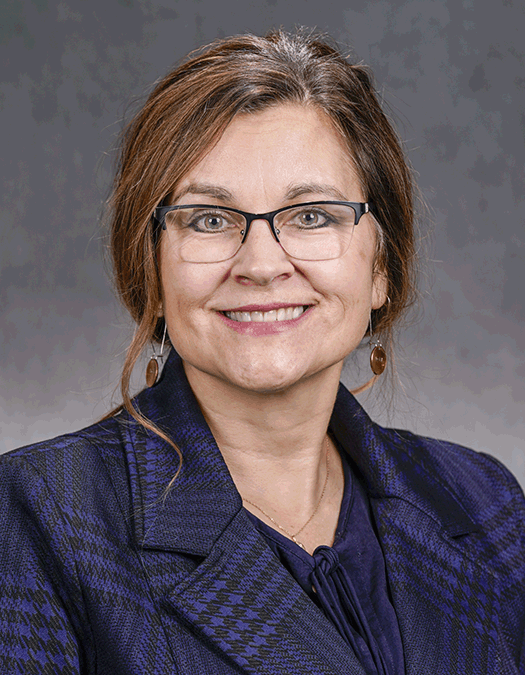
Rep. Natalie Zeleznikar
Sponsored bills
Maddy summaryHF 515 increases Minnesota's annual funding for public schools by guaranteeing a minimum 3% raise to the general education basic formula allowance starting in fiscal year 2026. This directly affects all public school districts receiving state education funding, as it changes how their base funding amount is calculated each year. The bill requires the state education commissioner to calculate the allowance using either a 3% increase or the current inflation rate (whichever is higher), but never exceeding a 3% annual increase. The change ensures schools receive predictable, inflation-adjusted funding growth while maintaining a minimum 3% annual increase in state support.
Maddy summaryHF 2548 creates the Outdoor School for All grant program to fund immersive, multiday outdoor educational experiences for Minnesota students in grades 4-8. The program provides grants to accredited overnight outdoor schools and nonprofit learning centers meeting specific criteria, including research-based curricula, integration with school standards, skill development (like leadership and critical thinking), and accessibility for underserved students. It appropriates $2.5 million for fiscal years 2026 and 2027 from the general fund. The bill directly affects public school students and providers offering equitable outdoor education, aiming to address declining outdoor engagement and access disparities.
Maddy summaryThis bill appropriates $1.5 million from Minnesota's general fund and $500,000 from the workforce development fund to support the 2026 Special Olympics USA Games. The funds will directly support the Games' operations and specifically target employment initiatives for individuals with intellectual and developmental disabilities. The $500,000 grant from the workforce fund is earmarked for activities aimed at increasing job opportunities for this community during the Games. These are one-time appropriations for fiscal year 2026, with no ongoing funding commitment.
Maddy summaryHF 381 modifies how Minnesota calculates rates for home and community-based waiver services and increases room and board rates for individuals receiving these services. It requires service providers to submit detailed data (like staffing hours, ratios, and transportation miles) to a central rates management system, with lead agencies required to approve rates within 30 business days or pay a 10% late penalty. The bill also creates an exception process for individuals with "exceptional needs" that cannot be met under standard rate formulas, allowing for alternative payment rates. These changes directly affect service providers, lead agencies (like county human services departments), and individuals receiving home and community-based care, effective July 1, 2025.
Maddy summaryHF 2408, titled the "No Patient Left Alone Act," requires hospitals and nonacute care facilities (like nursing homes) to allow patients and residents to have at least one support person of their choice physically present during healthcare services. This applies to individuals receiving care in hospitals (defined as "patients") or long-term care facilities (defined as "residents"). Facilities must create written policies explaining this right, including any reasonable restrictions (like infection control during emergencies), and ensure support persons have equal visitation access. The bill specifically ensures accommodations for end-of-life situations (up to six people), virtual visits when physical presence isn’t possible, and prohibits facilities from requiring patients to waive this right or sign additional documents to have a support person.
Maddy summaryHF 2872 allocates $750,000 for fiscal year 2026 and $750,000 for fiscal year 2027 to create a no-cost online program for early childhood educators, Minnesota residents, and high school students. The funding covers program development and operation, with up to $250,000 annually reimbursing schools - ensuring at least half supports schools outside Minnesota’s seven-county metro area. The program must meet specific requirements, including offering courses in English or Spanish for credentialing, providing accredited continuing education, meeting federal health/safety training standards, and being accessible on multiple devices. This one-time appropriation aims to expand professional development opportunities in early childhood education across the state.
Maddy summaryHF 1007 appropriates $5 million from Minnesota's general fund for the World Junior Hockey Championships hosted in Minnesota during December 2025 and January 2026. The funds, available until June 2027, are directed to Minnesota Sports and Events through Explore Minnesota to cover event-related costs. This bill provides specific financial support for the tournament's operational expenses. It directly affects the state's tourism organization and the event organizer, Minnesota Sports and Events. The legislation is a straightforward funding measure with no additional policy provisions.
Maddy summaryHF 2238 requires Minnesota's commissioner to approve youth skills training programs in construction trades, specifically those conducted at central locations like headquarters or training facilities. It directly affects young workers in construction training programs and the commissioner who must review these programs. The bill adds a new rule to Minnesota Statutes 2024, section 175.46, mandating commissioner approval for eligible programs and exempting participants from conflicting child labor laws under section 181A.07, subdivision 7. This creates a streamlined pathway for youth to gain construction trade experience while complying with labor regulations.
Maddy summaryHF 2679 exempts small rural ambulance services meeting specific criteria from Minnesota's healthcare gross receipts tax. It defines "small rural ambulance services" as those operating outside major metropolitan areas and cities (like Duluth or St. Cloud) with annual revenues under $10 million. The exemption requires state approval of federal waivers to maintain eligibility for federal funding, and takes effect January 1, 2026, or after federal approval is secured. This directly affects qualifying ambulance providers in rural Minnesota communities.