

Maddy summaryHF 2644 amends Minnesota law to update the definition of "crime of violence" specifically for firearms restrictions. The bill adds offenses like murder, manslaughter, aggravated assault, robbery, kidnapping, and sexual violence crimes (including attempts) to the list of qualifying "crimes of violence." This change directly affects individuals convicted of these offenses by potentially prohibiting them from possessing firearms under state law. The amendment clarifies which violent crimes trigger firearm restrictions, ensuring the definition aligns with current firearms regulations.
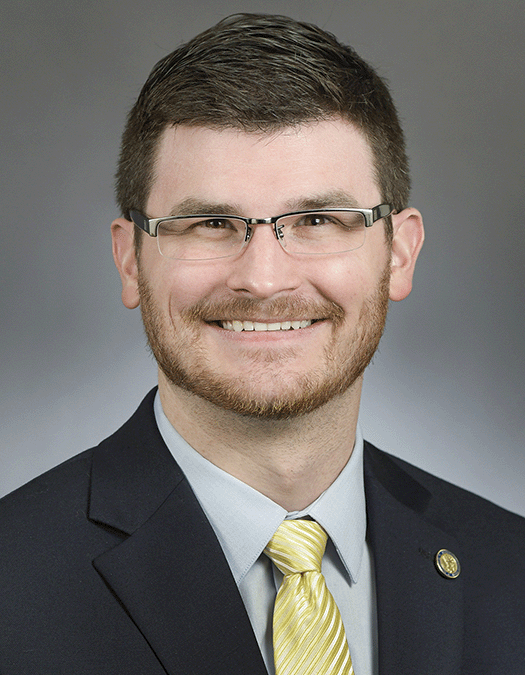
Rep. Nolan West
Sponsored bills
Maddy summaryHF 2459 appropriates $150,000 for the 2026 fiscal year and $150,000 for 2027 to the Metro Deaf School. The funding provides services specifically for young children with deafness, deafblindness, or hard-of-hearing disabilities who do not qualify for existing state funding under Minnesota Statutes §124E.11(h). This is a one-time appropriation, directly supporting the school's ability to serve this specific student population. The bill does not change eligibility rules but provides dedicated funding for an underserved group.
Maddy summaryHF 2643 requires child care providers (family child care homes and centers) to indicate whether they self-reported violations when receiving official licensing notices. The bill mandates that correction orders, fix-it tickets, and documented technical assistance documents must explicitly state if the violation was self-reported by the provider. This information must also be included in any public summaries posted on the state's department website for these notices. The bill does not change licensing standards but ensures transparency about whether providers voluntarily disclosed issues before inspections.
Maddy summaryHF 2107 establishes a new type of license plate specifically for rental motor vehicles in Minnesota. Auto rental companies that rent at least 50 vehicles must apply to get these plates, which display "RENTAL MOTOR VEHICLE" and cost a set fee. The plates are valid for seven years, can be transferred between vehicles within the same company for a $5 fee, and exempt rental vehicles from needing standard registration stickers. This bill directly affects larger rental companies and streamlines their vehicle registration process under Minnesota Statutes.
Maddy summaryHF 1771 appropriates $250,000 for fiscal year 2026 and $250,000 for fiscal year 2027 to the MacPhail Center for Music to expand its "Learning with Music" program. The funds require the center to create professional development training for early childhood educators statewide - both online and in person - based on the program's proven methods. Additionally, the grant will deepen direct programming at five early childhood centers in the Twin Cities metropolitan area, prioritizing children from families experiencing economic hardship. This bill directly affects early childhood educators and underserved young children through targeted educational support and expanded access to music-based learning.
Maddy summaryHF 2078 modifies Minnesota's child care licensing rules to expand exemptions for certain providers. It adds two new exemptions: (1) nonpublic schools operating child care for children 33 months+ that meet specific accreditation standards (including background checks and complaint investigations), and (2) nonprofit youth programs serving K-12 students that provide written parental consent, disclose they are unlicensed, and confirm they won’t accept state child care assistance. These changes directly affect nonpublic schools and community youth programs seeking to operate without full state licensing. The bill requires these exempt programs to meet documentation and disclosure requirements instead of standard licensing.
Maddy summaryHF 1247 requires Minnesota's Commissioner of Children, Youth, and Families to permanently amend child care licensing rules, allowing teacher's aides to supervise children in child care centers. This change makes permanent an exception that was temporarily permitted under a 2023 law. The commissioner must submit the proposed rule by June 1, 2025, using a specific rulemaking procedure. The bill directly affects child care centers and their staff by expanding the roles of teacher's aides in supervision without requiring a licensed teacher's presence.
Maddy summaryHF 2468 appropriates $500,000 for fiscal year 2026 and $500,000 for fiscal year 2027 from the general fund to support mental health initiatives in Minnesota's construction industry. The funds, available until June 30, 2027, are designated for outreach, education, stigma reduction programs, and worksite strategies to prevent suicide. They can be used for grants to industry groups and developing resources targeting construction workers. This bill directly affects construction industry workers by funding concrete mental health support services through state-administered programs.
Maddy summaryHF 1169 directs Minnesota's Commissioner of Children, Youth, and Families to create a plan by January 2026 to reduce paperwork in child protection cases. The plan must involve counties, local agencies, Tribal governments, and include specific changes, an implementation timeline, and ongoing input procedures to benefit foster care providers, tribes, counties, and child placement agencies. The bill also provides funding to improve the Social Services Information System and appropriates money for these efforts. This focuses on streamlining administrative processes without changing child protection standards.
Maddy summaryHF 1845 expands Minnesota's definition of "veteran" to include two specific groups: (1) Hmong veterans naturalized under the federal Hmong Veterans' Naturalization Act of 2000, and (2) individuals who served honorably with secret guerrilla units or irregular forces operating from Laos in support of U.S. forces between February 28, 1961, and May 14, 1975. The bill amends Minnesota Statutes section 197.447 to add these categories to the existing definition, ensuring these veterans qualify for state benefits. It also creates an advisory task force of veterans, experts, and community members to help determine eligibility under the new definition. This change directly affects Hmong veterans and Laotian-based veterans who previously may not have met Minnesota's veteran criteria.