

Maddy summaryHF 1615 sets new safety rules for cannabis edibles in Minnesota. It limits THC to 5mg per serving for most edibles (10mg for beverages), bans child-appealing packaging (like cartoon designs or candy-like shapes), and requires clear labeling with serving size, cannabinoid content, and a "keep out of reach of children" warning. The bill directly affects cannabis businesses selling edibles and consumers purchasing them, while also creating specific rules for hemp-based "lower-potency" edibles sold as beverages or snacks. These provisions aim to reduce accessibility to children and improve product transparency.
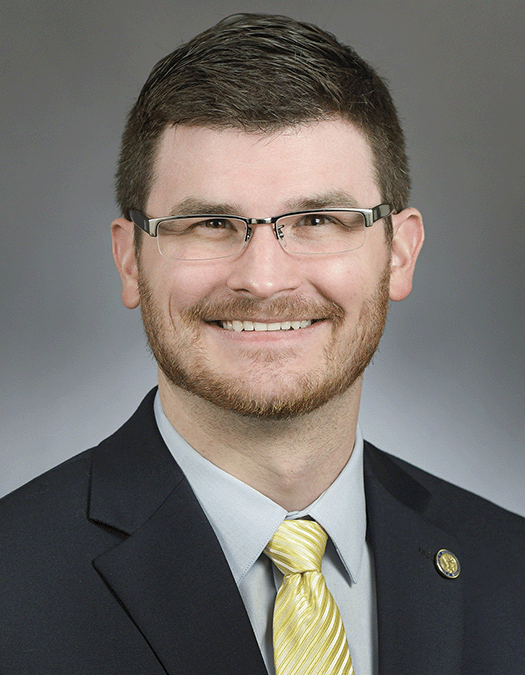
Rep. Nolan West
Sponsored bills
Maddy summaryThis bill requires Minnesota public schools to include overdose prevention education in health classes for students in grades 6 through 12. It adds specific content about recognizing, preventing, and responding to overdoses to existing health education standards. The mandate applies to all school districts statewide and is integrated into the current curriculum framework under Minnesota Statutes section 120B.215. This change directly affects school curricula and students in those grade levels, without altering funding or creating new programs.
Maddy summaryHF 2339 increases Minnesota's income threshold for the child tax credit, allowing more families to qualify for the full benefit before credits begin phasing out. The bill raises the phaseout threshold from $35,000 to $45,490 for married couples filing jointly and from $29,500 to $38,340 for other filers. This change directly affects Minnesota taxpayers with children who file individual income tax returns, as it prevents the credit from decreasing at lower income levels. The bill also requires future annual inflation adjustments to these thresholds starting in 2026.
Maddy summaryHF 1027 updates Minnesota's foreclosure process to better handle surplus funds after a property sale. If a foreclosure sale leaves $100 or more in surplus after paying the mortgage, taxes, and sale costs, the sheriff must hold that money during the owner's redemption period. The sheriff must mail written notice to the property owner about the surplus and provide contact details for the Minnesota Homeownership Center to help with redemption options. Owners can also request in writing to apply the surplus toward their redemption amount during the redemption period.
Maddy summaryHF 2436 modifies how Minnesota's Department of Education manages education funding transfers. It allows excess state budget allocations for specific education programs (like early childhood grants or special education aid) to be reallocated to underfunded programs within the same fiscal year, following proportional rules. This affects school districts and the Department of Education, as it changes the process for adjusting funding shortfalls. The bill does not create new services but adjusts administrative procedures for existing education funding mechanisms. (Note: Despite the title referencing "children and families," the bill focuses on education funding transfers, not direct child welfare services.)
Maddy summaryHF 2863 corrects technical errors in the definition of who must undergo a background study for child care providers in Minnesota. The bill amends Minnesota Statutes 2024, section 245C.02, subdivision 6a, to fix incorrect cross-references within the definition. This ensures the law accurately describes categories of individuals - such as employees, volunteers, applicants, and household members - who require background checks at licensed or certified child care facilities. The correction does not change existing requirements but clarifies the law to prevent confusion. It directly affects child care centers, family child care programs, and other providers regulated under state law.
Maddy summaryHF 3158 proposes a constitutional amendment requiring a two-thirds vote in both the Minnesota House and Senate to authorize public funding for the design, construction, or renovation of a professional sports facility. Currently, a simple majority vote suffices for such funding. The amendment must be submitted to voters in the 2026 general election, where they will decide whether to adopt the two-thirds requirement. If approved by voters, this change would become part of the Minnesota Constitution, affecting future legislative decisions on sports facility funding.
Maddy summaryHF 2716 allows licensed cannabis retailers in Minnesota to display and offer one sample per product type (e.g., flower, edibles) at cannabis events, such as festivals or sales demonstrations. Samples must be stored securely, labeled, and limited to 8 grams of flower/concentrate or 100mg THC for edibles - no free giveaways are permitted. The bill applies specifically to authorized retailers (including microbusinesses and combination businesses) during event sales, requiring age verification (21+) and adherence to existing packaging, testing, and security rules. Retailers must record all samples in the statewide monitoring system, and samples cannot be sold or distributed outside the designated event area.
Maddy summaryHF 1918 updates Minnesota's child welfare and early childhood programs. It requires child welfare agencies to actively locate noncustodial parents and relatives before removing African American or disproportionately represented children from their homes, and mandates placement with these relatives when feasible. The bill also modifies data privacy rules for the Great Start compensation program and exempts the Department of Children, Youth, and Families from standard contract term limits for electronic benefits systems. These changes affect foster care placements, early childhood providers, and families receiving child welfare services.
Maddy summaryHF 1740 appropriates $X from Minnesota's arts and cultural heritage fund for fiscal year 2026 to support community cable television programming. The funds will be distributed through the Minnesota Association of Community Telecommunications Administrators to public, educational, and governmental cable channels across the state. This grant program specifically aims to fund local programming that promotes community and civic engagement. The bill directly affects community cable providers by providing dedicated funding for locally produced content, with no changes to existing regulatory frameworks.