

Maddy summaryHF 22, titled "Parent's Bill of Rights," establishes specific rights for parents of minor children (under 18) in Minnesota. It requires schools and healthcare institutions to respect parental authority over education, access to school/medical records, moral/religious training, and consent for medical procedures or recordings of minors. The bill prohibits employees from coercing children to withhold information from parents or discriminating against parents who exercise these rights. It explicitly states these rights do not override child abuse laws or court orders, and does not limit other existing parental rights. This bill directly affects parents, schools, and healthcare providers serving minors.
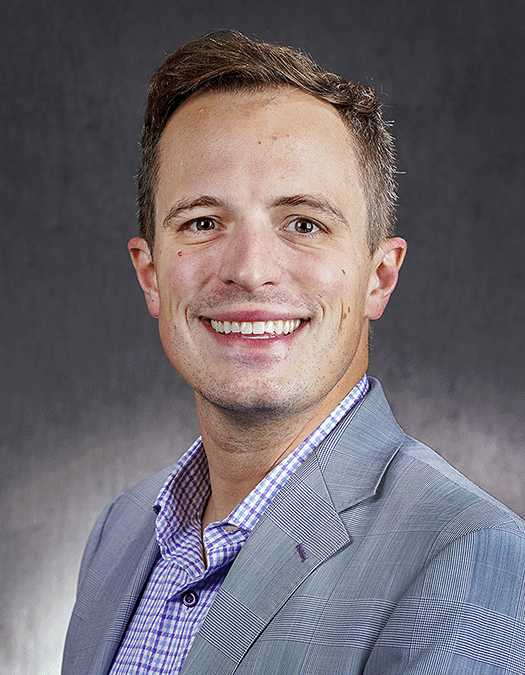
Rep. Max Rymer
Sponsored bills
Maddy summaryHF 10 prohibits Minnesota state-funded financial assistance, including health coverage and college scholarships, for undocumented noncitizens. The bill explicitly excludes undocumented noncitizens (defined as those residing without U.S. Citizenship and Immigration Services approval) from MinnesotaCare (state health insurance) and the North Star Promise scholarship program. It amends state statutes to require that these programs deny eligibility to individuals without lawful immigration status. The policy change takes effect upon final enactment, with scholarship eligibility applying to awards beginning in the 2025-2026 academic year.
Maddy summaryHF 1786 amends Minnesota law to allow cities to issue on-sale liquor licenses to licensed cosmetology salons. This change directly affects cosmetology salons that already hold valid state licenses under section 155A.29, enabling them to serve alcohol on-site. The bill adds cosmetology salons to the list of approved establishments (previously including hotels, restaurants, and clubs) eligible for such licenses. The amendment modifies Minnesota Statutes section 340A.404, subdivision 1, and takes effect upon final enactment.
Maddy summaryThis bill modifies Minnesota's renewable energy standards by expanding which hydroelectric projects count toward clean energy goals (including facilities over 100 megawatts if operating since 2023). It allows electric utilities to request delays in meeting renewable, solar, or carbon-free energy requirements if the commission determines it serves the public interest, considering factors like cost impacts and system reliability. The bill also expands sales tax exemptions for residential heating fuels and electricity, and prohibits demolition of fossil-fuel power plants under specific conditions. Additional provisions include supporting carbon capture technology and removing barriers to new nuclear power plants.
Maddy summaryHF 1590 establishes mandatory minimum prison sentences for individuals who maliciously punish children, specifically targeting cases involving severe physical injury. It affects parents, legal guardians, or caretakers who cause substantial or great bodily harm to children, with penalties increasing based on the child's age (under 4) and the injury's severity. For example, causing head/neck injuries to a child under 4 mandates at least one year in prison, while causing great bodily harm requires a minimum two-year sentence. The bill amends Minnesota Statute 609.377 and takes effect August 1, 2025.
Maddy summaryHF 1475 abolishes Minnesota's Metropolitan Council and transfers its core responsibilities to other state entities. Specifically, it moves the Council's duties to the commissioners of Administration and Natural Resources, shifts transportation and transit functions to the Department of Transportation, and creates a new metropolitan area sanitary sewer district. The bill also repeals land use planning provisions previously managed by the Council and ends its oversight of the Metropolitan Airports Commission. These changes reorganize regional governance for key services like transportation, environmental management, and sewer infrastructure across the metropolitan area.
Maddy summaryThis bill expands Minnesota's sales tax exemption to include additional baby products, directly affecting parents and caregivers who purchase these items. It adds baby wipes, cribs and bassinets (including mattresses and sheets), changing tables and pads, strollers, car seats and bases, baby swings, bottle sterilizers, and infant eating utensils to the list of tax-exempt items. The exemption applies to sales and purchases made after June 30, 2025. This change removes sales tax from these specific baby products, aligning with the existing exemption for items like breast pumps and baby bottles.
Maddy summaryHF 1026 proposes a constitutional amendment to Minnesota's Constitution that would prohibit state legislators from receiving pay on days when their chamber (Senate or House) fails to organize on the legally required convening date. The amendment specifies that legislators must not be compensated for any day the house is not "duly organized" as required by law. If approved by voters in the 2026 general election, this change would directly affect Minnesota legislators' compensation during unorganized sessions. The bill requires voter approval at the 2026 election and does not change current pay schedules for properly convened sessions.
Maddy summaryHF 1446 makes it a felony to knowingly add fentanyl to other controlled substances or drugs (either by mixing or replacing the substance in a container), targeting individuals who illegally alter drugs with fentanyl. This directly affects people who adulterate or substitute substances with fentanyl, excluding medical professionals like pharmacists or nurses acting in their professional capacity. The bill creates specific penalties for these acts and applies to crimes committed on or after August 1, 2025. It does not change existing laws for healthcare providers who handle controlled substances in their official roles.
Maddy summaryHF 606 appropriates $2 million from the general fund for the FATHER Project, administered by Goodwill Easter Seals Minnesota and its partners. The funding will continue the program in Rochester, Park Rapids, St. Cloud, St. Paul, Minneapolis, and surrounding areas to help fathers overcome economic and emotional barriers to supporting their children. This bill directly provides financial support to the nonprofit organization managing the initiative, which serves fathers in those specific communities. The key mechanism is a one-time grant allocation for program continuation, not a new policy. (3 sentences)