

Maddy summaryThis bill modifies Minnesota's definition of sustainable aviation fuel under state law. It specifies that qualifying fuel must be derived from biomass, gaseous carbon oxides from biomass or direct air capture, or green hydrogen - excluding palm fatty acid distillates - and must achieve at least a 50% reduction in life cycle greenhouse gas emissions compared to petroleum-based fuels. The requirement uses either the Argonne National Laboratory's GREET model or the International Civil Aviation Organization's methodology for verification. This directly affects Minnesota taxpayers engaged in producing or blending sustainable aviation fuel. The change ensures state compliance with specific environmental standards for eligible fuel.
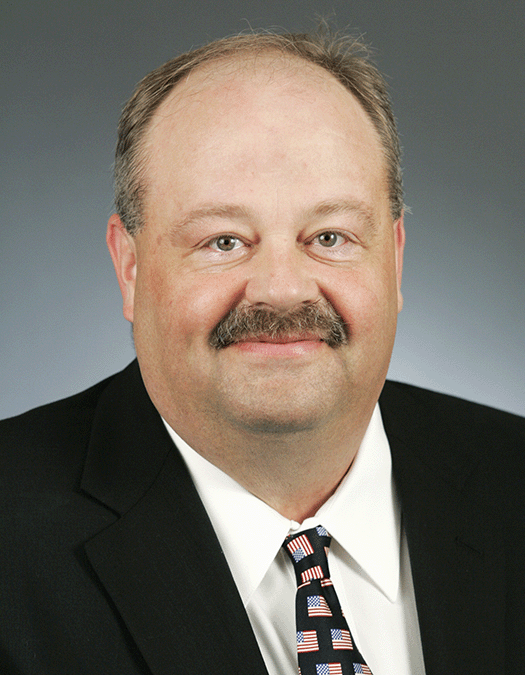
Rep. Greg Davids
Sponsored bills
Maddy summaryHF 172 reduces tax rates for charitable organizations that operate gambling activities like bingo, raffles, and paddlewheels in Minnesota. It amends the combined net receipts tax schedule to lower the rates applied to the organizations' taxable income, with specific reductions across all income brackets. The bill also exempts sports-themed tipboards (where outcomes are based on professional sports) from this tax. These changes take effect July 1, 2025, directly lowering tax burdens for qualifying charitable groups.
Maddy summaryHF 156 provides a refundable sales and use tax exemption for construction materials used in building a regional exhibition center at Graham Park in Olmsted County. It exempts materials purchased between January 1, 2025, and December 31, 2027, from Minnesota's sales tax, with the tax collected upfront and then refunded. The exemption applies to materials used in construction, reconstruction, or renovation of the center, and funds for refunds come from the state general fund. This directly affects Olmsted County's project costs by reducing upfront expenses for the exhibition center development.
Maddy summaryHF 171 creates a new 6.875% tax on gross receipts from amusement devices like arcade games, pinball machines, and bowling alleys in Minnesota. This tax replaces the existing sales tax for these devices, meaning owners (not customers) must pay it on revenue from device use. The tax revenue is split: 6.5% goes to the general fund and 0.375% to a specific constitutional fund. The bill takes effect July 1, 2025, and applies to all owners operating such devices in Minnesota.
Maddy summaryHF 148 provides a refundable sales tax exemption for construction materials used in building an ice rink in Delano, Minnesota. Purchases made between November 30, 2023, and January 1, 2026, qualify for the exemption, meaning the tax is collected upfront but then refunded to the buyer after June 30, 2025. The state will cover these refunds using funds from the general revenue fund. This policy directly affects the Delano ice rink project and its contractors by reducing upfront construction costs.
Maddy summaryThis bill (HF 139) increases annual cost-of-living adjustments for retirees in Minnesota's Public Employees Police and Fire Retirement Plan and State Patrol Retirement Plan. It raises the standard adjustment from 1% to up to 1.5% annually (based on federal Social Security COLA), and shortens the required waiting period from 36 months to 12 months for full benefits. Retirees receiving benefits for less than 12 months will now get a pro-rated increase based on months served. The changes take effect for adjustments starting January 1, 2026, and apply automatically unless retirees opt out in writing.
Maddy summaryHF 176 exempts all school supplies from Minnesota's sales and use tax, effective July 1, 2025. The bill defines "school supplies" to include common items like notebooks, pencils, binders, calculators, and book bags priced at $60 or less, while explicitly excluding items like regular stationery, wrapping paper, and hiking backpacks. This change directly affects students, families, and schools purchasing these items, removing a sales tax burden on required classroom materials. The policy alters Minnesota Statutes section 297A.67 by adding a specific tax exemption for the listed supplies.
Maddy summaryHF 147 increases Minnesota's estate tax general subtraction amount from $3 million to $6 million for estates of decedents dying after June 30, 2025. This change directly affects estates where the federal gross estate and adjusted taxable gifts exceed $6 million, reducing or eliminating Minnesota estate tax liability for many families. The bill amends Minnesota Statutes sections 289A.10 and 291.016 to set this new $6 million threshold, replacing the previous $3 million amount that applied to estates dying in 2020 and later. The policy change takes effect for deaths occurring after June 30, 2025.
Maddy summaryHF 175 exempts fiber and conduit purchased or leased by broadband and internet service providers for use in delivering retail broadband or internet access services from Minnesota's sales and use taxes. This bill directly affects broadband providers in Minnesota who buy these materials for network infrastructure. The key provision adds a new tax exemption to Minnesota Statutes, specifically covering fiber and conduit used in the provision of broadband services to end customers. The exemption applies to purchases made after July 1, 2025.
Maddy summaryHF 299 creates a property tax exemption for real estate owned and operated by congressionally chartered veterans service organizations in Minnesota. The bill removes a specific property tax classification rate for this property and establishes a direct exemption, meaning these organizations will no longer pay property taxes on qualifying owned properties. This exemption applies starting with the 2025 property tax assessment year, requiring organizations to file an application with their county assessor by August 1, 2025. The law directly affects eligible veterans service organizations by reducing their property tax burden on owned properties used for their operations.