

Maddy summaryHF 254 modifies Minnesota's process for updating the public waters inventory map, which identifies bodies of water designated as public waters. It requires the commissioner to reclassify certain wetlands (types 3, 4, and 5) as public waters only if they meet specific criteria, such as having shoreland management classification or being declared necessary for public ownership. The bill mandates written notice to local governments, counties, and watershed districts 60 days before changes take effect, allowing objections that could halt the revision. It also authorizes map updates for errors, trout stream adjustments, large quarries/pits meeting zoning criteria, and permit-required changes, with $1 million annually allocated for this work through 2032.
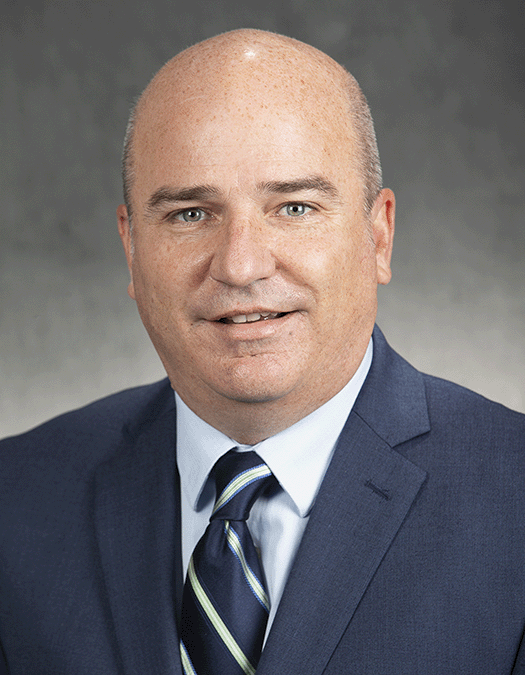
Rep. John Burkel
Sponsored bills
Maddy summaryHF 692 appropriates $48.586 million in state bond funds to finance flood prevention projects across six specific Red River Basin watershed districts in Minnesota. The bill directly affects communities like Newfolden (removed from floodplains) and funds projects including river rehabilitation, lake retention systems, and flood storage improvements. Key provisions include authorizing the state to issue bonds to cover the costs and setting grant limits (up to 75% of project costs) for approved flood mitigation work. The funding supports concrete infrastructure projects under Minnesota Statutes, not new policy or future legislation.
Maddy summaryHF 646 appropriates $634,000 for fiscal year 2026 and another $634,000 for fiscal year 2027 from the general fund to continue Minnesota's dairy development programs. The funding supports the dairy development and profitability enhancement programs, including dairy business planning grants, as specified in Minnesota Statutes section 32D.30. This directly benefits Minnesota dairy farmers and businesses by providing financial assistance for planning and improving their operations. The bill makes no changes to existing laws but ensures ongoing funding for these specific support services.
Maddy summaryHF 693 appropriates $350,000 for fiscal year 2026 and $350,000 for fiscal year 2027 from the state general fund to support implementation of the Red River mediation agreement. The commissioner of natural resources will administer grants covering up to 50% of implementation costs for eligible parties. This funding directly supports entities involved in the Red River mediation agreement, which addresses water resource management coordination in the Red River basin.
Maddy summaryHF 451 eliminates the dedicated funding source for pollinator habitat work by repealing the statutory requirement to appropriate money to the "pollinator account" (previously established under Minnesota Statutes 103B.101, subd. 19). It also repeals the "Lawns to Legumes" grant program (Minnesota Statutes 103B.104), which provided financial assistance to homeowners and communities for planting native, pollinator-friendly vegetation. These changes end two specific programs administered by the Board of Water and Soil Resources that supported habitat restoration for declining pollinators like the rusty patched bumble bee. The bill takes effect July 1, 2025.
Maddy summaryHF 604 appropriates $9.7 million from state bond proceeds to fund Phase 3 of the Karlstad airport runway and facility construction. The funds will support engineering, paving, lighting, taxiways, a fueling system, navigational aids, and other required infrastructure for the city of Karlstad to meet state aviation licensing standards. The state will issue bonds up to $9.7 million under Minnesota law to finance this project, building on prior funding for Phases 1 and 2. This bill directly affects the city of Karlstad, which will receive the grant to complete the airport relocation project.
Maddy summaryHF 694 allocates $170,000 for fiscal year 2026 and $170,000 for fiscal year 2027 from the clean water fund to the Red River Watershed Management Board. The funds will support expanding the River Watch program, which engages schools in monitoring water quality and watershed health across the Red River of the North watershed. The bill requires the management board to submit a detailed report by February 15, 2028, on how these funds were used to the commissioner of the Pollution Control Agency and relevant legislative committees. This provides direct funding for an existing educational monitoring initiative in schools within a specific watershed area.
Maddy summaryHF 481 prohibits discrimination against individuals aged 18+ or emancipated minors who refuse specific medical interventions (like vaccines, drugs, or gene editing) for conscience or religious reasons. It bans businesses, employers, healthcare providers, schools, and government entities from denying employment, services, commerce access, or treating individuals differently based on this refusal. Individuals harmed by violations can seek court orders, damages, or attorney fees. The bill explicitly states it doesn’t prevent education about or access to these medical interventions.
Maddy summaryHF 486 requires coal-fired electric generation facilities scheduled for retirement in 2027 or 2031, located within the Mississippi River - St. Cloud Watershed, to submit a decommissioning and repurposing plan by February 1, 2027. The bill mandates that public utilities provide this plan to the Public Utilities Commission and share it with the local municipality where the facility is located. The plan must include specific details on how the facility will be repurposed (if possible) and a timeline for the retirement process. This applies only to coal plants in the specified watershed and does not cover other energy sources or facilities outside that geographic area. The requirement is tied to the utility's next resource plan filing or a separate filing if needed before the deadline.
Maddy summaryThis bill modifies Minnesota's definition of sustainable aviation fuel under state law. It specifies that qualifying fuel must be derived from biomass, gaseous carbon oxides from biomass or direct air capture, or green hydrogen - excluding palm fatty acid distillates - and must achieve at least a 50% reduction in life cycle greenhouse gas emissions compared to petroleum-based fuels. The requirement uses either the Argonne National Laboratory's GREET model or the International Civil Aviation Organization's methodology for verification. This directly affects Minnesota taxpayers engaged in producing or blending sustainable aviation fuel. The change ensures state compliance with specific environmental standards for eligible fuel.