

Maddy summaryHF 1219 extends the validity period for temporary vehicle permits issued to nonresidents purchasing vehicles in Minnesota from 31 days to 60 days. This change directly affects nonresidents who buy vehicles in Minnesota and need to transport them out of state, allowing them more time to move the vehicle without immediate registration. The bill amends Minnesota Statutes sections 168.091 and 168A.11 to update the permit duration while keeping the $1 fee and electronic format requirements unchanged. The change takes effect October 1, 2025, for permits issued on or after that date.
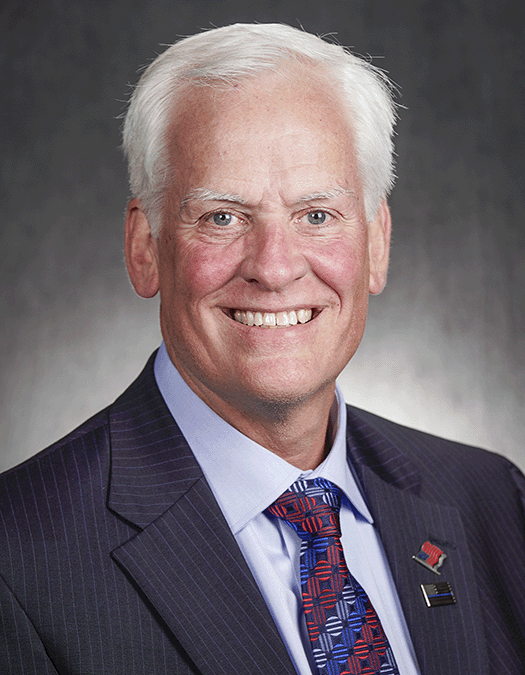
Rep. Tom Sexton
Sponsored bills
Maddy summaryHF 2063 designates July 2 each year as "1st Minnesota Day" to honor the 262 men of the 1st Minnesota Regiment who fought for the Union at the Battle of Gettysburg on July 2, 1863. The bill requires the governor to issue an annual proclamation, encourages schools to teach about the regiment's Civil War role, and mandates that the Minnesota Historical Society's replica regimental flag be flown at the State Capitol on July 2. It directly affects state government officials, public schools, and Capitol operations through these ceremonial requirements. The bill establishes a recurring observance without creating new taxes, regulations, or funding.
Maddy summaryHF 2682 appropriates $6,000 from Minnesota's general fund to provide a $1,200 bonus to eligible veterans who served in qualifying campaigns under Minnesota law but did not receive a bonus under existing provisions (Minnesota Statutes, section 197.79). Veterans must submit military discharge documents (DD214) confirming their service to the state veterans affairs commissioner by December 31, 2028, to qualify for the payment. The funds are available until June 20, 2029, to cover eligible bonus payments. This bill directly affects veterans meeting specific service criteria who were previously excluded from bonus eligibility under current state law.
Maddy summaryHF 2636 requires Minnesota's Attorney General to submit an annual report by July 15 each year to legislative committees overseeing judiciary, civil law, or criminal law. The report must detail all legal cases challenging the constitutionality of state statutes, including the challenged statute, defense efforts, case status, staff time, and costs incurred during the prior fiscal year. This bill directly affects the Attorney General's office (which must prepare the report) and the specified legislative committees (which receive the report). The law creates no new policy but mandates transparency about how the office handles constitutional challenges to state laws.
Maddy summaryHF 2262 appropriates $250,000 for fiscal year 2026 and $250,000 for fiscal year 2027 from the workforce development fund to the city of St. Paul. The funds are designated to expand the Right Track youth internship program, which connects young people from cost-burdened households to internships that build work skills, provide mentorship, and explore career paths. This is a one-time appropriation, not an ongoing funding source. The bill directly affects St. Paul's program and the youth participants in that initiative.
Maddy summaryHF 1443 increases the maximum bonded indebtedness limit for the State Armory Building Commission from $15 million to $45 million under Minnesota Statutes section 193.143. This bill directly affects the State Armory Building Commission, which manages military armory construction and maintenance projects across Minnesota. The key provision amends the statutory limit on bonds the commission can issue to fund armory-related costs, including construction, equipment, and upkeep. This change allows the commission to borrow more funds for these projects without requiring additional legislative approval for each financing step. The bill does not alter the commission's responsibilities or create new programs, only adjusting its borrowing capacity.
Maddy summaryHF 1580 amends Minnesota law to require medical personnel to provide immediate care to infants born alive during abortion procedures. The bill mandates that such infants be recognized as human persons under the law and that all reasonable medical measures, consistent with standard practice, be taken to preserve their life and health, including proper medical documentation. This directly affects healthcare providers performing abortions in Minnesota who encounter infants born alive. The law takes effect the day after final enactment. It focuses solely on medical care protocols for surviving infants, not on changing abortion access or legality.
Maddy summaryHF 1976 modifies Minnesota's Paid Leave Law to clarify eligibility for paid leave benefits. It defines "covered employment" to include workers performing at least half their work in Minnesota, while excluding self-employed individuals, independent contractors, and seasonal hospitality workers (defined as employed up to 150 or 180 days in a year for hospitality employers). The bill also allows the state to contract with private companies to process leave applications, determine eligibility, and make payments. These changes provide clearer rules for employers and employees, particularly in the hospitality sector.
Maddy summaryHF 1223 appropriates $500,000 for fiscal year 2026 and $500,000 for fiscal year 2027 from the workforce development fund to Big Brothers Big Sisters of the Greater Twin Cities. The funds will support job-seeking skills, connections to job training/education, and career-focused mentorship for disadvantaged youth aged 12-21 in Twin Cities, central, and southern Minnesota chapters. This one-time appropriation directly affects youth in these regions through targeted youth development programming. The bill creates a specific grant mechanism to deliver these services via an existing nonprofit organization.
Maddy summaryHF 1504 appropriates $50,000 for fiscal year 2026 and $50,000 for fiscal year 2027 from the general fund to the commissioner of veterans affairs. The funds are specifically designated for grants to "Veterans on the Lake" to cover expenses related to veteran retreats. These expenses include therapy, transportation, and customized activities for veterans. The bill directly affects the Veterans on the Lake organization and the veterans participating in their retreat programs.