

Maddy summaryHF 1184 removes burial fees at Minnesota state veterans cemeteries for spouses and dependents of eligible veterans. The bill amends Minnesota Statutes 190.19 (subd. 2a) and 197.236 (subd. 9) to eliminate the fee schedule for these individuals and direct funds from the "Support Our Troops" account to cover uncompensated burial costs. It appropriates unspecified funds for fiscal years 2026 and 2027 to cover these costs, replacing the previous waiver process for indigent applicants. This policy change directly affects veterans' families seeking burial at state cemeteries.
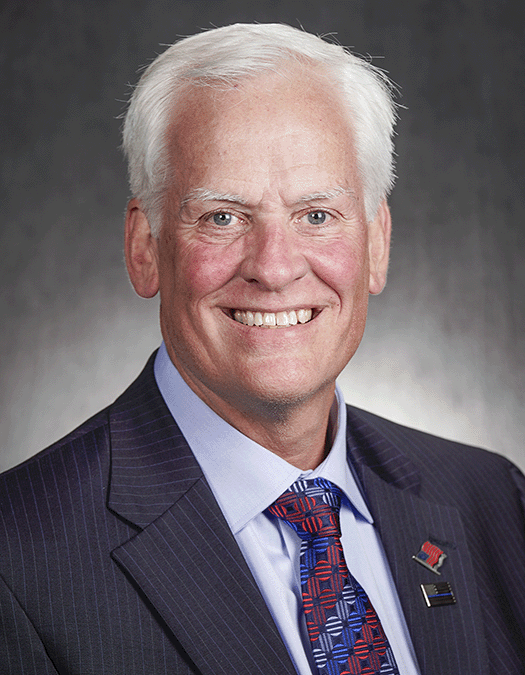
Rep. Tom Sexton
Sponsored bills
Maddy summaryThis bill expands Minnesota's sales tax exemption to include additional baby products, directly affecting parents and caregivers who purchase these items. It adds baby wipes, cribs and bassinets (including mattresses and sheets), changing tables and pads, strollers, car seats and bases, baby swings, bottle sterilizers, and infant eating utensils to the list of tax-exempt items. The exemption applies to sales and purchases made after June 30, 2025. This change removes sales tax from these specific baby products, aligning with the existing exemption for items like breast pumps and baby bottles.
Maddy summaryHF 540 requires Minnesota's Commissioner of Administration to submit a report by February 15, 2026, detailing all state-owned or leased office space and identifying substantially vacant properties. The report must assess the feasibility of converting vacant space into housing, estimate conversion costs, and analyze potential revenue from renting or selling repurposed properties. This report will be provided to specific legislative committees overseeing the Department of Administration's budget. The bill does not change existing laws but mandates a study to evaluate underutilized state assets. (HF 540, Section 1)
Maddy summaryHF 543 appropriates state funds for county attorney offices to cover costs of attending anti-human trafficking training. The bill allocates money from the general fund for fiscal year 2026 to reimburse all participating Minnesota county attorney offices equally for training expenses. This provides direct financial support to county prosecutors who handle human trafficking cases, ensuring consistent access to specialized training resources.
Maddy summaryHF 1467 transfers management of the Minnesota Braille and Talking Book Library from the Department of Education to the Department of Employment and Economic Development. This bill changes who oversees the library's services for people with visual or physical disabilities, requiring the new department to provide these services through a cooperative plan with the National Library Service for the Blind. It also updates rules for the library's advisory committee, including how meetings can be held virtually while ensuring public access and proper voting procedures. The change directly affects library users and the state agencies responsible for delivering these specialized services.
Maddy summaryThis bill repeals a provision in Minnesota law that previously barred charging individuals with attempting sexual extortion. It allows prosecutors to file attempt charges for sexual extortion attempts, which were previously unchargeable under Minnesota Statutes 609.3458, subdivision 3. The change applies to crimes committed on or after August 1, 2025, directly affecting individuals who make threats to coerce sexual acts without completing the act. This policy shift enables legal accountability for preparatory acts in sexual extortion cases.
Maddy summaryHF 2 requires state agency employees to immediately report suspected fraud to law enforcement and legislative committee leaders when they have reason to believe fraud exists in agency programs. It mandates that all state agencies post current organizational charts online with contact details for leadership and division heads. The bill strengthens grant management by requiring agencies to conduct unannounced monitoring visits before final payments for grants over $50,000 (and annually for grants over $250,000), perform financial reconciliations prior to disbursement, and withhold funds from grantees failing to submit required progress reports. Violating these grant management requirements constitutes a misdemeanor under the bill.
Maddy summaryHF 1185 creates a new special license plate design for Minnesota residents who received the National Defense Service Medal. The bill amends Minnesota law to add a plate inscription reading "NATIONAL DEFENSE SERVICE MEDAL RECIPIENT" to the existing list of veteran plate options. Eligible veterans must already meet standard requirements for veteran plates (including honorable discharge documentation) and own qualifying vehicles. The plate would follow the same fee structure as other veteran plates, requiring payment of the standard special plate fee upon issuance.
Maddy summaryHF 369 delays Minnesota's renewable energy standards for electric utilities under specific conditions and prohibits demolishing fossil-fuel power plants if utilities miss emission reduction goals. The bill gives the utility commission authority to delay implementation if it determines this serves the public interest, considering factors like customer costs, environmental impact, grid reliability, and permitting delays. Utilities failing to meet a 2025 emission goal (set under section 216C.05) automatically face a three-year delay in meeting renewable standards. Additionally, political subdivisions cannot issue demolition permits for fossil-fuel plants if utilities miss this goal, as determined by the commissioner. The bill directly affects Minnesota's electric utilities and local governments issuing permits.
Maddy summaryHF 260 extends an exemption for small employers from Minnesota's Paid Leave Law until January 1, 2028. The bill amends Minnesota Statutes to exempt employers with 20 or fewer employees (as calculated under section 268B.14, subdivision 5b) from the law's requirements. This means small businesses in Minnesota will not need to provide paid leave to employees until 2028, while larger employers must comply earlier. The exemption expires on January 1, 2028, after which all employers must adhere to the full Paid Leave Law.