

Maddy summaryHF 510 appropriates $2 million total ($1 million each for fiscal years 2026 and 2027) from the general fund to Enterprise Minnesota, Inc., to support small Minnesota manufacturers. The funding targets manufacturers with 250 or fewer full-time equivalent employees, providing services like business strategy, quality management, and peer advisory support through the "Made in Minnesota" program. Enterprise Minnesota must submit annual reports detailing funds distributed, estimated and actual financial impacts on recipient companies, and federal funds leveraged. This bill directly affects small manufacturing businesses in Minnesota by providing targeted growth support and requires transparency through mandated reporting.
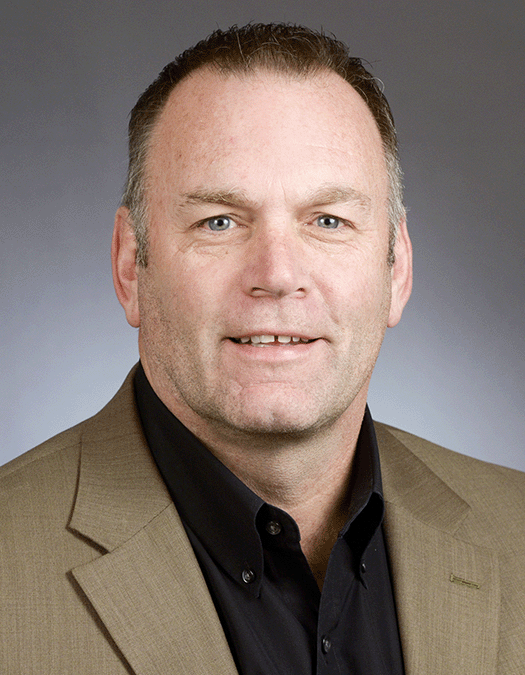
Rep. Dave Baker
Sponsored bills
Maddy summaryHF 1377 appropriates $1.75 million annually (2026-2027) for matching grants, $350,000 annually for equipment grants, and $1 million annually for block grants to Minnesota public television stations. The bill directs the commissioner of administration to allocate these funds based on recommendations from the Minnesota Public Television Association. It directly affects public television stations eligible under Minnesota Statutes, section 129D.13, by providing dedicated state funding for operational support and equipment. The funding is sourced from the general fund and applies specifically to fiscal years 2026 and 2027.
Maddy summaryHF 1577 appropriates $200,000 for fiscal year 2026 and $200,000 for fiscal year 2027 from the workforce development fund to create a statewide education campaign. The campaign directly targets Minnesota employers, aiming to inform them about the benefits of hiring people with conviction records (second-chance hiring) and available state/federal incentives. Key mechanisms include developing an informational website and staffing a hotline service. This is a one-time funding allocation, not a permanent program, to support employer education on inclusive hiring practices.
Maddy summaryHF 1096 allocates $2 million for fiscal year 2026 and $2 million for fiscal year 2027 from Minnesota's workforce development fund to Summit Academy OIC. The funding directly supports Summit Academy OIC in expanding student enrollment, employment placement, GED preparation, STEM programming, and launching a dental assistant training program in the Twin Cities and across Minnesota. It requires the organization to collaborate with employers to place students after they complete the dental assistant program. This bill provides concrete financial support for specific workforce development initiatives at Summit Academy OIC.
Maddy summaryHF 844 modifies Minnesota's broadband workforce reporting, investigative authority for utility infrastructure, and underground telecommunications installation rules. It requires broadband grantees serving over 100,000 customers to report detailed workforce data - including demographic breakdowns (e.g., Minnesota residents, people of color, women), pay rates ($25+ hourly), and benefits - annually. The bill also mandates that underground telecommunications installations near existing utilities must be performed by "safety-qualified installers" (with two present during directional drilling), starting July 2025 in the metro area and statewide by 2028. These provisions directly affect broadband providers, contractors, and telecommunications carriers working on infrastructure projects.
Maddy summaryHF 961 appropriates $250,000 for each of the 2026 and 2027 fiscal years to fund the Hospitality Minnesota Education Foundation's ProStart program. This program provides high school students with culinary and hospitality management education, including curriculum, tools, skills training, professional development, and scholarships. The funds directly support addressing workforce shortages in Minnesota's hospitality industry by enhancing career pathways for students. This is a one-time appropriation specifically designated for these educational services in participating high schools.
Maddy summaryHF 2447 establishes a dedicated account for financial assurance funds collected from gas development permits. It requires the commissioner of natural resources to deposit these funds into an account managed by the State Board of Investment, with earnings credited back to the account. The funds can only be used for financial assurance purposes related to specific gas permits under chapters 93 and 103I of Minnesota Statutes. This bill directly affects gas development permit applicants and the commissioner's office, creating a new mechanism for handling and investing these required funds.
Maddy summaryHF 2390 appropriates $275,000 for fiscal year 2026 and $275,000 for fiscal year 2027 from the workforce development fund to provide a grant to Workforce Development, Inc., for the Southeast Minnesota Workforce Development Area #8. The grant funds career training, education, and wraparound support services (including childcare, transportation, and housing assistance) for individuals with employment barriers in Steele County, aiming to address local worker shortages and help families move out of poverty. Up to 5% of the funds may cover administrative costs, and the grant is available until June 30, 2027, with unspent funds from year one carrying over to year two. The commissioner must report annually by January 15 to legislative committees on how the funds were used, including administrative expenses.
Maddy summaryHF 2416 modifies how counties pay for mental health care in state facilities. Counties now pay 0% for the first 30 days of care, 20% for days 31 and beyond if clinically appropriate, and 100% when discharge is deemed appropriate. The bill temporarily (until June 30, 2025) exempts counties from paying for certain clients awaiting transfer to another facility under specific conditions. It also requires a public dashboard showing waitlist data for mental health services, including average wait times and referral metrics, to increase transparency. These changes affect counties, mental health facilities, and individuals receiving care in Minnesota's state-operated mental health programs.
Maddy summaryHF 2468 appropriates $500,000 for fiscal year 2026 and $500,000 for fiscal year 2027 from the general fund to support mental health initiatives in Minnesota's construction industry. The funds, available until June 30, 2027, are designated for outreach, education, stigma reduction programs, and worksite strategies to prevent suicide. They can be used for grants to industry groups and developing resources targeting construction workers. This bill directly affects construction industry workers by funding concrete mental health support services through state-administered programs.