

Maddy summaryThis bill establishes a $10 million grant program to improve safety for students walking or biking to school. It appropriates $10 million from state bond proceeds to fund these grants, administered by the Minnesota Department of Transportation under statute 174.40. The funding comes from bonds the state will issue following specific legal procedures outlined in Minnesota law. The program directly affects school districts and communities seeking to create safer routes to schools.

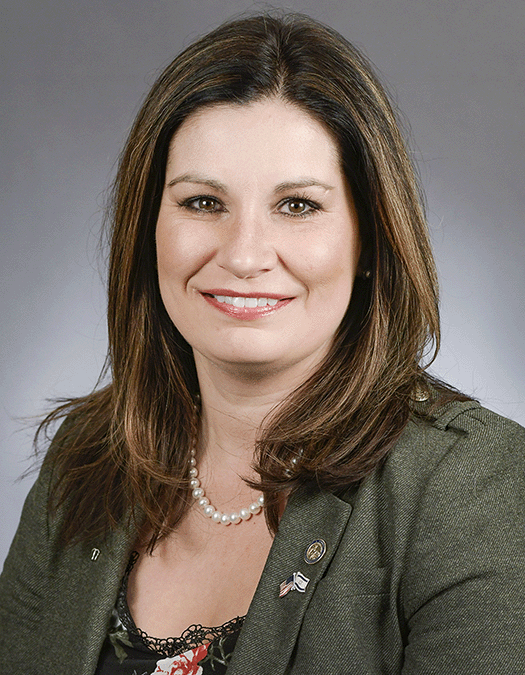
Rep. Mary Franson
Sponsored bills
Maddy summaryHF 2486 authorizes the state to issue up to $3 million in bonds to fund planning, construction, and renovation of early childhood learning and child protection facilities in Minnesota. The funds, drawn from bond proceeds, will be distributed as grants by the state human services agency to child care providers. This bill directly affects licensed child care centers and facilities serving young children by providing dedicated funding for facility improvements. The legislation creates a specific funding mechanism through state bonds rather than altering existing eligibility rules or service requirements.
Maddy summaryThis bill repeals existing affirmative action requirements for state agencies in Minnesota, removing the mandate for the state to establish specific goals and programs to increase the employment of members of protected groups. While the legislation eliminates these targeted initiatives, it retains the policy that state hiring and performance evaluations must be based on merit and free from discrimination based on race, gender, disability, or other protected characteristics. The law also keeps in place a requirement for agency managers to receive training on identifying and mitigating bias in the hiring and evaluation processes. Ultimately, the bill shifts the state's approach from proactive affirmative action plans to a focus on equal opportunity and nondiscrimination without setting numerical targets for diverse representation.
Maddy summaryThis bill requires ticket resellers and online marketplaces to clearly disclose pricing information to consumers when selling event tickets in Minnesota. The law mandates that sellers show the total ticket cost including all fees, the original purchase price, and the percentage markup above that original price. It also requires websites to inform buyers that resale prices may vary from original prices and that they are responsible for checking event changes before the event begins. Additionally, the bill establishes definitions for key terms like ticket reseller and online ticket marketplace to clarify who must comply with these disclosure requirements.
Maddy summaryHF 3131 creates a new cancer-related disability parking certificate in Minnesota. It allows people diagnosed with cancer who experience mobility issues from the cancer, treatment, or related conditions to qualify for disability parking permits. To qualify, applicants must provide a medical statement confirming a cancer diagnosis, mobility impact lasting at least 30 days, and submit an application. The certificate is valid for up to 12 months and grants parking privileges only when the vehicle is transporting the certified individual. This directly affects cancer patients needing temporary mobility accommodations.
Maddy summaryHF 82 clarifies the scope of practice for licensed athletic trainers in Minnesota. The bill defines "athletic training" to include specific activities like injury prevention, emergency care, assessment, rehabilitation, and clinical decision-making within the trainer's expertise. It requires athletic trainers to work under a primary physician's direction, with documented protocols updated yearly, and limits initial treatment of undiagnosed injuries to 30 days (or less as specified by the physician). This directly affects athletic trainers, primary physicians, and healthcare facilities employing them, ensuring clear boundaries for their practice while preventing overlap with other licensed professions like physical therapy or medicine.
Maddy summaryThis bill prohibits the sale and use of paraquat dichloride, a pesticide, in Minnesota. Starting January 1, 2027, no one can sell or distribute this product, and by January 1, 2028, its use is also banned. The commissioner of agriculture must collect and dispose of any remaining stock of this pesticide and submit a report on its historical use and current supply chain status by January 1, 2028. The law directly affects pesticide sellers, distributors, and agricultural users who currently handle or apply this chemical.
Maddy summaryThis bill appropriates $1,000,000 from the state's general fund to support a critical access dental clinic in Alexandria, Minnesota. The money will be given as a one-time grant to West Central Dental Resources, Inc., a nonprofit organization, to purchase and install necessary equipment for the facility. The funds are designated for fiscal year 2027 and will be used specifically to furnish and equip the clinic, with the appropriation ending once the project is finished or discontinued.
Maddy summaryThis bill modifies the requirements for marriage and family therapists to obtain a Minnesota license through reciprocity with other states. It allows the state licensing board to issue licenses to out-of-state therapists who meet specific criteria, including holding a valid license in good standing elsewhere, passing a Minnesota jurisprudence exam, and having no criminal convictions or disciplinary actions. The changes streamline the application process by clearly outlining five conditions that applicants must satisfy, such as completing the required application and fees. Therapists seeking to practice in Minnesota from other jurisdictions would need to demonstrate their qualifications meet these new standards before receiving a state license.
Maddy summaryHF 482 establishes "Choose Life" special license plates for Minnesota motor vehicle owners. To obtain these plates, applicants must pay a $25 initial fee and $25 annual contribution to a dedicated "Choose Life account," in addition to standard registration fees. Funds collected are deposited into this account and distributed by Choose Life Minnesota, Inc., to non-profit agencies within each county that assist pregnant women making adoption plans - excluding any agencies involved in abortion services or charging fees for services. The bill also specifies plate design requirements (featuring the "Choose Life" logo and inscription) and limits administrative costs for the program to 15% of funds. The program becomes effective January 1, 2026.