

Maddy summaryHF 3493 increases Minnesota's safe schools revenue funding to $36 per adjusted pupil unit for the 2027 fiscal year and later. It expands eligibility to include charter schools, cooperative units, nonpublic schools, and Tribal contract schools - previously limited to traditional public school districts. The bill requires funds to be used for specific safety purposes like security enhancements, counseling services, drug prevention programs, and cybersecurity measures. This policy change directly affects all Minnesota schools receiving state education funding, providing new resources for school safety initiatives. The bill takes effect for fiscal year 2027.
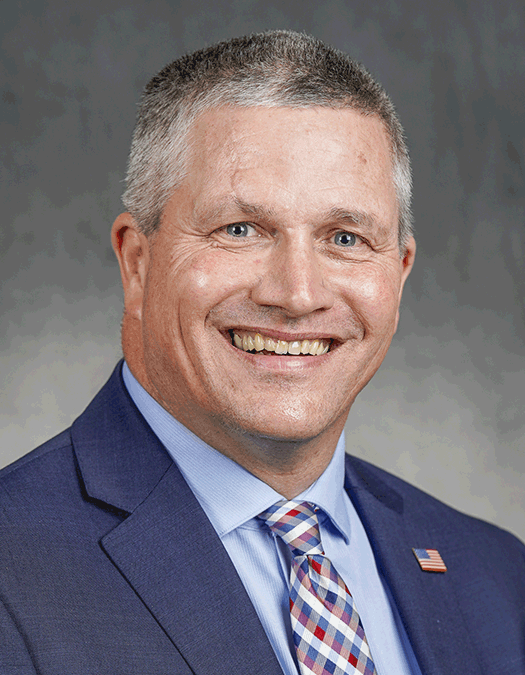
Rep. Jeff Dotseth
Sponsored bills
Maddy summaryThis bill authorizes the issuance of up to $225 million in state bonds to fund clean water infrastructure improvements. The funds will be distributed through grants and loan matching programs to eligible municipalities for projects addressing emerging contaminants, water infrastructure upgrades, and point source pollution control. The legislation directs $22 million toward emerging contaminants, $19 million to match federal grants for water and drinking water revolving funds, $60 million for general water infrastructure grants, and $124 million for point source implementation projects. All funding is designated for qualified capital projects that must be approved under existing state statutes.
Maddy summaryThis bill requires nonemergency medical transportation providers in Minnesota to equip their vehicles with global positioning systems and rear-facing cameras, while also mandating that they compile trip information and keep recordings for two years. The law applies to private and public transportation companies that carry Minnesota health care program beneficiaries to medical appointments, but exempts public transit systems, volunteer drivers, and not-for-hire vehicles. Providers must also comply with existing wheelchair securement standards and background check requirements for their drivers, with the commissioner of transportation responsible for enforcing these safety and operational rules. The bill amends current statutes to establish these new technical and data retention standards for vehicles used in medical transportation services.
Maddy summaryHF 3395, the "Fraud Isn't Free Act," requires Minnesota state agencies administering public programs (like healthcare or education funding) to take specific actions when fraud occurs. If fraud is suspected, agencies must submit a corrective plan to lawmakers within 30 days, including steps to prevent future fraud, recover stolen funds, and fire employees directly responsible for the fraud. The bill also mandates suspending new enrollments in affected programs, reducing agency budgets, and reporting fraud totals to the budget office and legislative auditors. These provisions apply to all state programs using public funds, with definitions covering intentional deception like false claims or theft.
Maddy summaryHF 3809 modifies Minnesota's expedited eviction process for specific situations, directly affecting residential tenants and landlords in cases involving safety threats or property damage. The bill requires landlords to file an affidavit with specific facts proving why an expedited hearing is needed (e.g., tenant endangering others or damaging property), sets strict hearing timelines (5-7 days after summons), and imposes a $500 civil penalty for misuse of the process. It also restricts courts from combining expedited hearings with other claims like nonpayment of rent. This bill applies only to the specified emergency eviction scenarios, not standard eviction cases.
Maddy summaryThis bill provides $5 million in funding to upgrade or replace the solid waste management transfer station in Carlton County. To secure these funds, the state will issue bonds and allocate the proceeds through the Pollution Control Agency as a grant to the county. The legislation authorizes the sale of up to $5 million in state bonds following the standard legal procedures for such financial instruments. This measure directly affects Carlton County by enabling necessary infrastructure improvements for its waste management facility.
Maddy summaryThis bill establishes a one-time property tax refund program for Minnesota property owners who paid eligible taxes in 2026, affecting residential, agricultural, and commercial property classifications. The program allocates $4 billion from the state general fund to provide refunds based on a percentage calculated by the Department of Revenue, with applications accepted between July 15 and September 15, 2026. Any unclaimed refund amounts will automatically be converted into property tax credits for 2027 on the properties where no refund was requested. The legislation defines specific property categories eligible for the refund and sets clear deadlines for application processing and payment distribution.
Maddy summaryThis bill modifies Minnesota's Paid Leave Law to expand the definition of "seasonal employee" from 150 days to 180 days within a 52-week period, specifically for workers in the hospitality industry. Under the new rules, employers must certify that an employee meets the extended duration limit and that the business meets specific revenue thresholds to classify someone as seasonal. The legislation also requires employers to notify the state within five business days if a seasonal employee no longer qualifies for that status. Employees classified as seasonal under these criteria would remain ineligible for paid leave benefits during weeks they are employed in that capacity.
Maddy summaryThis bill clarifies what actions by public officers and employees in Minnesota count as misconduct, specifically including knowingly providing false information to the legislative auditor and failing to perform mandatory duties. It increases penalties for repeat offenders, raising the maximum prison sentence to three years or fines up to $5,000 for a second or subsequent violation. The legislation also extends the statute of limitations for prosecuting public misconduct and removes the offense from eligibility for automatic expungement, meaning convictions cannot be automatically sealed from public records. These changes take effect on August 1, 2026, and apply to crimes committed on or after that date.
Maddy summaryHF 1434 requires commercial websites sharing material harmful to minors (defined as content with sexual depictions lacking artistic value for minors) to verify users are 18+ if 25% or more of the site’s pages contain such material. It mandates age verification using approved methods like commercial databases, prohibits retaining user identifying information, and creates a private right of action for parents to sue violators. The Minnesota Attorney General can enforce the law through civil actions, and commercial entities face $25,000 penalties per violation. This bill directly affects websites meeting the 25% harmful content threshold and targets operators of commercial platforms accessible to Minnesota residents.