

Maddy summaryThis resolution formally recognizes 2026 as the International Year of Rangelands and Pastoralists, acknowledging the ecological and economic importance of these lands to the United States. The bill highlights that rangelands cover a significant portion of U.S. territory and support domestic production of food, fiber, and energy while providing critical ecosystem services like carbon storage and wildfire risk reduction. It encourages federal agencies, universities, and organizations to engage in education, research, and outreach activities related to sustainable rangeland management during the designated year. The measure does not create new laws or funding but serves to raise awareness and promote collaboration among stakeholders involved in rangeland stewardship.
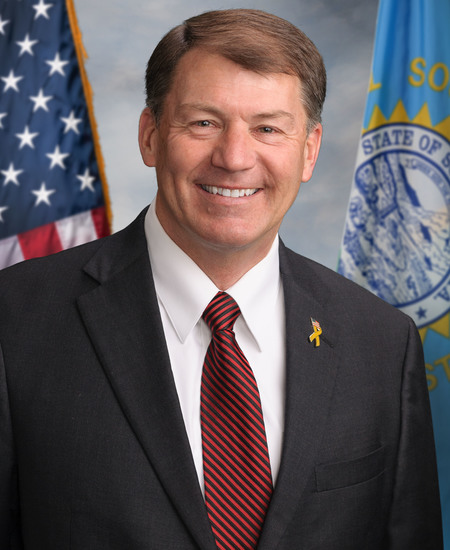
Sen. Mike Rounds
Sponsored bills
Maddy summaryThis bill would remove the federal approval for the drug mifepristone, which is used in combination with other medications to end pregnancies, and would make it illegal to distribute the drug for that purpose. It also creates a new federal lawsuit option allowing individuals to sue drug manufacturers for physical or mental harm they claim resulted from using mifepristone. The law would take effect 14 days after passing, with the new lawsuit provision becoming active 90 days after enactment.
Maddy summaryThis bill establishes the Economy of the Future Commission, a temporary legislative body designed to study how artificial intelligence adoption is affecting the U.S. economy. The Commission will consist of 10 members appointed by congressional leaders, including representatives from various congressional committees and experts in AI, education, workforce development, and taxation, along with four nonvoting deputy secretaries from federal departments. Its main duties include developing legislative recommendations on AI-related economic changes, evaluating impacts on education and workforce programs, and producing reports on employment shifts and federal revenue over the next five and ten years. The Commission will operate for approximately 13 months, concluding with a final report submitted to Congress and relevant federal agencies, and will be funded with $5.25 million.
Maddy summaryThis bill, titled the Investments in Rural Transit Act, aims to improve funding and administrative support for public transportation in rural areas and on Tribal lands. It increases the Federal operating share for rural transit from 50 percent to 80 percent and allows Tribal transit agencies to receive up to 100 percent Federal funding for eligible projects. The legislation also streamlines how rural and Tribal agencies can purchase vehicles and equipment through cooperative purchasing arrangements and requires the creation of a new Associate Administrator position focused on Tribal transit support. Additionally, the bill mandates a joint report from the Departments of Transportation and Energy on improving the procurement of low-emission vehicles in rural communities.
Maddy summaryThis bill requires the Assistant Secretary of Commerce for Economic Development to create simplified application forms for rural communities seeking federal economic development grants. It defines rural communities as incorporated municipalities, Tribal areas, or territories with populations of 10,000 or fewer people or those outside metropolitan statistical areas. The legislation mandates that the Assistant Secretary gather input from rural stakeholders on reducing application length, minimizing required documentation, standardizing forms across programs, and eliminating repetitive information requests. Additionally, the bill requires the agency to publicly share sample successful applications, decision-making criteria, and standardized guidance to help rural applicants navigate the grant process.
Maddy summaryThis resolution designates February 21-28, 2026, as "National FFA Week" to honor the National FFA Organization’s work in agricultural education. It recognizes FFA’s role in developing leadership and career skills for students (with over 1 million members nationally) and celebrates the 50th anniversary of Alaska’s State FFA Association, which has 19 chapters and 493 members. As a symbolic resolution, it has no legal effect but formally expresses Senate support for FFA’s mission.
Maddy summaryThis bill amends the Community Development Banking and Financial Institutions Act of 1994 to require the Treasury Secretary to testify annually before Congress about the Fund's operations. It also strengthens the CDFI Bond Guarantee Program by adjusting guarantee limits and extending the program's authorization period. Additionally, the bill expands capital assistance options for community development financial institutions and creates a new lending program specifically for Native community development financial institutions to support homeownership in Tribal and Native communities.
Maddy summarySRES 602 is a symbolic Senate resolution expressing support for the U.S. Olympic and Paralympic Teams (Team USA) competing in the 2026 Winter Games in Milano Cortina, Italy. It formally applauds Team USA athletes, coaches, and their supporters, commends Italy for hosting the event, and commits to ensuring safety for future U.S. host events (2028 Los Angeles Summer Games and 2034 Utah Winter Games). The resolution does not create new policies, funding, or obligations - it is purely a statement of congressional support. It directly affects Team USA athletes and organizers by acknowledging their efforts and achievements. This is a procedural resolution with no binding effect on government actions.
Maddy summaryS 3880, the Small Business Investor Capital Access Act, raises the asset threshold for investment advisers to qualify for an exemption under the Investment Advisers Act of 1940. It increases the current $150 million asset limit to $175 million and requires the SEC to adjust this threshold every five years based on inflation (using the Consumer Price Index), rounding to the nearest $1 million. This change directly affects investment advisers managing assets above $175 million, potentially reducing regulatory requirements for them. The bill makes a concrete policy change to the exemption criteria without altering other regulatory obligations.
Maddy summaryThe FUTURES Act (S 3855) establishes a formal U.S.-Israel Defense Technology Cooperation Initiative to accelerate joint development and integration of defense technologies. It directs the U.S. Secretary of Defense to identify Israeli-origin technologies for rapid adoption into American military systems, focusing on areas like counter-drone systems, missile defense, AI, cyber security, and directed energy. The bill authorizes $150 million annually (2027-2029) for this initiative, requiring regular reports to Congress on progress, technology transitions, and industry partnerships. This policy directly affects U.S. defense contractors, Israeli defense firms, and military acquisition programs by creating new pathways to incorporate Israeli innovations into U.S. systems.