

Maddy summarySenate Bill 297 aims to protect registered professional nurses by ensuring their refusal to work beyond their predetermined schedule is not grounds for administrative action. It also establishes penalties for hospitals that violate rules related to mandatory overtime for nurses, as referenced in section 21526. Hospitals found in violation could face an administrative fine of $1,000 for each instance, along with other potential sanctions. This bill amends the Public Health Code to implement these provisions, directly affecting nurses and hospitals.
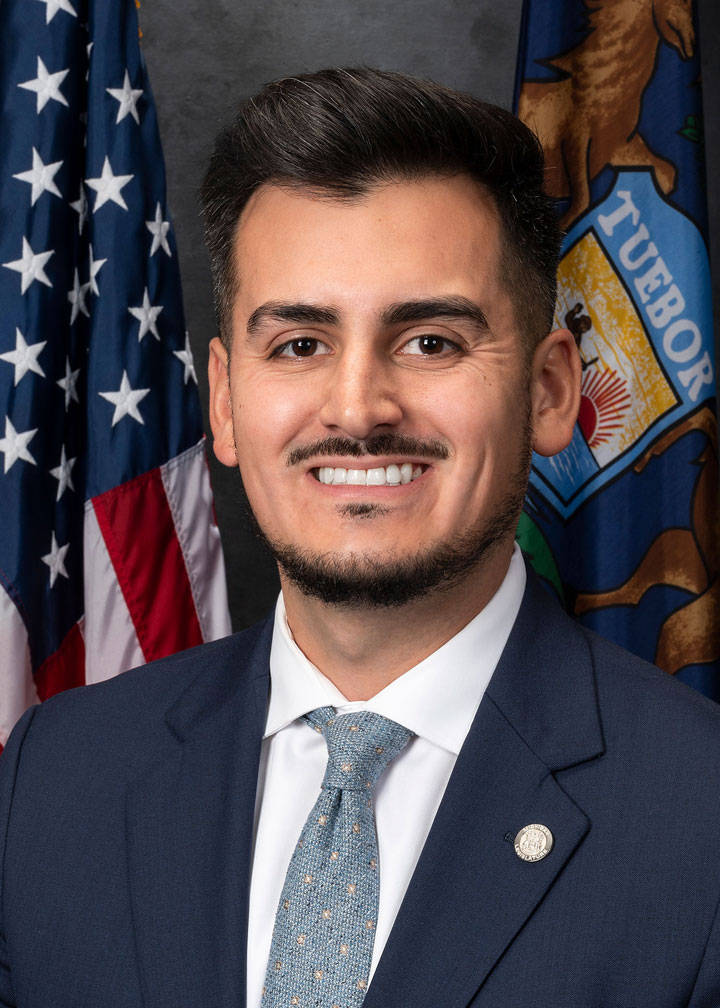
Sen. Darrin Camilleri
Sponsored bills
Maddy summarySenate Bill 296 prohibits hospitals from requiring registered professional nurses to work beyond their regularly scheduled, on-call, or voluntarily agreed-upon hours. It mandates that nurses working 12 or more consecutive hours receive 8 consecutive hours of off-duty time immediately afterward. Exceptions to this prohibition include declared states of emergency, mass casualty incidents, certain patient-care procedures, and situations where an oncoming nurse is unexpectedly absent. The bill also protects nurses from retaliation if they refuse work assignments that exceed these limits and requires hospitals to post notices informing nurses of these provisions.
Maddy summaryThis bill provides supplemental funding for Michigan public schools for the 2025-2026 fiscal year by allocating money from multiple state funds, including the state school aid fund, general fund, and various reserve funds. It establishes specific payment schedules requiring the state treasurer to distribute funds to school districts in eleven monthly installments starting in October 2025, with provisions for adjusting payments if errors occur or if districts need temporary advance releases. The legislation also includes requirements that any unspent general fund allocations be transferred to a stabilization fund at the end of the fiscal year and mandates that all available federal funds be used only as allocated in the bill.
Maddy summaryThis Senate resolution urges the President and Congress to reverse actions from the Trump Administration that the bill's sponsors claim are driving up energy costs. It calls for reinstating renewable energy programs, closing inefficient coal plants, and passing a war powers resolution to end the conflict with Iran, which the bill states has increased fuel prices. The measure directly addresses Michigan residents, farmers, and businesses facing higher energy and fertilizer expenses, and it requests that copies be sent to federal and state leaders.
Maddy summaryThis Senate resolution honors the memory of Joel Gougeon, a former Michigan State Senator who passed away, by formally recognizing his life and public service. The bill does not change any laws or policies but serves as an official tribute to Gougeon's career, military service, and community contributions. It directs copies of the resolution to the Gougeon family as a formal acknowledgment of his legacy. The measure was introduced by Senator Brinks and adopted by the full Senate membership.
Maddy summarySB 695 allows regional transit authorities in Michigan to charge an extra $1.20 per $1,000 of a vehicle’s value (on top of standard registration fees) for transit funding, but only if approved by voters in a November election. It requires ballot measures to specify how funds will be used and limits spending to transit projects. The tax applies to regular vehicle registrations in transit regions, excluding company test vehicles (e.g., manufacturer-owned vehicles used for testing). It takes effect January 1, 2027, pending approval of related legislation. This change directly affects vehicle owners in participating transit regions through their registration costs.
Maddy summaryThis bill is a concurrent resolution that formally honors Bruce Patterson, a former Michigan state legislator who served in both the House of Representatives and Senate. It recognizes his public service career, which included leadership roles in committees on energy policy, environmental protection, and consumer rights, as well as his advocacy for nursing home care and water pollution control. The resolution expresses the Legislature's tribute to his memory and directs that copies be sent to his family.
Maddy summarySB 504 requires Michigan to test public water supplies for tiny plastic particles (microplastics) starting in 2027, with quarterly sampling through 2030. It focuses testing on water sources near Great Lakes shorelines, agricultural areas, landfills, and groundwater systems, using methods aligned with federal or state standards. By July 2031, the state must report findings - including microplastic levels, sources, and potential health impacts - and recommend next steps for monitoring or regulation. This directly affects all public water systems in Michigan, including those serving communities near environmental justice concerns.
Maddy summarySB 505 requires Michigan's Department of Environment, Great Lakes, and Energy (DEGLE) to create a statewide research and monitoring plan focused on microplastics in the Great Lakes by July 2026. The plan must assess microplastic impacts on drinking water, human/animal health, and the Great Lakes ecosystem, establish baseline data, identify sources, and propose reduction strategies using federal standards (like EPA and NOAA guidelines). It mandates annual updates, public reporting, and requires DEGLE to collaborate with universities and leverage existing federal efforts. The bill directly affects state agencies, researchers, and Great Lakes water quality management, with implementation deadlines set for 2026 and 2028.
Maddy summarySB 503 prohibits the manufacture, sale, or distribution of plastic microbeads (intentionally added solid plastic particles ≤5mm) in personal care products (like face scrubs and toothpaste) and cleaning products (including floor cleaners) in Michigan. Starting January 1, 2027, these products cannot contain microbeads unless the concentration is below 1 part per million by weight. The law applies to manufacturers, sellers, and distributors within the state, with enforcement by the Department of Environment, Great Lakes, and Energy. Violations carry civil fines up to $2,000 per day, and the department must report on enforcement annually. The bill does not affect air care products or materials used in non-personal care applications.