

Maddy summaryThis bill establishes the "language assistance for elections act" to require local governments in Michigan to provide voting materials in languages other than English for residents with limited English proficiency. Localities must offer these services if they have a specific number of eligible voters who share a non-English language, with thresholds adjusted based on whether the requirement starts before or after January 1, 2030. The secretary of state will publish annual lists of affected areas and languages, while also providing translated documents and ensuring all translations are done by certified professionals rather than relying on automatic tools. Additionally, the law creates a language access advisory council to guide the program and mandates that counties assisting local governments during early voting must also follow these language requirements.
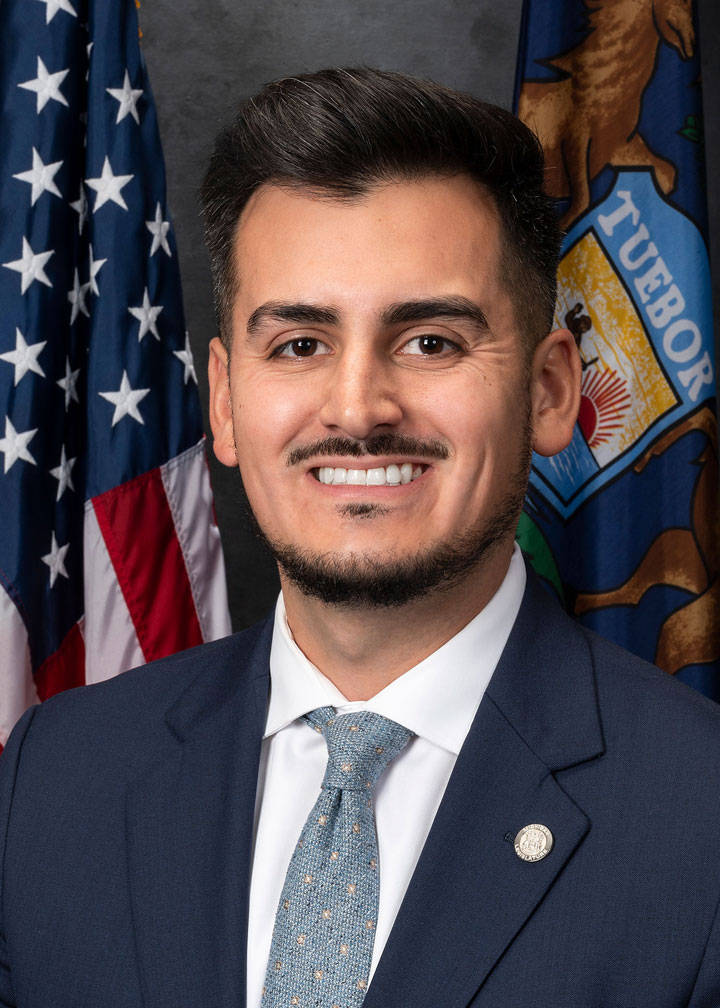
Sen. Darrin Camilleri
Sponsored bills
Maddy summaryThis bill modifies Michigan election laws to expand voting access for older adults and individuals with disabilities by establishing a curbside voting option. Under the new provisions, eligible voters can request to cast their ballots from their vehicles without needing to disclose their age, disability status, or the reason for their request. Election inspectors would verify the voter's registration and allow them to mark and return their ballot in a designated area within 200 feet of the polling place entrance. Additionally, the legislation permits nonprofit organizations to provide transportation to polling locations and allows individuals to offer food, warmth, or other necessities to voters waiting in line.
Maddy summaryThis bill requires Michigan public schools to add one unit of instruction each on the histories of African Americans, Indigenous Peoples, Asian Americans and Pacific Islanders, and other specific ethnic groups starting in the 2027-2028 school year. The mandated lessons must cover contributions to society, local history including discriminatory policies, and civil rights advancements, with the state superintendent providing guidelines developed with community input. School districts must monitor compliance, but instructors have flexibility to integrate these lessons into existing curricula, and the instruction can be delivered online if needed.
Maddy summarySB 1126 requires Michigan health insurers to use a standardized electronic system for prior authorization requests starting June 1, 2023, to streamline the approval process for medical services. The bill mandates that clinical review criteria used to approve or deny care must be evidence-based, developed by qualified medical entities, and updated at least annually. Additionally, it ensures that adverse decisions on non-drug benefits are made by licensed physicians and that any new coverage restrictions are posted on insurer websites and notified to providers with sufficient lead time. These provisions apply to all health benefit plans issued in the state and aim to increase transparency and consistency in how medical care approvals are handled.
Maddy summarySB 965 modifies the Youth Employment Standards Act in Michigan to update penalties for employers who violate rules regarding the hiring of minors. The bill clarifies that the minimum employment age is 14, while allowing specific exceptions for 11- and 13-year-olds working as referees, caddies, or in farming under strict conditions. It also increases the maximum administrative fine for violations from $500 to $5,000 and raises criminal penalties for repeat offenders and those who cause serious harm to a minor on the job.
Maddy summaryThis bill amends Michigan's school code to require the state department to approve specific screening and diagnostic reading assessments for use in public schools and public school academies. The legislation mandates that these approved tools must evaluate students' progress toward reading proficiency while minimizing disruption to instructional time. Additionally, the bill outlines requirements for district-identified literacy coaches to support teachers in implementing evidence-based reading instruction and addressing reading deficiencies. These changes directly affect school districts, public school academies, teachers, and students by standardizing early literacy screening and enhancing professional support for reading instruction.
Maddy summaryThis bill requires Michigan teacher preparation programs to include specific instruction on dyslexia and the science of reading by September 2027. To maintain approval, these programs must teach candidates about the characteristics of dyslexia, its secondary consequences, instructional adjustments, and methods for using multi-tiered systems of support. Programs preparing educators for reading, language arts, or special education roles must also cover evidence-based interventions grounded in structured literacy. The law includes a waiver process for programs not focused on these areas, which must be reviewed every two years, and it only takes effect if a companion bill is passed.
Maddy summaryThis bill is a memorial resolution honoring Nancy C. Cassis, a former Michigan legislator who served in both the House of Representatives and the Senate. It recognizes her career as a public servant and details her legislative achievements, including her work on tax policy and her receipt of various awards. The resolution formally expresses the legislature's condolences to her family and requests that copies of the document be sent to them as a tribute.
Maddy summaryThis Senate resolution designates September 21, 2024, as Maltese American Heritage Day to honor the contributions of Maltese Americans in Michigan. The measure commemorates the 60th anniversary of Malta's independence and acknowledges the state's large population of Maltese immigrants and their descendants, particularly in the Metro Detroit area. By adopting this resolution, the legislature formally recognizes the cultural and economic impact of this community without altering any laws or policies.
Maddy summaryThis Senate resolution designates September 2024 as Childhood Cancer Awareness Month to highlight the importance of supporting children affected by cancer. The measure, introduced by Senator Erika Geiss, serves to recognize the resilience of patients and their families while acknowledging the progress made in treatment and research over recent decades. By officially setting aside the month for awareness, the bill aims to encourage increased support and attention to the cause without imposing new laws or funding requirements.