

Maddy summaryThis bill prohibits licensed individuals from carrying concealed pistols or electro-muscular disruption devices on the premises of various public and private locations, including schools, child care centers, sports arenas, bars serving alcohol, places of worship, hospitals, and college classrooms. The law explicitly excludes parking areas from these restrictions and does not apply to current state legislators or specific groups of law enforcement and security personnel who are required to carry weapons for their jobs. Violations of the ban result in escalating penalties, starting with a fine and license suspension for a first offense and potentially leading to felony charges and license revocation for third or subsequent offenses.
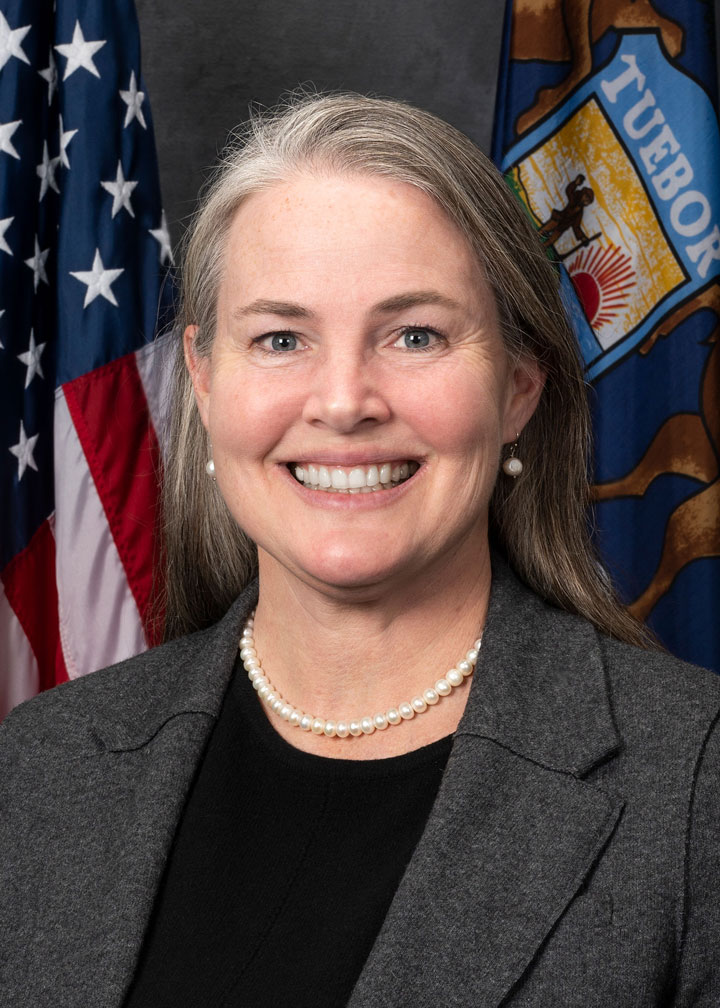
Sen. Sue Shink
Sponsored bills
Maddy summaryThis bill amends Michigan's liquor control code to address situations where liquor retailers use payments that are rejected by banks due to insufficient funds. Under the new rules, a retailer who makes such a dishonored payment to a wholesaler must pay a $50 administrative fee. If the retailer repeats this mistake within 12 months, the fee increases to $150 for a second offense and $300 for a third or subsequent offense. The bill also clarifies that any fines imposed by the state commission for these violations must be placed into a specific state fund.
Maddy summaryThis bill updates Michigan's laws regarding embezzlement from vulnerable adults and their estates by clarifying that fraud committed while a person is alive and continued after their death counts as a single continuous offense. It establishes specific penalties based on the value of the stolen property, ranging from misdemeanors for amounts under $1,000 to felonies punishable by up to 20 years in prison for amounts exceeding $100,000. The legislation also allows courts to combine the value of multiple thefts occurring within a 12-month period or against a single individual to determine the appropriate charge severity. Additionally, the bill requires prosecutors to explicitly list prior convictions when seeking enhanced sentences and protects financial institutions and their employees from liability when acting within the normal course of business.
Maddy summaryThis bill modifies Michigan's Motor Vehicle Service and Repair Act to allow owners of registered repair facilities to operate an additional facility under the same registration. The legislation clarifies definitions for terms such as "auxiliary facility" and "BAIID service," which refers to work on breath alcohol ignition interlock devices. It also updates requirements for mechanics, specifying that certified specialty or master mechanics working at an auxiliary facility are not required to display their certificates at that specific location. These changes aim to streamline regulations for vehicle repair businesses while maintaining oversight over mechanic certifications and service descriptions.
Maddy summaryThis bill allows counties or groups of counties in Michigan to establish multidisciplinary teams dedicated to protecting vulnerable adults, defined as individuals over 18 who require supervision due to age, disability, or illness. These teams would be composed of representatives from various sectors, including law enforcement, adult protective services, healthcare providers, legal aid, and finance experts, to coordinate efforts against abuse and neglect. The legislation grants these teams the authority to share confidential information among themselves and specific government agencies while exempting their records and meetings from public disclosure laws. Ultimately, the teams aim to prevent exploitation, coordinate care services, and develop programs to detect and stop the abuse of vulnerable adults in the community.
Maddy summaryThis bill amends Michigan's Youth Tobacco Act to strengthen penalties for minors who purchase, possess, or use tobacco, vapor, or alternative nicotine products in public places. It specifically prohibits minors from using false identification to obtain these items and outlines a tiered system of consequences, including fines, mandatory health assessments, and increasing amounts of community service for repeat offenses. The law includes exceptions for minors participating in authorized law enforcement operations or employment-related activities, and it requires the bill to be enacted alongside two other related measures to take effect.
Maddy summaryThis bill updates the Age of Majority Act to clarify that the age of 18 applies to all legal purposes, except for specific areas like child support and tobacco regulations. It explicitly states that laws requiring individuals aged 18 to 20 to be treated differently than those 21 or older are no longer valid, with the notable exception of the Nicotine and Tobacco Act which maintains a minimum age of 21 for purchasing tobacco products. The legislation also removes previous legal distinctions for 18-to-20-year-olds in various other state statutes, effectively aligning their rights and responsibilities with those of adults aged 21 and older in most contexts.
Maddy summaryThis bill creates a new legal tool called an elder and vulnerable adult personal protection order for Michigan residents aged 60 or older, as well as for vulnerable adults and those with developmental disabilities. The order allows courts to stop specific harmful behaviors, such as entering a person's home, threatening violence, abusing their pets, or financially exploiting their assets. It also includes provisions to transfer related cases to probate courts if the person is under guardianship and requires fiduciaries to notify the court if such an order is issued against them.
Maddy summaryThis bill amends Michigan's definition of racketeering to explicitly include embezzlement committed against vulnerable adults. By adding this specific crime to the list of offenses that constitute racketeering, the legislation ensures that individuals who steal from elderly or disabled persons can be prosecuted under broader organized crime statutes. The change directly affects prosecutors and defendants by expanding the legal tools available to address financial exploitation of those who cannot protect themselves. No new penalties are created; rather, the bill clarifies that this type of theft falls under the existing framework for serious, repeated criminal activity.
Maddy summaryThis bill proposes to amend an existing section of Michigan's Natural Resources and Environmental Protection Act that outlines the state department's duties regarding water resources and pollution control. The primary change would allow the department to continue enforcing rules that were established before January 1, 2007, even though the original law previously prohibited creating new rules after that date. Additionally, the bill clarifies that the department can take actions to comply with federal water pollution laws but must stay within the budget amounts approved by the state legislature. The legislation directly affects the state environmental agency and its regulatory authority over surface and underground waters.