

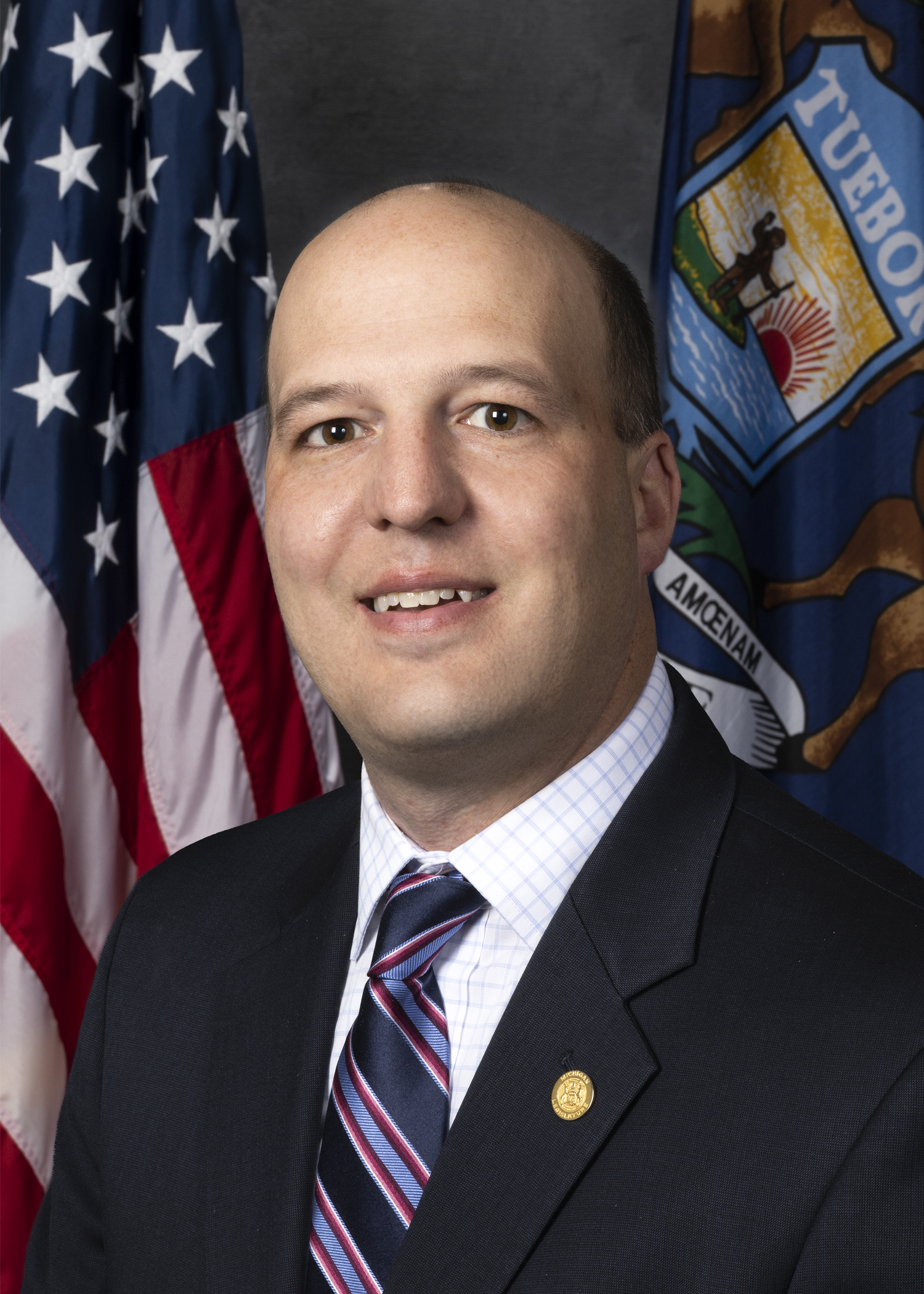
Photo of Kevin Hertel
D Michigan Senate · District 12 On the 2026 ballot

Sen. Kevin Hertel

Compare
Total votes
5,327
all sessions
Attendance
100%
23 missed
Higher than 90% of chamber peers
With party
96%
of cast votes
Higher than 81% of chamber peers
Bipartisan score
2%
crosses aisle rarely
Lower than 85% of chamber peers
Sponsored
1,526
bills & resolutions
Near the chamber average
Committees
6
assignments
1,526 bills and resolutions

Sponsored bills

Total
1,526
Primary
142
Co-sponsor
1,384
This page
1,526
matching current filters
Primary SB 1189
Passed · Michigan Senate · Lead sponsor
Civil procedure: statute of limitations; statute of limitations for criminal sexual conduct violations; revise statute of limitations and notice requirements for actions against state government. Amends sec. 6452 of 1961 PA 236 (MCL 600.6452).

Maddy summarySB 1189 amends Michigan law to change the time limits for filing claims against the state government. It requires individuals to file these claims within three years of the incident occurring, with specific exceptions for wrongful imprisonment compensation and other designated cases. The bill also grants the state attorney general the authority to act as a legal representative for the estates of deceased individuals or guardians for minors and other disabled persons in these matters. This legislation is designed to clarify procedural rules for suing the state and relies on the simultaneous passage of two other related bills to take effect.

Passed Dec 13, 2024 0 co-sponsors
Primary SB 1130
Passed · Michigan Senate · Lead sponsor
Public employees and officers: compensation and benefits; public employer contribution to medical benefit plan; modify. Amends sec. 3 of 2011 PA 152 (MCL 15.563).

Maddy summaryThis bill updates the rules for how much Michigan public employers, such as state agencies and local governments, can spend on health insurance for their employees and elected officials. It establishes specific dollar limits for employer contributions based on the number of people covered, with different rates for single, spouse, and family plans, and requires these amounts to be adjusted annually based on changes in medical costs. The new spending caps take effect on January 1, 2025, but the bill will only become law if a separate related measure is also passed. Additionally, the law includes a provision that exempts any public employer from these limits if they are already bound by an existing collective bargaining agreement at the time the bill is enacted.

Passed Dec 13, 2024 0 co-sponsors
Primary SB 1129
Passed · Michigan Senate · Lead sponsor
Public employees and officers: compensation and benefits; public employer contribution to medical benefit plan; modify. Amends sec. 4 of 2011 PA 152 (MCL 15.564).

Maddy summaryThis bill modifies Michigan's rules for how public employers contribute to medical benefit plans for their employees and elected officials. It establishes a minimum contribution requirement of 80% of total annual plan costs for coverage years starting on or after January 1, 2025, while allowing employers to choose a lower contribution rate for earlier years. The legislation also updates collective bargaining agreements to ensure they align with these new contribution standards, with existing contracts being allowed to continue until their expiration dates.

Passed Dec 13, 2024 0 co-sponsors
Co-sponsor SB 1190
Passed · Michigan Senate · Co-sponsor
Criminal procedure: statute of limitations; statute of limitations for certain criminal sexual conduct violations; eliminate. Amends sec. 24, ch. VII of 1927 PA 175 (MCL 767.24).

Maddy summarySB 1190 amends Michigan's criminal procedure code to update the time limits for filing indictments against individuals accused of various crimes. The bill establishes specific deadlines for serious offenses like murder and certain sexual conduct violations, while introducing special rules for cases involving DNA evidence from unidentified suspects. For crimes such as kidnapping and identity theft, the law allows prosecutors to file charges at any time if the suspect remains unknown, but sets a final deadline once the individual is identified. Additionally, the legislation extends the filing window for crimes committed against minors and adjusts time limits for offenses affecting real property. These changes aim to ensure that victims have adequate time to seek justice while maintaining clear procedural standards for the legal system.

Passed Dec 13, 2024 1 co-sponsor
Primary SB 837
Passed · Michigan Senate · Lead sponsor
Children: child care; review and appeal process for certain violations of child care organization rules; require the department to establish. Amends 1973 PA 116 (MCL 722.111 - 722.128) by adding sec. 12a.

Maddy summaryThis bill requires the Michigan Department of Health and Human Services to create a formal process for child care providers to request a review and appeal of certain rule violations. The new procedure applies specifically to cases where the violation does not lead to the denial, revocation, or refusal to renew a license, or result in an injunction. The department must establish this written process within 90 days of the bill's effective date and make it publicly available on its website.

Passed Dec 13, 2024 0 co-sponsors
Co-sponsor SB 1187
Passed · Michigan Senate · Co-sponsor
Civil procedure: statute of limitations; civil actions for criminal sexual conduct; extend period of limitations, and add grace period for past occurrences. Amends sec. 5851b of 1961 PA 236 (MCL 600.5851b).

Maddy summarySB 1187 extends the time limit for survivors of criminal sexual conduct to file civil lawsuits for damages, raising the maximum age to file from 28 to 52 and adjusting the discovery rule. The bill also creates a special window to revive claims for incidents that occurred between December 31, 1996, and two years before the law takes effect, allowing victims to sue within a 90-day period starting two years after enactment. Additionally, it removes the statute of limitations entirely for cases where the alleged perpetrator has already been convicted of the specific offense. These changes directly affect adult survivors of past abuse who may have previously been barred from seeking legal redress due to time limits.

Passed Dec 13, 2024 1 co-sponsor
Primary SB 915
Passed · Michigan Senate · Lead sponsor
Mental health: hospitalization; person requiring treatment; revise, and modify certain procedures for treatment. Amends secs. 401, 427, 430, 461, 468, 472a & 475 of 1974 PA 258 (MCL 330.1401 et seq.).

Maddy summaryThis bill updates Michigan's mental health code to clarify when individuals with mental illness can be hospitalized and how police officers should handle those situations. It defines specific criteria for a "person requiring treatment," including those who pose a serious physical threat to themselves or others, cannot care for basic needs like food or shelter, or are unwilling to follow necessary treatment plans due to impaired judgment. The legislation also outlines procedures for peace officers, allowing them to take individuals into protective custody and transport them to screening units for evaluation without being financially responsible for the care costs. Additionally, the bill requires that a psychiatrist examine hospitalized patients within 24 hours and ensures that the examining doctor is different from the one who initially certified the need for hospitalization.

Passed Dec 12, 2024 0 co-sponsors
Primary SB 540
Passed · Michigan Senate · Lead sponsor
Veterans: other; Michigan veterans coalition grant program; create. Creates new act.

Maddy summaryThis bill establishes a grant program to provide funding to veteran service organizations in Michigan that support veterans with federal benefits. To receive money from the state fund, organizations must agree to use the grants for allowable expenses, such as paying accredited veteran service officers who help veterans and their families access health, financial, and memorial benefits. The program requires the Michigan veterans affairs agency to work with the state veterans coalition to manage the grants and approve administrative support costs. Additionally, the bill includes a condition that it will only become effective if a companion bill, SB 541, is also passed into law.

Passed Dec 12, 2024 0 co-sponsors
Primary SB 542
Passed · Michigan Senate · Lead sponsor
Health: pharmaceuticals; choice of formulation, dosage, and route of administration for opioid antagonists by certain persons and governmental entities if department of health and human services distributes opioid antagonists free of charge; allow. Creates new act.

Maddy summaryThis bill allows individuals and government agencies in Michigan to select the specific type, dosage, and delivery method of free naloxone provided by the state's Department of Health and Human Services. The law applies only when the department distributes these overdose reversal drugs at no cost to help reduce opioid-related overdoses. While it grants recipients the choice of formulation and administration route, it includes a provision to maintain federal funding eligibility if those choices would jeopardize state grants.

Passed Dec 12, 2024 0 co-sponsors
Co-sponsor SB 730
Passed · Michigan Senate · Co-sponsor
Liquor: retail sales; displaying co-branded alcoholic beverages adjacent to certain products; prohibit. Amends 1998 PA 58 (MCL 436.1101 - 436.2303) by adding sec. 609k.

Maddy summaryThis bill prohibits retailers with sales floors larger than 2,500 square feet from placing co-branded alcoholic beverages next to youth-oriented snacks, cartoons, or similar items. For smaller stores, the law allows either the same prohibition or the option to post a specific age-restriction sign near those displays. The term "co-branded" refers to alcohol products that share logos or packaging with non-alcoholic drinks. Any fines for breaking these rules must be added to the state's liquor enforcement fund.

Passed Dec 12, 2024 1 co-sponsor
Showing 161 to 170 of 1,526 bills
Previous 1 … 16 17 18 … 153 Next