

Maddy summaryThis resolution officially designates June 27, 2025, as National PTSD Awareness Day in Michigan. It encourages Michigan residents to learn about PTSD, reduce stigma, and support those affected - including veterans, first responders, and trauma survivors - while aligning with the existing U.S. Senate observance honoring Staff Sergeant Joe Biel. The bill has no new funding or legal requirements; it is a symbolic gesture to promote awareness and compassion.
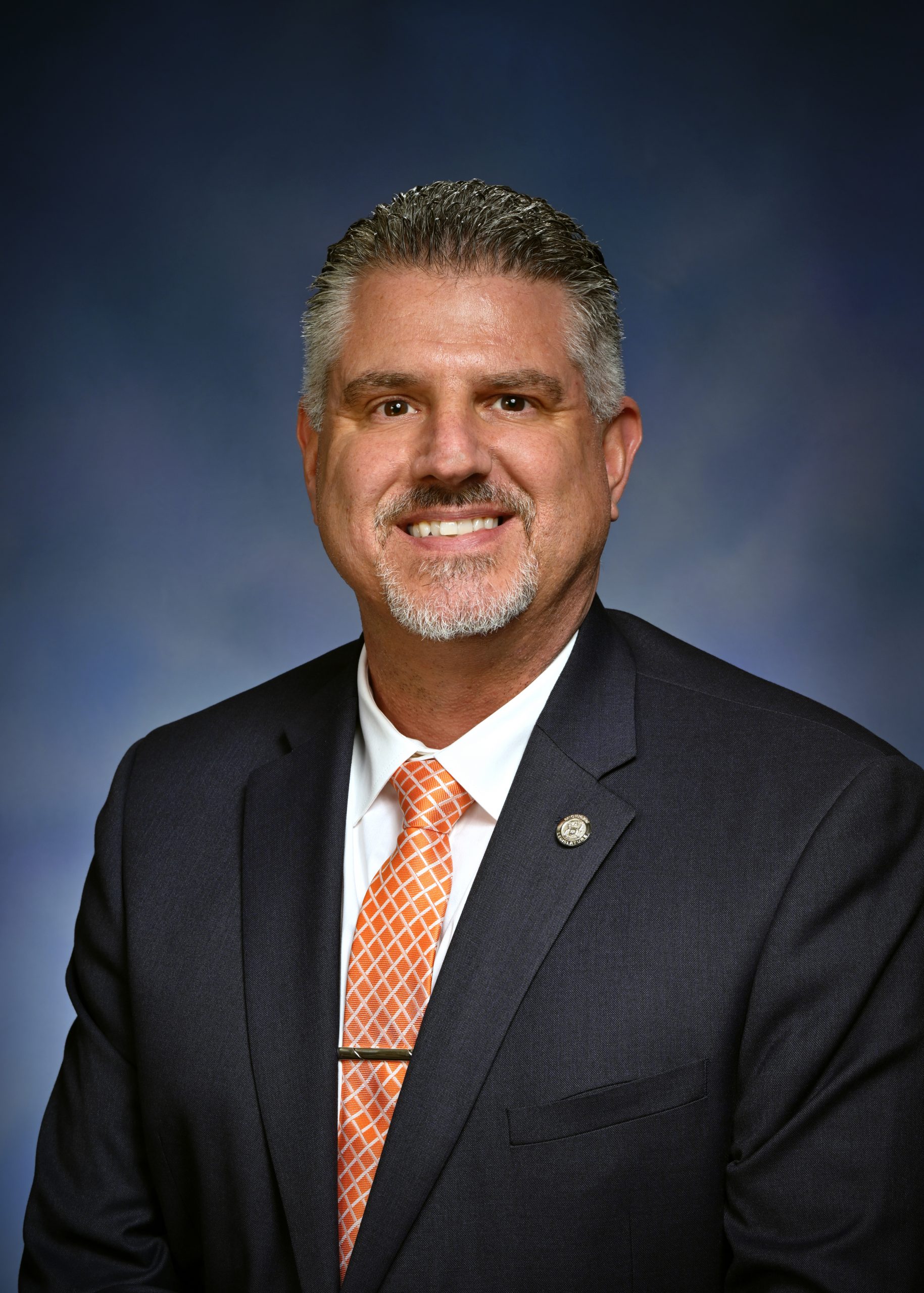
Rep. Mike Hoadley
Sponsored bills
Maddy summaryHB 4655 prohibits Michigan state departments or licensing boards from requiring implicit bias training as a condition for health professional licensure or license renewal. The bill directly affects licensed healthcare workers (like nurses, doctors, and therapists) who would otherwise need to complete such training to obtain or maintain their licenses. It achieves this by amending Michigan's Public Health Code to add Section 16149, which bans the enforcement of rules mandating this training, and by rescinding a related section of the Michigan Administrative Code (MCL 338.7004). The bill removes a potential requirement for healthcare professionals seeking initial licensure or renewal.
Maddy summaryHB 4652 requires Michigan's governor to announce a special election date to fill a vacant legislative seat within 30 days of the vacancy occurring, and to hold that election within 180 days. This bill directly affects state senators and representatives whose seats become vacant during their term, as it sets strict deadlines for filling those positions. The key mechanism establishes clear timeframes for the governor to act, replacing previous flexibility with fixed deadlines under Michigan's election law. It amends sections 178, 634, and 641 of the Michigan Election Code to enforce these timelines. The bill does not change how vacancies may be filled at the next general election if the governor chooses that option.
Maddy summaryHB 4653 sets specific timelines for holding special elections to fill vacant legislative seats in Michigan. It requires the governor to announce the special election date within 30 days of a vacancy occurring and mandates that the election be held no later than 180 days after the vacancy begins. The bill directly affects voters in districts with vacancies and the governor's office, establishing clear deadlines for the election process. This procedural bill amends Michigan's election law to standardize the timeline for filling legislative vacancies, ensuring elections occur within defined windows.
Maddy summaryHB 4356 amends Michigan election law to establish a procedure for election officials to remove voters from the qualified voter file if they have not voted in two consecutive general elections. This directly affects voters who have not participated in recent elections, potentially impacting their ability to vote unless they re-register or update their status. The bill specifies the exact steps election officials must follow to verify voter inactivity and remove names from the file, ensuring a standardized process across jurisdictions. It does not change voter registration requirements but modifies the method for maintaining accurate voter rolls.
Maddy summaryThis is a ceremonial resolution (HR 133) introduced by Rep. Aragona and adopted on June 12, 2025, to commemorate the 115th anniversary of the Midwest Independent Retailers Association (MIRA), founded in 1910. The resolution acknowledges MIRA's history as a trade association representing independent retailers across the Midwest, including its evolution from the Detroit Retail Meat Merchants to its current form. It has no policy provisions or funding impact - it solely serves as a symbolic recognition of MIRA's role in supporting small businesses and communities.
Maddy summaryHR 131 is a ceremonial resolution introduced by Rep. Bruck and adopted on June 12, 2025, to honor the 250th anniversary of the U.S. Army's founding on June 14, 2025 (marking the 1775 establishment of the Continental Army). It recognizes the Army's historical role in the Revolutionary War, its mission, and its current status as a key military force. The resolution has no legal effect or policy changes - it is purely symbolic, expressing congressional admiration without impacting any laws, funding, or specific groups.
Maddy summaryHB 4011 authorizes the transfer of two specific parcels of state-owned land in Arenac County (totaling ~118 acres) to local governments or land banks for public use. The bill requires that transfers occur at fair market value through competitive sales or direct agreements, with all proceeds (after costs) going to the state. It mandates that transferred land must be used for public purposes like parks, schools, or emergency services - not for-profit ventures - and prohibits charging different fees to the public. The transfer process requires approval from the state administrative board and includes specific deed restrictions to ensure ongoing public access.
Maddy summaryThis resolution urges the U.S. military to expand medical waivers for recruits with food allergies, including peanuts, under existing Department of Defense guidelines. It specifically targets current disqualifying rules (DODI 6130.03) that exclude applicants with certain allergies, while noting the Air Force already allows waivers for non-anaphylactic cases. The resolution highlights that such changes would allow more eligible applicants - like the estimated 140,000 Michigan adults with peanut allergies - to serve without restricting career options. As a procedural resolution, it does not change policy but formally requests the Department of Defense to broaden waiver availability.
Maddy summaryThis bill proposes a constitutional amendment to Michigan's budget rules (Article IX, Section 28), directly affecting how the state sets annual spending limits. It replaces current spending caps with a new formula tying budget growth to inflation, population changes, and voter-approved revenue increases. Any state revenue exceeding this calculated limit must be refunded to taxpayers via law. The amendment modifies how the legislature calculates yearly spending authority, requiring excess funds to flow back to citizens rather than remaining in the state budget.