

Maddy summaryHB 5533 modifies Michigan's school zone speed limit rules. It defines a "school zone" as property within 1,000 feet of a school building and sets a reduced speed limit (minimum 25 mph) that applies up to 30 minutes before school starts and until 30 minutes after school ends, rounded to the nearest 5 minutes. School superintendents can adjust these timing windows for off-campus lunch or different school hours. The bill also requires "All Year School" signs for year-round schools and mandates that all signage follow Michigan's traffic control device standards. This directly affects drivers near schools and school officials managing zone timing.
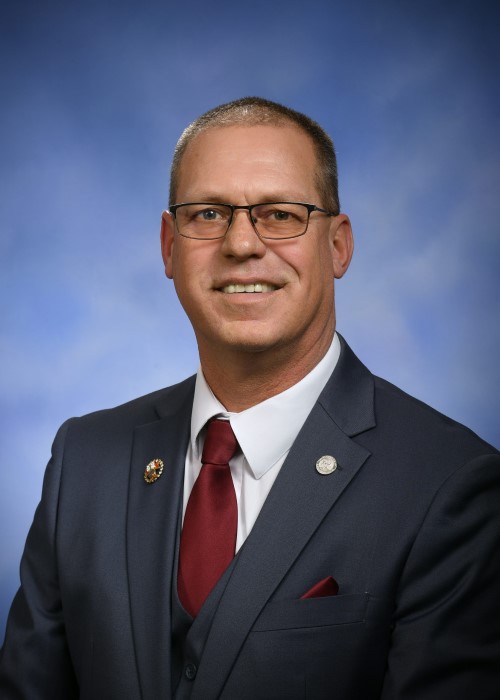
Rep. Greg Alexander
Sponsored bills
Maddy summaryHB 5535 would allow plumbing inspectors to provide plumbing services without violating state law. Currently, plumbing inspectors (registered under Article 10) are prohibited from engaging in the plumbing business, such as installing pipes or selling materials, due to potential conflicts with their inspection duties. The bill amends Section 1123 of Michigan's Skilled Trades Regulation Act to remove this prohibition, permitting inspectors to work for or own plumbing businesses. This change directly affects local plumbing inspectors who wish to operate in both roles simultaneously.
Maddy summaryHB 5556 allows industrial construction permit applicants in Michigan to purchase wetland credits from approved mitigation banks instead of always restoring or creating wetlands on-site to offset project impacts. The bill introduces temporary credits for short-term delays during on-site mitigation and establishes a stewardship fund for alternatives like conservation easements or payments. It updates rules to encourage wetland bank development by expanding service areas within watersheds, reducing required mitigation ratios when using bank credits, and allowing credit transfers between projects. This directly affects developers and construction companies requiring permits for projects impacting wetlands.
Maddy summaryHB 4279 would create a new apprenticeship program for Michigan National Guard members, allowing them to earn industry-recognized certifications while serving. The bill establishes a formal structure for training in high-demand fields like engineering and information technology, directly affecting Guard members seeking to build civilian career skills. Key provisions include requiring the Michigan National Guard to develop partnerships with employers and educational institutions to design the apprenticeships. The legislation is currently pending in committee review and has not yet been enacted.
Maddy summaryHB 5519 lowers Michigan's individual income tax rate to 3.9% for tax years beginning January 1, 2026, replacing the current 4.25% rate. This change applies to all Michigan residents who pay state income tax on their earnings. The bill amends Section 51 of the Income Tax Act to implement this rate reduction, which follows a temporary 4.25% rate period through 2025. This policy directly reduces the tax burden for individual taxpayers starting in 2026.
Maddy summaryThis is a ceremonial resolution (not a law), declaring February 11, 2026, as "2-1-1 Day" in Michigan. It recognizes the 2-1-1 helpline service, which connects Michiganders to free health and human services (like housing, food, and disaster assistance) without creating new policies or changing how the service operates. The resolution aims to raise public awareness about the existing 2-1-1 resource, which handled over 400,000 contacts in fiscal year 2025. It has no binding effect on state programs or funding.
Maddy summaryThis resolution designates February 21-28, 2026, as National FFA Week in Michigan. It formally recognizes the Future Farmers of America (FFA) organization, which supports agricultural education for students in grades 7-12 through local chapters, leadership development, and career preparation. The resolution does not create new laws or policies but encourages Michiganders to celebrate FFA’s role in fostering student leadership, agricultural skills, and community engagement. It directly affects Michigan residents by promoting awareness of FFA’s educational programs and achievements.
Maddy summaryThis bill modifies Michigan's licensing rules for foreign-trained registered nurses. It requires the Board of Nursing to accept verification from specific organizations (like CGFNS) to confirm foreign education programs are substantially equivalent to Michigan-approved programs. The bill also simplifies licensing for nurses already licensed in another U.S. state or Canadian province with 5+ years of active, unblemished practice, eliminating the need for program verification in those cases. These changes directly affect foreign-educated nurses and out-of-state nurses seeking Michigan licensure.
Maddy summaryThis resolution (HR 245) symbolically declares February 2026 as National Teen Dating Violence Awareness and Prevention Month and February 10, 2026, as National Teen Dating Violence and Prevention Day in Michigan. It does not create new laws or allocate funding but aims to raise public awareness about teen dating violence. The resolution cites CDC data showing high rates of physical, sexual, and psychological violence among teens, including 44.3% experiencing at least one form of violence. It directs Michigan residents and communities to recognize these dates to support prevention efforts, though it has no binding policy requirements.
Maddy summaryHB 5313 modifies Michigan's licensing rules for health professionals by removing certain disciplinary records from public view and adjusting continuing education requirements. It directly affects licensed healthcare workers (like nurses, doctors, and therapists) by changing how past disciplinary actions are handled and what training they must complete. Key provisions include adding new sections (16211a and 16231b) to limit public access to some disciplinary records, updating continuing education standards, and modifying sanctions for violations. The bill focuses on administrative changes to licensing processes without altering core professional standards or creating new funding.