

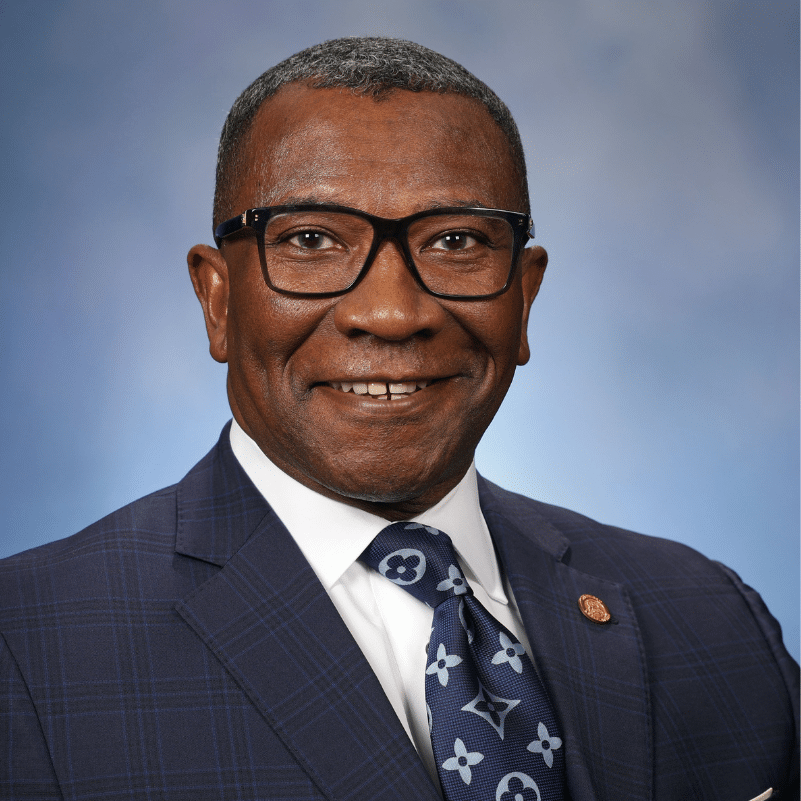
Photo of Amos O'Neal
D Michigan House · District 94 On the 2026 ballot

Rep. Amos O'Neal

Compare
Total votes
2,632
all sessions
Attendance
93%
210 missed
Lower than 81% of chamber peers
With party
97%
of cast votes
Near the chamber average
Bipartisan score
2%
crosses aisle rarely
Near the chamber average
Sponsored
1,264
bills & resolutions
Near the chamber average
Committees
1
assignment
1,264 bills and resolutions

Sponsored bills

Total
1,264
Primary
99
Co-sponsor
1,165
This page
1,264
matching current filters
Primary HB 6285
In committee · Michigan House · Lead sponsor
Elections: recall; recall procedures; modify. Amends secs. 951a & 952 of 1954 PA 116 (MCL 168.951a & 168.952).

Maddy summaryThis bill modifies Michigan election laws to update the procedures for recalling state and local government officials. It requires recall petitions to be printed, clearly state factual reasons based on the official's current conduct, and include a certificate from the person collecting signatures. The bill establishes a review process where the Board of State Canvassers or county election commissioners must verify that the petition contains valid signatures and clear, truthful reasons before it can be circulated. If the initial review finds issues with the petition's content or signatures, the entire petition is rejected, and the bill also outlines specific timelines for appeals to the Court of Appeals.

In committee Dec 13, 2024 0 co-sponsors
Co-sponsor HB 4698
Passed · Michigan House · Co-sponsor
Elections: voters; definition of identification for election purposes; expand. Amends sec. 2 of 1954 PA 116 (MCL 168.2).

Maddy summaryThis bill amends Michigan election law to expand the list of documents that qualify as valid identification for voting and voter registration. It directly affects voters and election officials by clarifying which specific IDs, such as driver's licenses, passports, military cards, and student IDs, are acceptable. The legislation explicitly excludes mobile versions of certain licenses and state ID cards from this list while also defining other key terms like "absent voter" and "educational institution." The bill does not take effect until three other related Senate bills are also passed into law.

Passed Dec 13, 2024 1 co-sponsor
Co-sponsor HB 4169
Passed · Michigan House · Co-sponsor
Health occupations: occupational therapists; occupational therapy licensure compact; enact. Amends 1978 PA 368 (MCL 333.1101 - 333.25211) by adding sec. 16188.

Maddy summaryThis bill establishes an interstate licensure compact for occupational therapists and occupational therapy assistants in Michigan, allowing them to practice in other member states without obtaining separate licenses. The legislation creates a system where a therapist licensed in their home state can receive a "compact privilege" to work in remote states, provided the patient is located in that remote state during the encounter. Key provisions include the mutual recognition of licenses, the sharing of disciplinary and investigative information between states, and specific accommodations for military families relocating. The law also aims to improve public access to therapy services by facilitating the use of telehealth technology and ensuring consistent regulatory standards across participating jurisdictions.

Passed Dec 12, 2024 1 co-sponsor
Co-sponsor HB 5974
In committee · Michigan House · Co-sponsor
Health facilities: licensing; licensing of prescribed pediatric extended care facilities; provide for. Amends secs. 20106, 20109, 20115 & 20161 of 1978 PA 368 (MCL 333.20106 et seq.) & adds pt. 219A.

Maddy summaryThis bill proposes changes to Michigan's Public Health Code to update regulations for licensing health facilities. It specifically adds a new section to the code to establish rules for licensing prescribed pediatric extended care facilities. The legislation amends existing sections related to facility licensing and adds a new part to the code to address these specific care settings. If passed, the bill would require these specialized pediatric facilities to meet new licensing standards set by the state.

In committee Dec 12, 2024 1 co-sponsor
Primary HB 6229
In committee · Michigan House · Lead sponsor
Natural resources: hunting; certain registration and license fees; increase. Amends secs. 43509, 43520, 43522, 43523a, 43523b, 43524, 43525b, 43525c, 43527a, 43528, 43529, 43531, 43532, 43532a, 43533, 43535, 43536 & 43540 of 1994 PA 451 (MCL 324.43509 et seq.) & adds secs. 503d & 43555a.

Maddy summaryHB 6229 proposes to increase various registration and license fees associated with hunting in Michigan. The bill directly affects hunters and other individuals who purchase permits or licenses regulated under the Natural Resources and Environmental Protection Act. By amending numerous existing sections and adding new ones, the legislation updates the specific fee amounts charged for these activities. This change would result in higher costs for obtaining hunting-related authorizations but does not alter the fundamental rules governing how or when hunting can occur.

In committee Dec 12, 2024 0 co-sponsors
Co-sponsor HB 4170
Passed · Michigan House · Co-sponsor
Health occupations: occupational therapists; licensure process for occupational therapists; modify to incorporate occupational therapy licensure compact. Amends sec. 18301 of 1978 PA 368 (MCL 333.18301) & adds secs. 18303a & 18303b. TIE BAR WITH: HB 4169'23

Maddy summaryThis bill updates Michigan's public health code to allow occupational therapists and occupational therapy assistants to practice under a national licensure compact. The key provision authorizes individuals who hold a compact privilege from other states to engage in practice within Michigan as if they were fully licensed under state law. By incorporating this compact, the legislation aims to facilitate easier mobility for these healthcare professionals across state lines while maintaining the same professional standards and obligations. The changes apply directly to occupational therapy practitioners and the facilities that employ them, ensuring that out-of-state compact members are recognized and regulated consistently with local licensees.

Passed Dec 12, 2024 1 co-sponsor
Co-sponsor HB 4198
In committee · Michigan House · Co-sponsor
Weapons: other; local units of government imposing certain restrictions on firearms; allow. Amends sec. 3 of 1990 PA 319 (MCL 123.1103).

Maddy summaryThis bill allows local governments in Michigan to impose specific restrictions on firearms, pneumatic guns, and related ammunition within their jurisdictions. It explicitly permits municipalities to regulate how employees carry weapons at work, set age limits for children possessing air guns, ban threatening displays of such weapons, and prohibit open carry inside government buildings. The legislation also clarifies that these local rules cannot override existing state criminal laws and must allow law enforcement officers to openly carry firearms.

In committee Dec 11, 2024 1 co-sponsor
Co-sponsor HB 4556
Passed · Michigan House · Co-sponsor
Criminal procedure: sentencing; resentencing upon petition of certain prisoners; provide process for. Amends secs. 12 & 25, ch. IX of 1927 PA 175 (MCL 769.12 & 769.25) & adds secs. 27a, 27b, 27c, 27d, 27e, 27f, 27g & 27h to ch. IX.

Maddy summaryThis bill modifies Michigan's sentencing laws to allow certain prisoners convicted of multiple felonies to petition the court for a review of their sentences. It establishes a formal process for these individuals to request resentencing, which would require a judge to evaluate whether their current punishment remains appropriate under current legal standards. The legislation specifically targets those sentenced under the state's habitual offender provisions and creates new sections in the criminal procedure code to govern this review mechanism. By adding these new procedures, the bill aims to provide a legal pathway for eligible inmates to seek a reduction in their prison terms without changing the underlying laws that led to their original convictions.

Passed Dec 11, 2024 1 co-sponsor
Co-sponsor HB 4160
Passed · Michigan House · Co-sponsor
Corrections: parole; parole of certain offenders less than 19 at time of conviction; provide for under certain circumstances. Amends sec. 34 of 1953 PA 232 (MCL 791.234). TIE BAR WITH: HB 4161'23, HB 4162'23, HB 4163'23, HB 4164'23

Maddy summaryThis bill amends Michigan's corrections code to clarify the rules for when prisoners become eligible for parole, specifically addressing how time served is calculated for those with consecutive sentences or those subject to disciplinary time. It maintains existing restrictions by denying parole eligibility to individuals convicted of serious crimes such as first-degree murder and certain sexual offenses, while allowing the parole board to consider releasing other life sentence prisoners after serving 10 to 20 years depending on when the crime was committed. The legislation also specifies that discharge for these prisoners can only occur after they have served the full maximum term of their sentence, unless they are granted parole and successfully complete the parole period.

Passed Dec 11, 2024 1 co-sponsor
Primary HB 4162
Passed · Michigan House · Lead sponsor
Crimes: penalties; penalties for certain crimes of imprisonment for life without parole eligibility; amend Michigan penal code to exclude application to individuals less than 19. Amends secs. 16, 18, 200i, 204, 207, 209, 210, 211a, 316, 436 & 543f of 1931 PA 328 (MCL 750.16 et seq.) & adds sec. 506b. TIE BAR WITH: HB 4164'23, HB 4160'23, HB 4161'23, HB 4163'23

Maddy summaryHB 4162 amends Michigan's penal code to adjust penalties for crimes involving the adulteration or improper mixing of drugs and medicines. The bill establishes specific sentencing guidelines based on the severity of the outcome, ranging from fines and short prison terms for minor violations to up to 15 years in prison if the actions result in death. A key provision modifies the application of life imprisonment without parole, excluding individuals who were under 19 years old at the time of the offense from facing that specific penalty. Instead, minors who commit these crimes with intent to kill or cause serious harm resulting in death face a minimum of 20 years and a maximum of 60 years in prison. These changes directly affect how the state prosecutes and sentences offenders involved in distributing harmful pharmaceutical products.

Passed Dec 11, 2024 0 co-sponsors
Showing 371 to 380 of 1,264 bills
Previous 1 … 37 38 39 … 127 Next