

Maddy summaryHB 5563 amends Michigan's consumer credit law to exempt licensed earned wage access services from being classified as "regulated persons" under debt collection rules. This means businesses offering early wage access (allowing workers to receive part of their earned wages before payday) are not subject to standard debt collection regulations for their core wage access operations. The exemption specifically applies to activities conducted under the earned wage access services act, separating these services from traditional debt collection oversight. The bill requires another related bill (HB 5558) to become law before it takes effect.
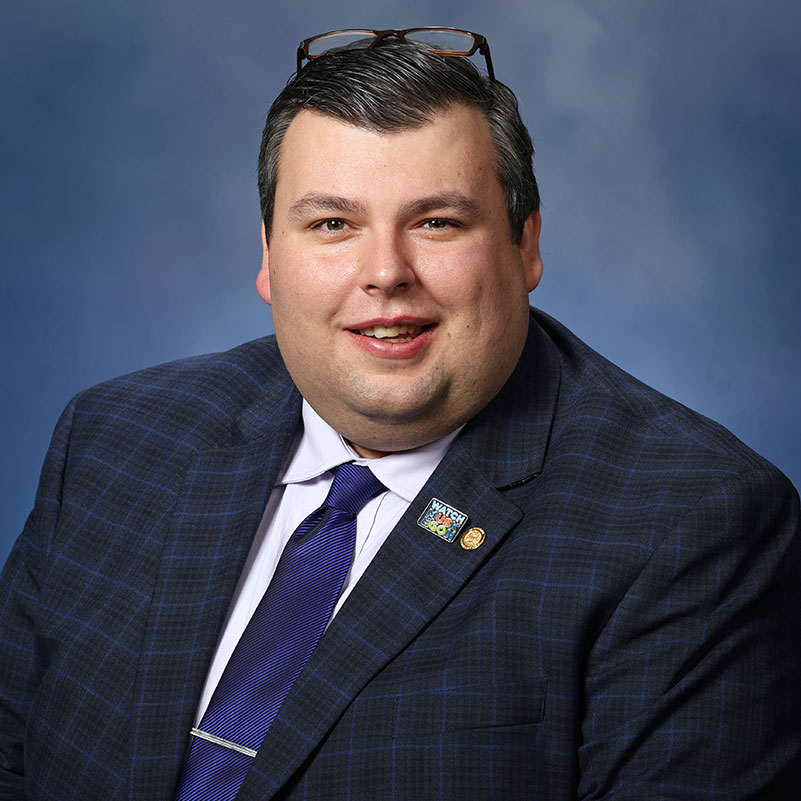
Rep. Will Snyder
Sponsored bills
Maddy summaryHB 5561 amends Michigan's Occupational Code to exempt licensed earned wage access services from standard collection agency regulations when collecting debts related to their core services. Specifically, it adds an explicit exemption in the definition of "collection agency" for businesses operating under the Earned Wage Access Services Act. This means these services no longer need separate collection agency licensing for debts tied to their earned wage access offerings. The bill directly affects businesses providing short-term wage access (like early paycheck access) that are already licensed under the Earned Wage Access Services Act. The exemption simplifies regulatory requirements for these specific providers without altering broader collection practices.
Maddy summaryHB 5562 amends Michigan's Consumer Financial Services Act to add the "Earned Wage Access Services Act" to the list of financial licensing acts requiring state regulation. This change directly affects companies offering earned wage access services (like apps allowing workers to access earned wages early), requiring them to obtain licenses under the same framework as other financial service providers. The bill modifies Section 2 of the act by explicitly including earned wage access services in the definition of "Financial licensing acts," aligning them with existing regulatory requirements. This is a definitional update without creating new rules or fees, ensuring these services fall under the state's financial licensing oversight.
Maddy summaryThis resolution asks Michigan's representatives in Congress to support H.R. 7459, a bill designed to create a federal Coastal Storm Risk Management Trust Fund. The proposed fund would provide permanent money for coastal projects, such as beach nourishment, to help manage erosion along the Great Lakes. By encouraging the delegation to back this legislation, the bill aims to ensure a steady source of funding for protecting shorelines and public property. It does not directly allocate money itself but serves as a formal request to influence the congressional delegation's stance on the funding bill.
Maddy summaryThis bill proposes the creation of a select committee to investigate the Interlochen Center for the Arts and its connection to Jeffrey Epstein. The committee would be tasked with examining the relationship between the arts center and the individual, potentially leading to further inquiries or recommendations. The measure is currently under consideration by the Michigan House of Representatives and has been referred to the Committee on Government Operations.
Maddy summaryHB 5251 requires Michigan's medical assistance program (Medicaid for low-income residents) to cover prescribed pediatric extended care for children. This specifically affects low-income children in Michigan who need specialized, long-term medical care beyond standard hospital stays. The bill amends state law to mandate this coverage under existing rules for pediatric extended care (Part 219A of the Public Health Code). The coverage would apply to children receiving medically necessary care as prescribed by a doctor. The bill is contingent on the passage of companion legislation (HB 5252).
Maddy summaryHB 5252 amends Michigan's Public Health Code to create a new licensing category for "prescribed pediatric extended care facilities," which provide specialized long-term medical care for children with complex health needs. The bill establishes specific licensing requirements for these facilities, including standards for staffing, medical oversight, and facility operations, directly affecting providers seeking to operate such services. Key provisions include adding Part 219A to the code and revising existing sections (20106, 20109, 20115, 20161) to incorporate these new requirements. This change aims to ensure consistent safety and quality standards for pediatric extended care facilities across the state. The bill is currently pending in the House Health Policy Committee.
Maddy summaryThis bill allows Michigan customers to install small, portable solar power systems on their property without needing approval from their electric provider or paying installation fees. It defines these systems as plug-in photovoltaic devices that produce up to 1,200 watts and connect through standard electrical outlets, while protecting providers from liability for any damage caused by customer installations. The law requires customers to notify their electric provider within 30 days of installation using a form developed by the state commission, which must include details like the system's capacity and address. Electric providers cannot require additional equipment or charge fees for these systems, and providers must not approve or reject their use. The bill amends Michigan's Clean and Renewable Energy Act to formalize these rules for small-scale solar generation.
Maddy summaryThis bill removes the requirement for anglers to pay a fee to use certain fishing devices such as set hook lines, nets, and commercial trolling rigs in Michigan waters. It directly affects individuals and businesses that currently hold licenses for these specific fishing activities. The legislation amends existing sections of the Natural Resources and Environmental Protection Act to eliminate the associated licensing fees while maintaining the requirement for a license itself. This change applies to both residents and nonresidents engaging in these types of fishing methods.
Maddy summaryThis bill grants immunity from nuisance lawsuits to owners and operators of racing facilities and racetracks in Michigan if the facility was built before the plaintiff purchased their property or began construction nearby. It protects these racing venues from legal claims filed by neighbors within a 5-mile radius who acquired their land or started building after the racetrack was established. The law applies to all claims filed after the bill takes effect, regardless of when the alleged nuisance occurred, but does not exempt racetracks from complying with environmental or health and safety regulations.