

Maddy summaryHB 4758 requires Michigan Works agencies to create teams providing job transition services to two groups: individuals who lost federal jobs involuntarily between January 2025 and January 2027 (dislocated federal employees), and veterans. The bill mandates these teams to analyze job matches with public employers, assess transferable skills, and refer individuals to both public and private employers needing staff. It also requires assistance with filing for unemployment benefits under Michigan’s existing employment security system. The law applies specifically to Michigan Works agencies and public employers like state/local governments, schools, and community colleges. This bill creates a new coordination framework but does not establish new benefits or funding.
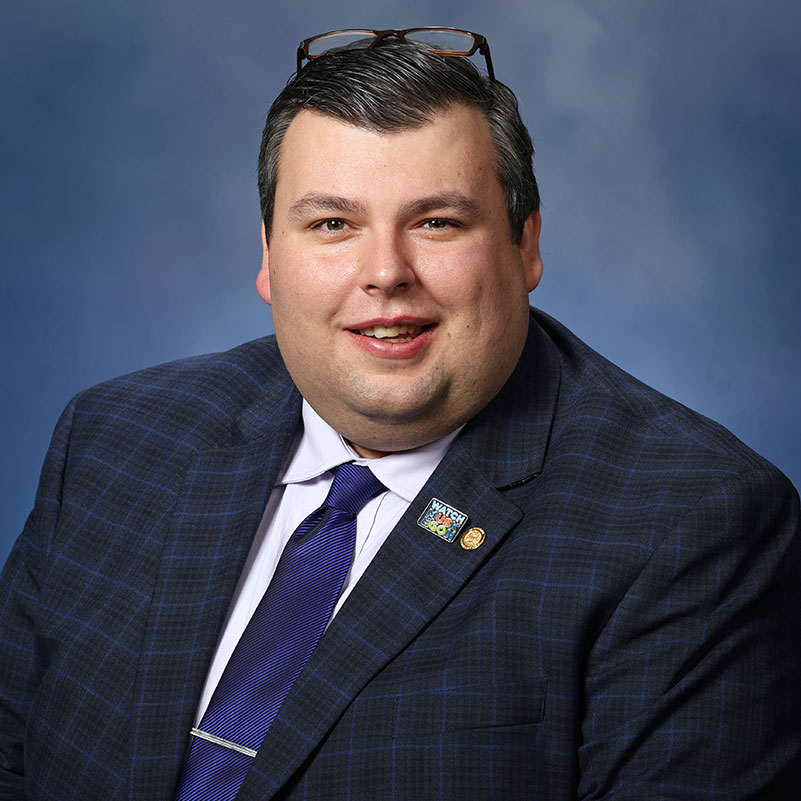
Rep. Will Snyder
Sponsored bills
Maddy summaryHB 4759 encourages public employers (like state agencies, cities, schools, and community colleges) to use an expedited hiring process for dislocated federal employees who are referred through the state's reemployment services program. The bill requires public employers receiving such referrals to prioritize these candidates, though it does not mandate hiring. Key provisions include defining "public employer" broadly and specifying that this process must follow existing constitutional hiring rules for state positions. It does not override other laws but depends on another bill (HB 4758) being enacted first. The measure directly affects dislocated federal workers seeking new jobs and public employers hiring for open positions.
Maddy summaryThis resolution urges the federal government to maintain funding and reinstate staff for the Low Income Home Energy Assistance Program (LIHEAP) while negotiating the "One Big Beautiful Bill Act." It directly affects Michigan residents who rely on the state's Home Heating Credit Program, which provided assistance to 248,765 Michiganders in 2022 - including low-income families, seniors, and people with disabilities - by helping cover heating costs. The resolution highlights that proposed federal budget cuts to LIHEAP and the recent firing of LIHEAP program staff threaten the program's continuation, potentially causing payment delays or termination. As a non-binding request, it asks federal leaders to prioritize LIHEAP funding to prevent disruption of this critical aid.
Maddy summaryHB 4739 removes age restrictions for Medicaid coverage of autism spectrum disorder (ASD) diagnosis and treatment in Michigan. It requires the state department to cover these services for all Medicaid-eligible individuals, including those aged 21 and older, within 180 days of the bill’s effective date. The bill mandates the department to seek federal approval to amend Michigan’s Medicaid plan to include these services for adults. This directly affects Medicaid recipients with ASD, ensuring continued access to diagnostic and treatment services regardless of age.
Maddy summaryHB 4740 requires health insurance plans sold in Michigan to cover diagnosis and treatment for autism spectrum disorders (ASD), directly affecting insured individuals with ASD and their families. It mandates coverage for behavioral health treatments like applied behavior analysis, with age-based annual limits: $50,000 for children under 6, $40,000 for ages 7-12, and $30,000 for ages 13-18. Insurers cannot deny coverage based on an ASD diagnosis, limit treatment visits, or apply stricter cost-sharing than for physical illnesses (though annual caps apply). The bill also allows insurers to request periodic diagnostic reviews (e.g., autism diagnostic observation schedule every 3 years) and annual development evaluations.
Maddy summaryHB 4721 creates tax credits for biodiesel sales and production in Michigan, effective 2025-2030. Retail fuel dealers receive credits of $0.02-$0.07 per gallon for selling biodiesel blends (6-9%, 10-19%, or 20%+), while biodiesel producers get $0.02 per gallon. Total credits are capped at $16 million annually for retailers and $2 million for producers, with excess claims distributed proportionally. The bill directly affects Michigan fuel retailers and biodiesel producers by reducing their income tax liability based on specific blend volumes sold or produced.
Maddy summaryHB 4710 increases Michigan's standard marriage license fee from $20 to $50. It requires counties to allocate $15 of each fee paid by applicants to fund circuit court family counseling services, specifically for domestic violence and child abuse support. Nonresident applicants must pay an additional $25 fee, which goes to the county general fund. The bill ensures these funds are used for established counseling services or returned to the county if services aren't available, with fee waivers available for undue hardship cases.
Maddy summaryHB 4722 creates tax credits to incentivize biodiesel use in Michigan. Retail fuel dealers selling biodiesel blends (6-9% at $0.02/gal, 10-19% at $0.05/gal, 20%+ at $0.07/gal) can claim credits, while biodiesel producers get $0.02 per gallon produced. Credits apply for tax years 2025-2030, with a $16 million total cap for retailers and a $2 million cap for producers. This directly affects Michigan fuel retailers and biodiesel manufacturers by reducing their income tax liability for qualifying sales and production.
Maddy summaryHB 4426 amends Michigan's Motor Carrier Safety Act (MCL 480.12d) to set a minimum age of 21 for drivers transporting hazardous materials requiring placards under federal rules. It maintains the existing 18-year-old minimum for most commercial driving but specifically raises the age requirement for hazardous materials transport. The bill does not change medical waiver or grandfathered driver provisions. This change directly affects commercial drivers operating in Michigan who transport hazardous materials requiring placards.
Maddy summaryHR 138 is a symbolic resolution introduced by Michigan House representatives to declare June 2025 as Lesbian, Gay, Bisexual, Transgender, and Queer Pride Month in the state. It does not create new laws or policies but formally recognizes the historical significance of LGBTQ+ rights movements, including the Stonewall Riots and key legal victories like Obergefell and Bostock. The resolution aims to affirm Michigan's support for LGBTQ+ communities and their contributions to the state's cultural and economic vitality. This declaration directly affects all Michiganders by officially honoring Pride Month through state-level recognition.